
Source of Truth Enterprise Intelligence Platform

The Source of Truth Enterprise Intelligence Platform turns internal company knowledge, documents, business data and organizational experience into governed, traceable intelligence that people and AI can search, analyze, verify, monitor and use. It is built for organizations that want AI to work with their own knowledge under their own rules — without making an external AI API the foundation of the system.
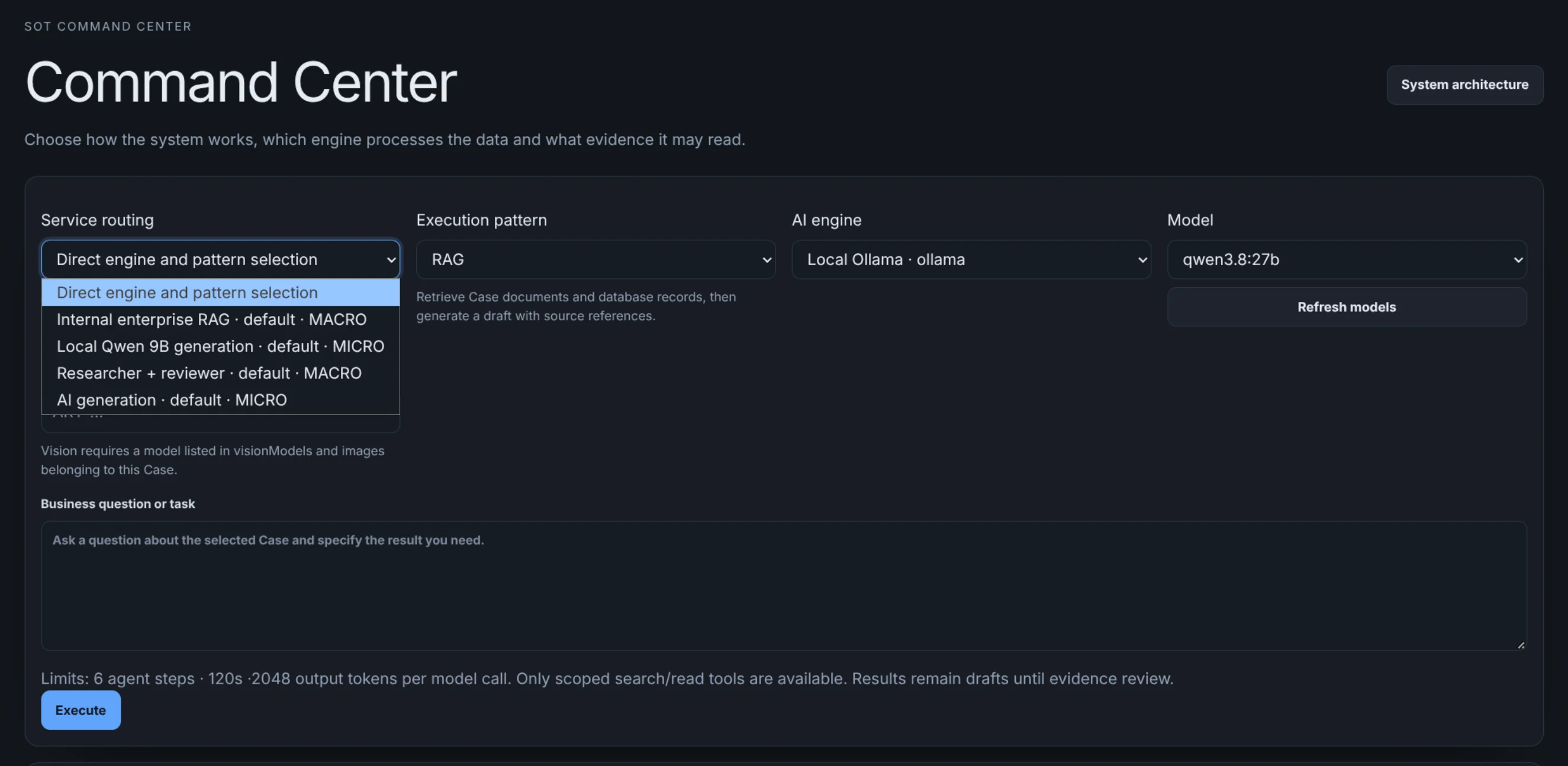
What the company buys
The product is not a chatbot, a model subscription or a collection of disconnected AI features. It is an enterprise intelligence layer for the information, evidence, questions, workflows and AI execution that already exist inside an organization.
The objective is straightforward: important internal knowledge should be findable, understandable, traceable and reusable — and AI should operate inside that governed knowledge environment rather than becoming an uncontrolled replacement for it.
From internal information to business value
| What the organization has | What the platform does | What the organization gains | |
|---|---|---|---|
| Documents and internal knowledge | Policies, procedures, project files, specifications, reports and accumulated know-how | Organizes, retrieves, relates and preserves the knowledge with provenance | Faster access to usable organizational knowledge |
| Business data and structured records | Operational records, approved datasets and internal system information | Makes approved information available to controlled analysis and research workflows | Evidence-backed answers across more than documents alone |
| AI models and compute | Locally operated or otherwise approved models selected by the organization | Uses models as replaceable reasoning and generation resources inside governed workflows | AI capability without binding institutional knowledge to one model vendor |
| Decisions, evidence and change | Claims, decisions, contradictions, observations and evolving information | Preserves evidence relationships, review state and audit history | Institutional memory that can be inspected instead of reconstructed from fragments |
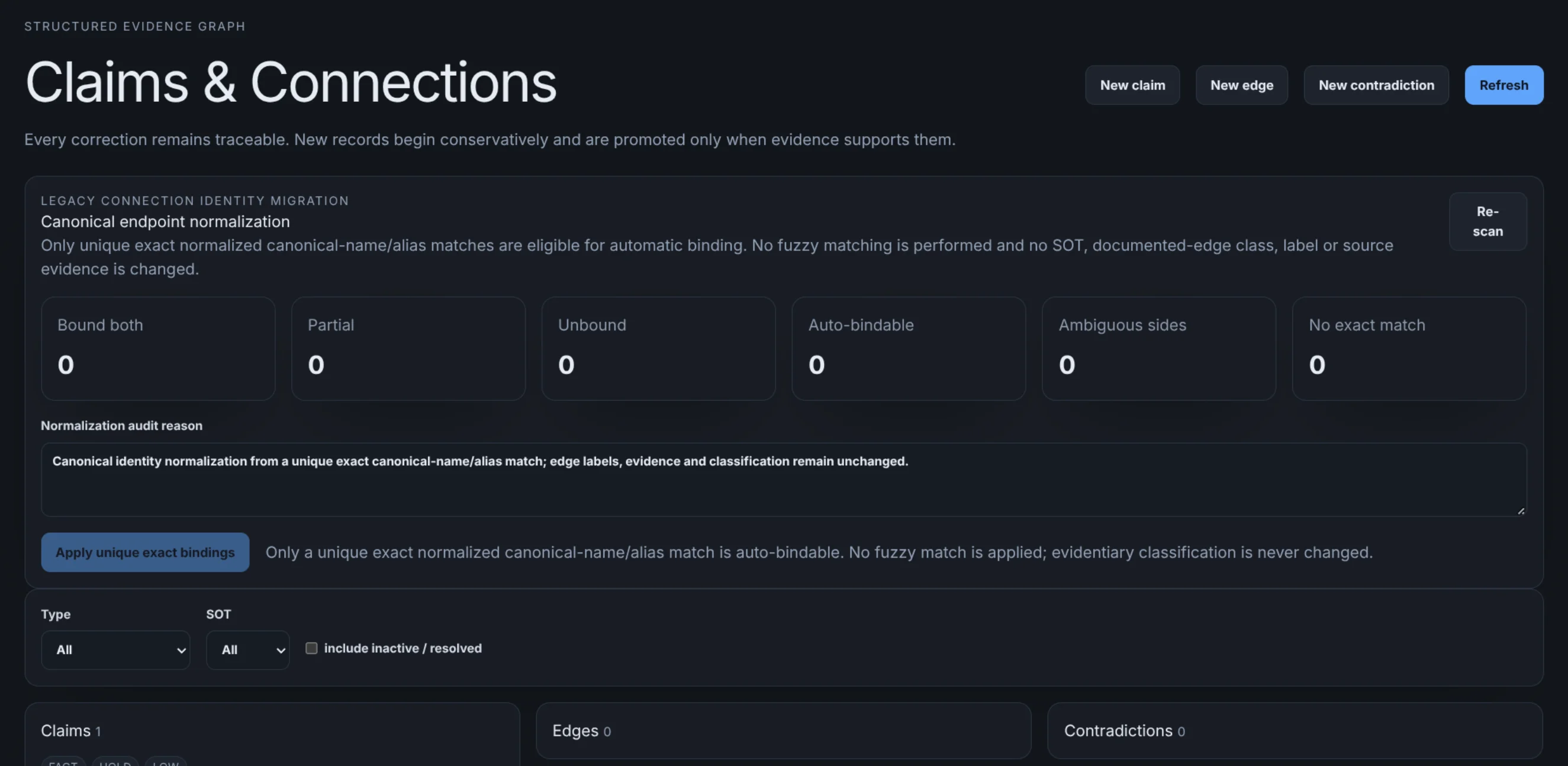
Immediate business value
The platform is designed for internal work where people repeatedly need to find information, understand what is current, compare conflicting material, establish what supports a conclusion, monitor change or delegate bounded work to AI.
- Find internal knowledge faster. Search across approved organizational information instead of relying on individual memory or manual document hunting.
- Reduce knowledge fragmentation. Connect information that currently lives across documents, teams, projects and systems.
- Trace important answers back to evidence. Preserve the source and context behind material conclusions.
- Keep contradictions visible. Conflicting information is something to investigate, not something the AI should silently blend away.
- Preserve decision history. Keep the reasoning and evidence behind important organizational conclusions.
- Monitor change. Detect when defined internal information or signals change and route that change into a controlled review process.
- Use AI without outsourcing the knowledge system. Models can change while the organization's evidence and institutional knowledge remain.
- Automate bounded internal work. Give AI agents specific tools, information scopes and execution limits instead of unrestricted access.
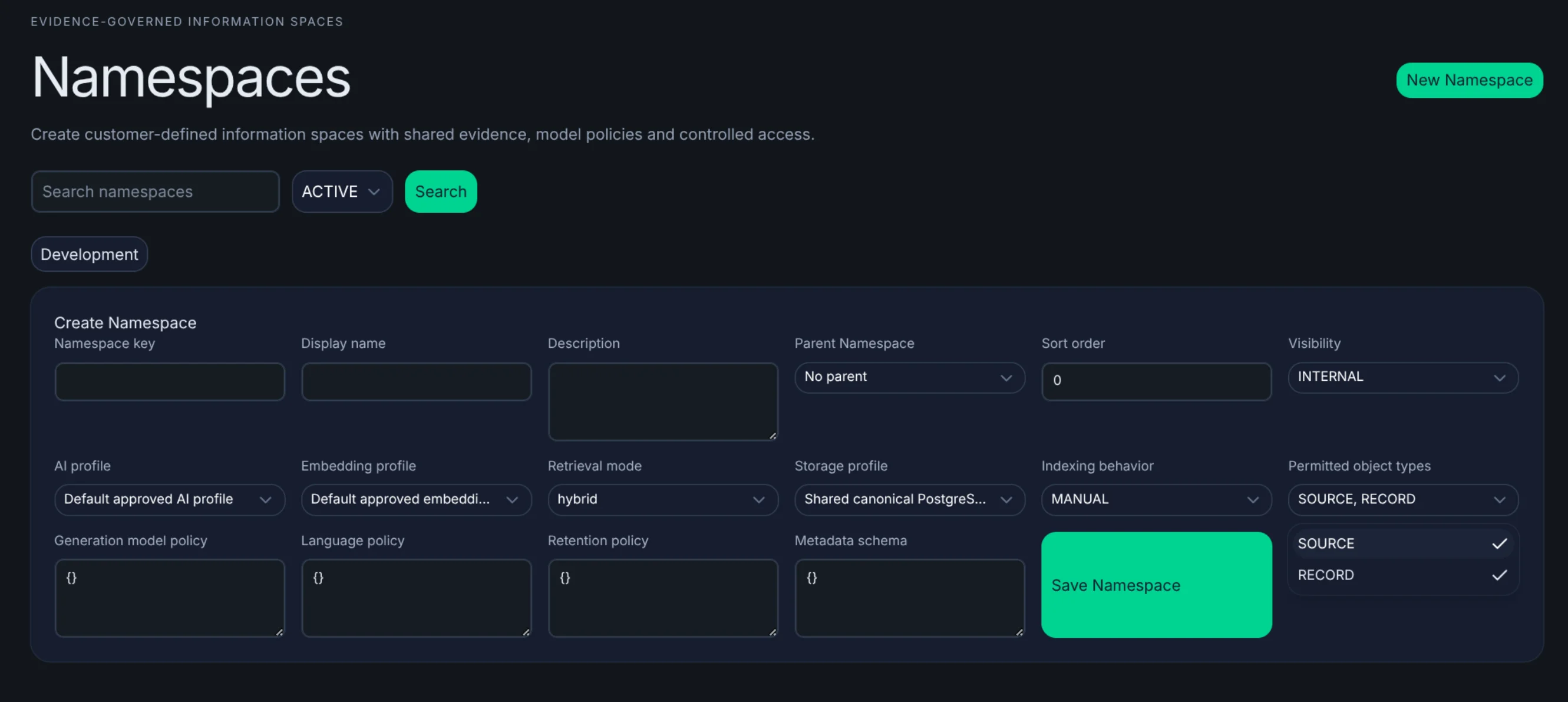
Built for the work happening inside the organization
The same evidence-governed core can be configured for different departments and business cases. The product does not depend on one industry vocabulary: the business case defines which sources, users, permissions, workflows and AI capabilities are enabled.
Internal enterprise use cases
| Business need | Platform capability | Typical result | |
|---|---|---|---|
| Enterprise knowledge | Employees cannot reliably find or connect internal knowledge | Controlled search, research, evidence and organizational context | A usable internal intelligence layer |
| Management & decision intelligence | Management receives fragmented or conflicting information | Evidence-backed synthesis with explicit uncertainty and contradiction handling | A clearer basis for decisions |
| Project & delivery intelligence | Requirements, decisions, risks and project knowledge drift across tools | Connect project evidence, decisions and evolving information | Better continuity and traceability across delivery |
| Document & contract intelligence | Large collections must be searched, compared or reviewed | Source-preserving discovery, comparison and research | Faster document analysis with traceable findings |
| Policy & compliance intelligence | Policies, standards and rules must be interpreted against current evidence | Version-aware evidence review and controlled research | More defensible internal compliance work |
| Technology & architecture intelligence | Architecture, interfaces, incidents and technical decisions are scattered | Evidence-driven system research and decision traceability | A shared technical knowledge base that explains not only what exists but why |
| Operations & incident intelligence | Operational events are resolved but the reasoning is lost | Observations, evidence, investigation and preserved resolution context | Operational learning that survives the ticket |
| Billing & commercial operations | Pricing, invoices, contracts and exceptions need reconciliation | Evidence-controlled comparison and exception analysis | Faster investigation of commercial inconsistencies |
| Continuous internal monitoring | Important information changes without the right people noticing | Defined observations, change detection and review triggers | Earlier visibility into relevant internal change |
Private enterprise AI without mandatory external AI APIs
Organizations can operate the platform and its AI workloads inside infrastructure they control. External AI services are optional choices, not a mandatory dependency of the product.
This matters because the organization's knowledge system should not have to be rebuilt every time a preferred model, inference environment or compute strategy changes. The platform separates institutional knowledge and evidence from the models used to reason over it.
Scale AI capacity without rebuilding the knowledge system
Evidence-governed by design
The platform does not ask a language model to become the organization's Source of Truth. Models are used to retrieve, compare, reason, summarize and execute bounded tasks. Evidence remains a separate governed layer.
Important information can retain its source, provenance and relationship to the claims or conclusions it supports. Contradictions and unresolved questions can remain explicit instead of being hidden behind a fluent answer.
From internal question to reviewed organizational knowledge
One platform, multiple ways to work
Choose the working mode that matches the task
| Mode | What it does | Business use | |
|---|---|---|---|
| Find & understand | Knowledge discovery | Searches and connects approved internal information | Answer everyday company questions with source context |
| Research & verify | Evidence-governed research | Collects, compares and tests information across a bounded case | Investigate complex questions that cannot be answered from one document |
| Monitor & detect change | Continuous intelligence | Preserves observations and identifies defined changes or thresholds | Notice relevant internal change before it disappears into operational noise |
| Execute bounded AI work | Controlled AI agent | Uses explicitly allowed tools and information within defined limits | Automate repeatable analytical or knowledge tasks without unrestricted agent access |
| Review & preserve | Reference Model governance | Separates drafts and observations from reviewed institutional knowledge | Maintain a durable, auditable organizational knowledge state |
Controlled internal AI agents
AI agents are useful when an internal task requires more than one model response: finding documents, reading sources, comparing records, following a research procedure or using approved tools. The platform treats the agent as a bounded worker inside the enterprise system.
The agent does not define its own authority. The organization defines the information scope, permissions, available tools, execution limits and review boundary.
- Restricted information scope based on the active business context.
- Explicitly allowed tools instead of arbitrary system access.
- Defined execution budgets and stopping conditions.
- Recorded tool decisions and execution traces for review.
- Human review where the business consequence requires it.
- Separation between generated output and reviewed organizational knowledge.
Corporate memory that survives projects, systems and people
A large part of organizational knowledge is not lost because the data disappeared. It is lost because the connection between a decision, its evidence, its context and the people who understood it disappears over time.
The platform is designed to preserve those relationships so that future teams can recover not only a document or answer, but the evidence and decision context behind it.
Configured around the business case
The platform is intentionally modular. A company does not need every possible capability enabled at once. The implementation is shaped around the internal problem, information landscape, security boundary, users and required outcomes.
From business requirement to operating system
A real product, not a slide deck
The current product already implements the core system needed to demonstrate this operating model: Case-based workspaces; Sources, Artifacts and provenance; Claims, relations and contradictions; evidence admission controls; a reviewed Reference Model; search and discovery; bounded research pipelines; versioned tasks; monitoring with preserved observations; resource authorization; controlled AI execution; and audit/change history.
That matters commercially because the discussion can start from the customer's actual information and workflow rather than from a hypothetical architecture diagram.
Technical depth when you need it
This product page focuses on business capability. The stajic.de knowledge base documents the underlying architecture, retrieval, evidence and agent design in technical depth for engineering, security and architecture stakeholders.
FAQ
Source of Truth Enterprise Intelligence Platform
Does the platform require an external AI API?
Can the company choose its own AI models?
Is the product only a research system?
Is this just a RAG system or enterprise chatbot?
Can the platform work primarily with internal company information?
Can AI agents work with internal company knowledge?
Can the system scale when the organization needs larger models or more users?
Can the platform be adapted to a specific company process?
Turn internal knowledge into an operational asset
If an internal process depends on repeatedly finding information, understanding it, comparing it, verifying it, monitoring it or acting on it with AI, the Source of Truth Enterprise Intelligence Platform can provide the governed intelligence layer around that work.
The starting point is the business requirement: What does your organization need to know, verify, monitor or automate — and which internal information should support it?
Related Projects

From Vision to Value: Maximizing POS ROI Through Consistent CI Creation and Strategic Branding
In modern retail, bridging the gap from creative vision to financial value requires aligning Corporate Identity (CI) with the Point of Sale (POS). This case study explores the framework for eliminating cognitive friction to enhance ROI.
LibreOffice ChatGPT Macro Integration Case Study
Explore the custom Python OpenAI macro integration for ChatGPT in LibreOffice, enhancing workflows with AI assistance directly in your documents.
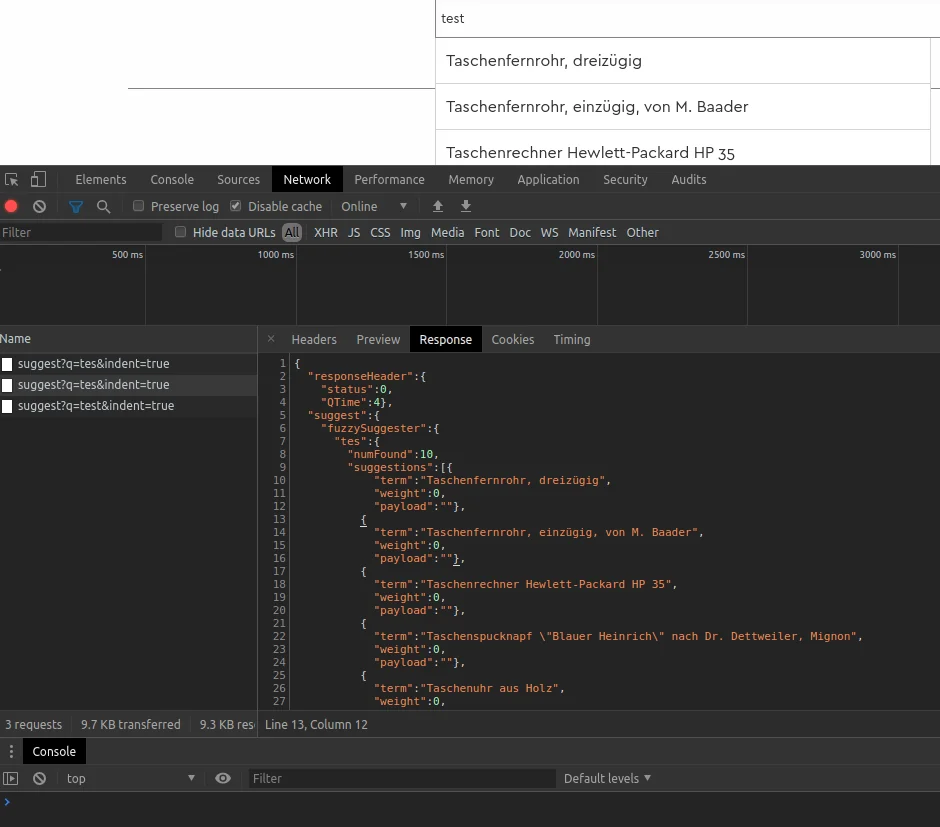
Solr Fuzzy Suggester and Solr Infix Suggester over Ajax
For effective website search, it is important that users quickly and easily find relevant results. Solr Fuzzy Suggester and Solr Infix Suggester offer an efficient solution for this. They can be called and filtered via Ajax queries.
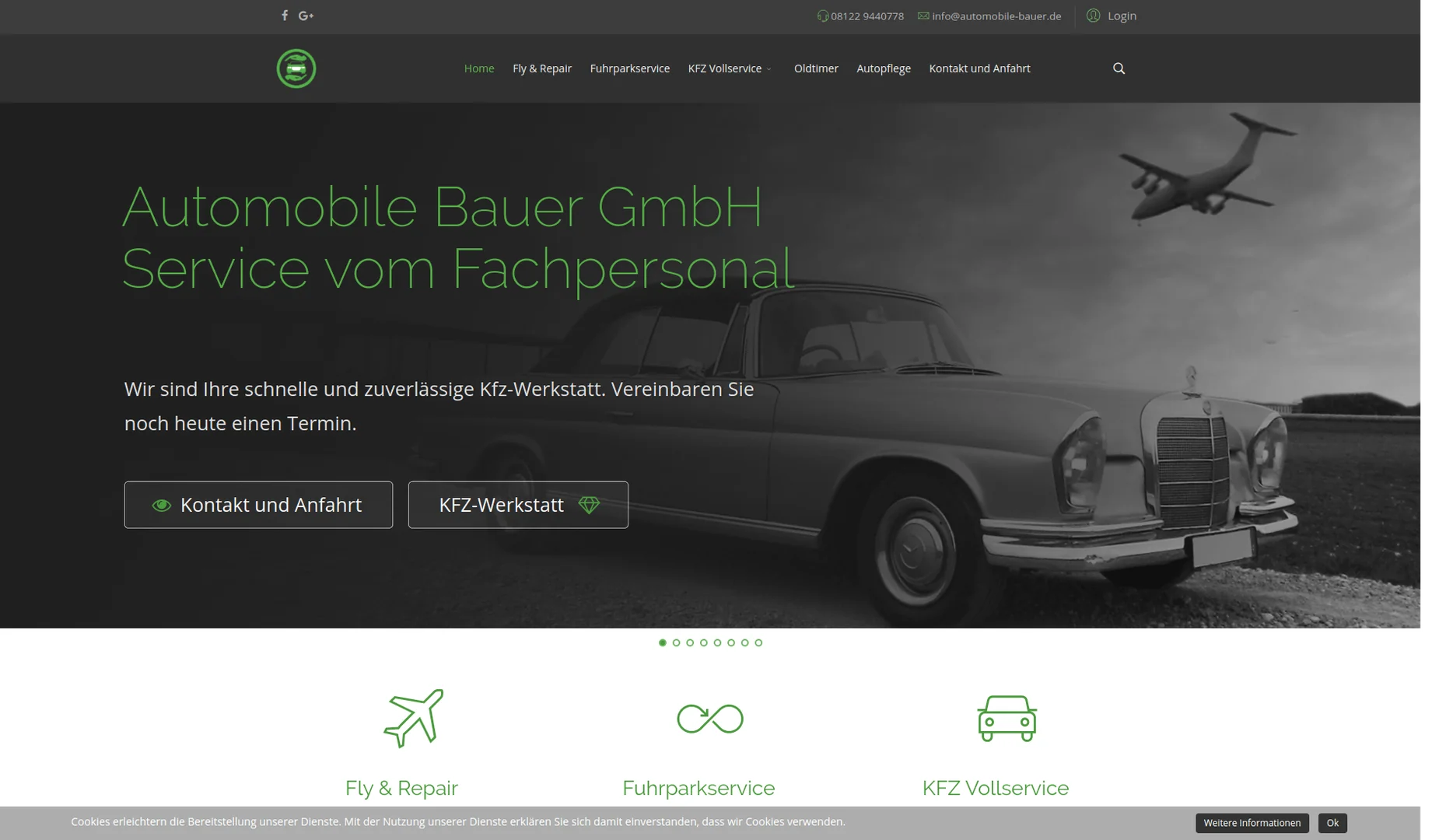
Web Presence Making a Statement - Automobile Bauer Joomla

SEO Mobile Web Application Munich
SEO for Mobile Web Applications in Munich: clean indexing, analytics, structured sitemaps and Google News optimization as a solid foundation for sustainable visibility.

From Raw Data to Verifiable AI Context: A Practical Architecture for Agent-Ready Information
AI systems do not mainly fail because they lack more text. They fail because identity, provenance, conflicts, unknowns and validity are often missing from the context they receive. This article documents a practical architecture for turning heterogeneous business data into controlled, reusable information objects for humans, applications and agents.

From Global Business to the Kitchen — Enterprise Media OS That Scales Calmly (stajic.de + Showcase Portals)
Global strategy only works if it survives the kitchen: constraints, cadence, clarity, and measurable output. Here’s how an Enterprise Media OS turns market noise into repeatable systems — with figure.rocks and loving.rocks as showcase implementations.
Enterprise-Grade Production Platform
Enterprise-grade CMS- und Portal-Plattform mit Multi-Database-Architektur, echter Mehrsprachigkeit und professioneller WordPress-Migration. Entwickelt für skalierbare, sichere und zukunftsfähige Publishing-Systeme.
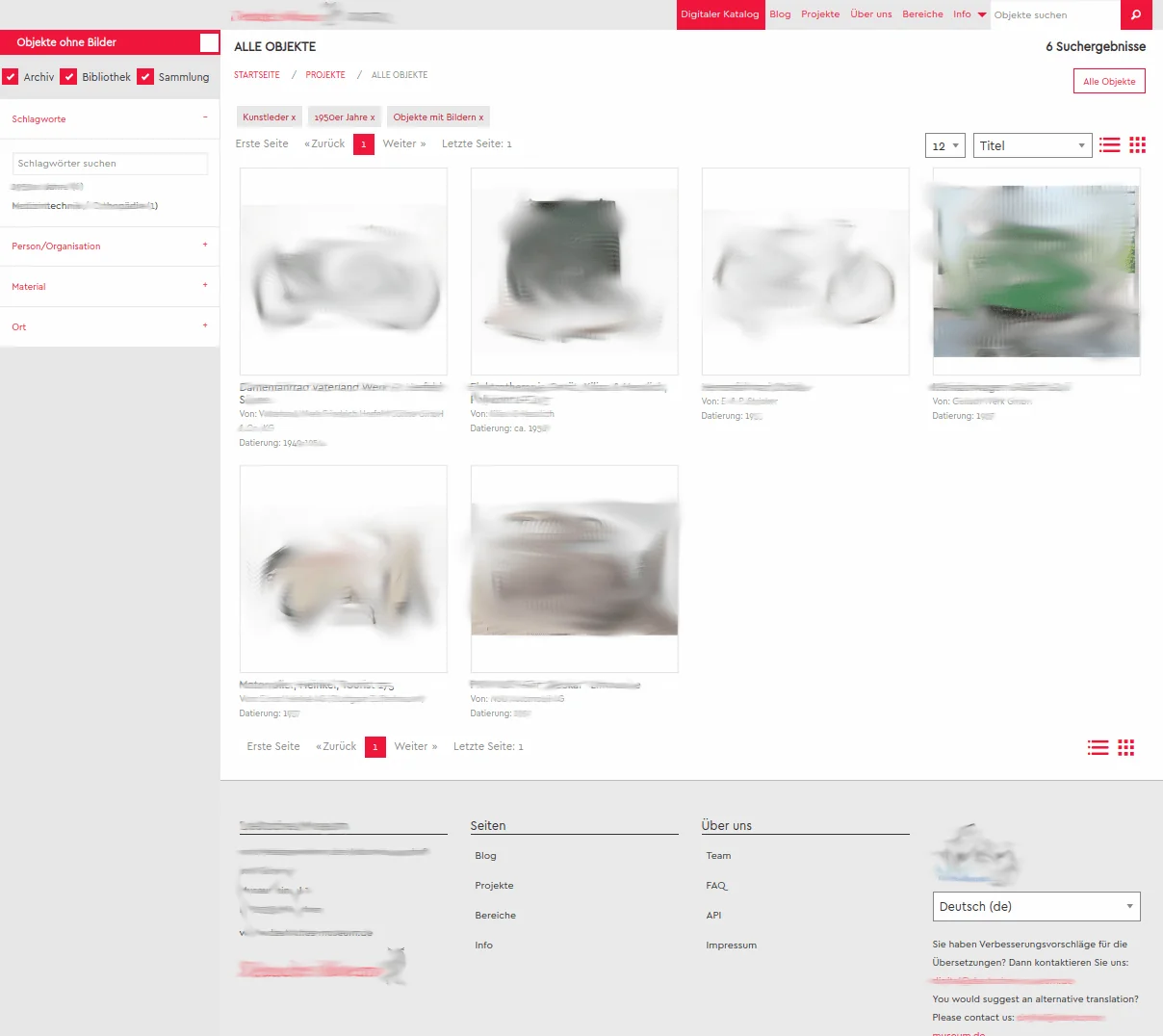
Digitalization portal for Archive Museum Library
The Deutsche Museum Digital is dedicated to the digitalization and scientific exploration of the collections of objects, archives, and library of the Deutsches Museum.

Local Roots, Global Reach: Implementing the Enterprise Business OS
A deep dive into transforming local business operations through the Enterprise Business OS, focusing on clear positioning, high-output content engines, and strategic distribution systems.

Mobile App Creation with Apache Cordova: Cross-Platform Case Study
Explore how Apache Cordova transforms web apps into cross-platform mobile solutions for Android, iOS, and more, with detailed process, tech stack, and benefits.
Presence Platforms — Enterprise Communication That Wins Without Competing
A Presence Platform turns operations into decision-grade clarity: governed claims, repeatable formats, internal linking that routes decisions, and a weekly learning loop that compounds trust and pipeline.