
From Raw Data to Verifiable AI Context: A Practical Architecture for Agent-Ready Information

Most AI projects start too late in the pipeline. They begin with a model, a prompt, or a retrieval layer and only later discover that the underlying data is inconsistent, duplicated, outdated, private, or impossible to trace back to a reliable source.
A more durable architecture starts before retrieval. The first task is to decide what an information object actually is, where it came from, which identity it belongs to, whether another source contradicts it, and under which conditions it is still valid.
What This Really Means
The goal is not to create another knowledge base full of text. The goal is to create information that remains useful when the consumer is no longer a human browsing a website but an application or AI agent making a decision.
From heterogeneous data to controlled context
The Simplest Example
Imagine three data sources describing the same device. One supplier says it has 32 GB of memory, an older PDF says 16 GB, and the manufacturer feed says 32 GB for hardware revision 4. A normal enrichment pipeline may choose one value and overwrite the others. A verifiable pipeline keeps the disagreement visible until identity and revision are resolved.
The result is not simply memory = 32 GB. It is closer to: value 32 GB, source manufacturer feed, revision 4, market EU, observed at a known time, conflicting older source present, current status verified for the resolved revision.
Where the Example Stops Working
Real business data is rarely this clean. Product names drift, identifiers are missing, PDFs use different terminology, fields change meaning between markets, and private tenant data must not leak into another tenant's context. That is why normalization alone is not enough.
A Reusable Information Object
| Field | Purpose |
|---|---|
| Identity | What entity or version does this claim belong to? |
| Value | What is actually asserted? |
| Source | Where did it come from? |
| Status | Verified source, merchant claim, user-provided, derived, inference, unknown or conflicting |
| Observed at | When was it seen? |
| Validity | Where, when and for which version does it apply? |
| Rights | May this source be stored, reused or redistributed? |
| Tenant | Which customer or data owner may use it? |
Why RAG Is Not the First Step
Retrieval can only retrieve what has been indexed. If conflicting, stale or legally restricted data is indexed without governance, RAG can make the answer look better while making the underlying decision less reliable.
A safer order is: rights gate → source classification → identity resolution → claim extraction → provenance → conflict detection → evidence store → retrieval → reasoning.
Agent-Ready Does Not Mean Agent-Controlled
An agent should receive controlled context, not unrestricted authority. The model may reason over the available information, but it should not be allowed to fabricate missing product facts, relax mandatory constraints, bypass source-rights rules or turn uncertainty into certainty.
Why This Matters Beyond One Domain
The same architecture applies to technical products, event planning, software documentation, supplier catalogs, internal knowledge and commerce. The domain rules change, but the core problem remains: identity, provenance, conflicts, validity and controlled reuse.
What Would Change This Architecture?
The architecture should become simpler when the source system already provides canonical identifiers, strict versioning and contractual data quality. It should become stricter when decisions affect regulated products, safety, private data or legally sensitive outcomes.
Conclusion
The useful unit for future AI systems is not just a document or chunk of text. It is a verifiable information object with identity, provenance, status, conflicts and a validity boundary. That is the layer that allows portals, business systems and agents to reuse the same knowledge without pretending that uncertain data is certain.
Related Projects

From Global Business to the Kitchen — Enterprise Media OS That Scales Calmly (stajic.de + Showcase Portals)
Global strategy only works if it survives the kitchen: constraints, cadence, clarity, and measurable output. Here’s how an Enterprise Media OS turns market noise into repeatable systems — with figure.rocks and loving.rocks as showcase implementations.

Web Presence Making a Statement - Automobile Bauer Joomla

Local Roots, Global Reach: Implementing the Enterprise Business OS
A deep dive into transforming local business operations through the Enterprise Business OS, focusing on clear positioning, high-output content engines, and strategic distribution systems.

Mobile App Creation with Apache Cordova: Cross-Platform Case Study
Explore how Apache Cordova transforms web apps into cross-platform mobile solutions for Android, iOS, and more, with detailed process, tech stack, and benefits.

From Vision to Value: Maximizing POS ROI Through Consistent CI Creation and Strategic Branding
In modern retail, bridging the gap from creative vision to financial value requires aligning Corporate Identity (CI) with the Point of Sale (POS). This case study explores the framework for eliminating cognitive friction to enhance ROI.

From Global Business to the Kitchen — A Reverse Communication System That Still Scales
Stop scaling by noise. Start with global signals, reduce them to a few stable truths, and turn them into weekly templates, checklists, and repeatable “menus” that ship real value.

LibreOffice ChatGPT Macro Integration Case Study
Explore the custom Python OpenAI macro integration for ChatGPT in LibreOffice, enhancing workflows with AI assistance directly in your documents.

SEO Mobile Web Application Munich
SEO for Mobile Web Applications in Munich: clean indexing, analytics, structured sitemaps and Google News optimization as a solid foundation for sustainable visibility.

Presence Platforms — Enterprise Communication That Wins Without Competing
A Presence Platform turns operations into decision-grade clarity: governed claims, repeatable formats, internal linking that routes decisions, and a weekly learning loop that compounds trust and pipeline.
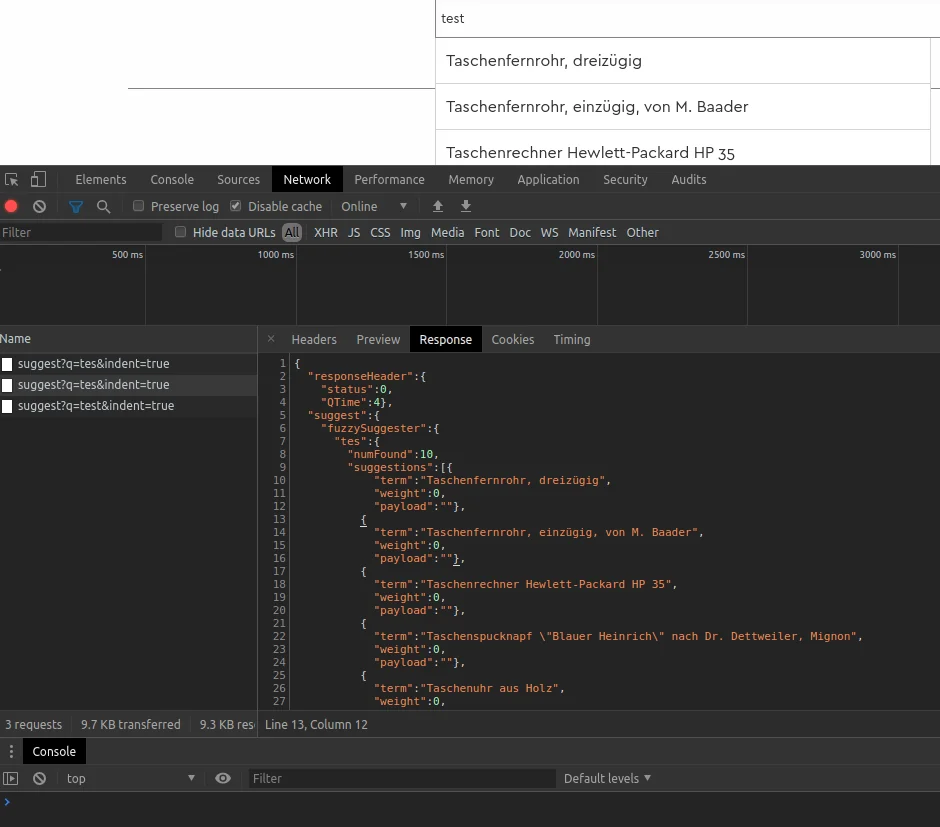
Solr Fuzzy Suggester and Solr Infix Suggester over Ajax
For effective website search, it is important that users quickly and easily find relevant results. Solr Fuzzy Suggester and Solr Infix Suggester offer an efficient solution for this. They can be called and filtered via Ajax queries.

Source of Truth Enterprise Intelligence Platform
A self-hosted, evidence-governed enterprise intelligence platform that turns internal company knowledge, documents and business data into traceable intelligence for research, decisions, monitoring and controlled AI execution.

Enterprise-Grade Production Platform
Enterprise-grade CMS- und Portal-Plattform mit Multi-Database-Architektur, echter Mehrsprachigkeit und professioneller WordPress-Migration. Entwickelt für skalierbare, sichere und zukunftsfähige Publishing-Systeme.