Presence Platforms — Enterprise Communication That Wins Without Competing
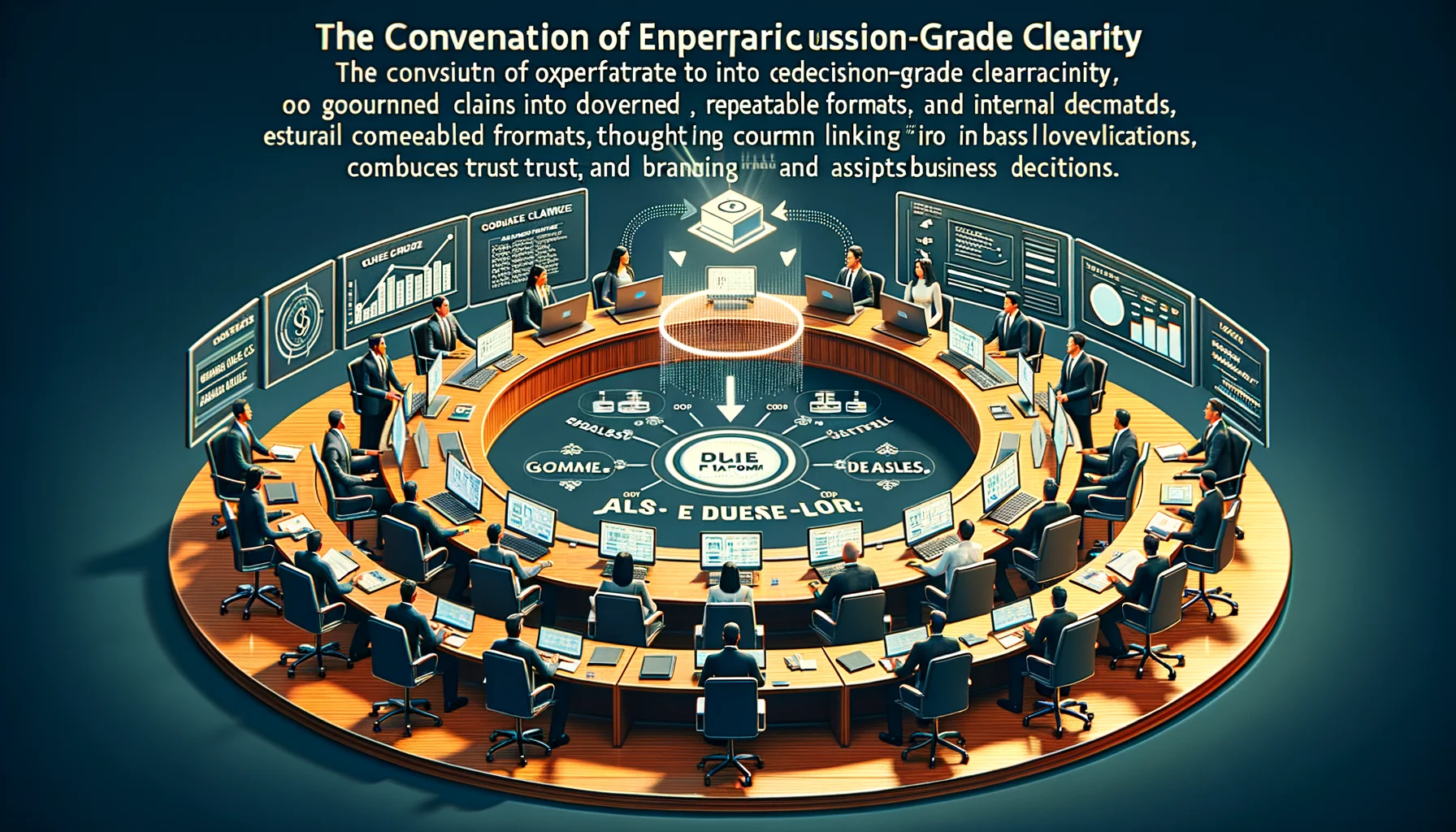
Enterprise buyers don’t reward the loudest voice. They reward the safest decision. That’s why the next era of communication isn’t “more content.” It’s decision-grade clarity: repeatable formats, transparent constraints, and a system that turns real operations into stable trust signals across markets.
This article unifies the full model: local proof translated into global readability, and global complexity reduced into weekly execution. The result is a Presence Platform — a media layer that makes a brand present where decisions are made, without fighting for attention like a typical competitor.
If you want the foundational framework (local proof → global trust signals), use this internal reference: Local Roots, Global Reach — Communication & Media Systems for Modern Business.
What a Presence Platform Is
A Presence Platform is not a blog. It’s not a campaign engine. It’s an operating layer that converts operations into market clarity through repeatable content formats, structured internal linking, and measurable learning loops. It behaves like infrastructure: predictable, governed, and built to compound.
Definition (in one sentence)
A Presence Platform is a system that produces consistent understanding in the market by standardizing how proof is packaged, how decisions are supported, and how content routes readers to the next step.
Why This Model Outperforms “More Marketing”
The web is saturated. Feeds are unstable. Paid channels inflate and decay. In that environment, brute-force output becomes expensive, inconsistent, and risky. Enterprises need a structure that reduces variance: fewer pages, stronger intent match, and a governance layer that keeps claims safe and credible.
The Enterprise Truth
Most enterprise marketing fails not because teams lack talent, but because the organization lacks a system that makes quality repeatable across teams, regions, and time.
Hidden Costs of the Old Approach
- Message drift: different pages promise different outcomes.
- Format chaos: every team invents structure and tone from scratch.
- Channel roulette: distribution depends on mood and trends, not intent.
- Compliance friction: legal review slows down because claims are inconsistent.
- No compounding: content spikes and dies instead of becoming a library.
- Trust debt: overstated certainty and unclear constraints create backlash.
The Win-Win: Visitors, Brands, and Services
Presence Platforms are built around decision progress. That creates a structural win-win: visitors get clarity, brands gain credibility, and service providers receive qualified demand. The system works because it does not depend on persuasion — it depends on making the decision easier and safer.
For Visitors: Less Noise, More Certainty
- Criteria-first guidance: clear trade-offs instead of hype.
- Compatibility answers: explicit yes/no with constraints and versions.
- Shortlists and next steps: no dead ends in the journey.
- Transparent scope: what is covered, what is not, and why.
- Updates as a feature: pages improve instead of going stale.
For Brands: Credibility Without Aggression
- Presence where decisions happen (search intent and comparison moments).
- A consistent standard of explanation that scales across teams.
- Lower reputational risk via clear claims boundaries.
- More durable growth via evergreen libraries and refresh cycles.
- A trust signature: transparency becomes a recognizable brand trait.
For Services: Qualified Demand, Faster Sales Cycles
- Inbound leads arrive educated and pre-qualified by the library.
- Fewer repetitive explanations in sales calls.
- Clear routing: content paths map to buyer readiness.
- Better lead quality: visitors self-select through constraints and criteria.
- Measurable pipeline impact: content ties to actions, not impressions.
Not Competition — Benchmarking for Decision Safety
Enterprises rarely buy because a brand “beats competitors.” They buy because the decision looks safe: clear scope, credible proof, predictable delivery, and low downside risk. Presence Platforms support that by using benchmarking as a quality discipline — comparing against reference standards and decision criteria, not attacking competitors.
Compare Up: The Professional Move
The strongest positioning is often implicit: your formats, transparency, and proof discipline show that you operate at a reference level. This attracts serious buyers because it signals maturity: you’re optimizing for long-term trust, not short-term clicks.
Language That Signals Quality Without Hype
- Decision-grade clarity (helps people choose with confidence).
- Benchmark-ready formats (consistent criteria and structure).
- Reference-level documentation (clear scope, constraints, update history).
- Transparent constraints (tested/not tested, what was measured).
- Governed claims (safe promises tied to proof types).
The Operating System Behind the Platform
A Presence Platform works when it is run like an OS. That means: stable rules, a small set of formats, deliberate distribution paths, internal linking architecture, and a weekly learning loop. This is what makes enterprise output consistent without slowing down.
1) Messaging Rules (to prevent drift)
Messaging is not creativity. It’s constraint. The OS defines a message map: audience, job-to-be-done, promise, proof types, packaging, and boundaries. That map prevents contradictions across pages and teams.
2) Formats (to make quality repeatable)
Formats are quality control. Enterprises scale when they refuse format chaos and commit to a few structures that match decisions. Predictability is a trust feature.
A Practical Format Set
- Decision hubs: overview + routing.
- Comparisons: criteria-first trade-offs.
- Compatibility/requirements: explicit yes/no with scope.
- Implementation guides: remove onboarding friction.
- Change notes: updates, context, next action.
3) Internal Linking (to turn pages into a library)
Internal linking is not decoration. It’s navigation design. The reader should never reach a dead end. Each page routes to context (hub), trade-off (comparison), proof (evidence), and action (next step).
4) Governance (to stay professional and safe)
Governance isn’t bureaucracy when it is embedded into templates. Claims are scoped. Disclosures are standardized. Testing labels are explicit. Updates are logged. This reduces legal risk and makes review faster.
5) Weekly Learning Loop (to compound results)
The weekly loop is simple: identify winners, refresh them, and double down on what moves the pipeline. The point is compounding — building assets that improve instead of campaigns that expire.
Metrics That Matter
- Decision flow clicks (hub → comparison → proof → action).
- Qualified inquiries and lead quality (not raw traffic).
- Return rate and saves/shares (trust signals).
- Refresh impact (did an update improve outcomes).
- Time-to-publish and time-to-refresh (execution health).
Why Portal Products Fit Enterprise Buyers
Portal products work because they feel like infrastructure, not advertising. They reduce risk for the buyer: the information is structured, criteria-led, and transparent. That is exactly what enterprise teams need when they justify decisions internally.
Traits of an Enterprise-Grade Portal
- Stable formats that readers can rely on.
- Clear scope and constraints (no hidden persuasion).
- Update cycles as part of the product.
- Internal linking that mirrors decision pathways.
- A governance layer that makes claims safe and consistent.
stajic.de as the Base Layer (Enterprise Media OS)
In this ecosystem, stajic.de functions as the base layer: a single OS that can unify multiple portal products, service lines, and enterprise offerings under one governed system. It reduces operational entropy: content becomes a predictable pipeline rather than a sporadic effort.
What the Base Layer Enables
- One set of messaging rules across brands and markets.
- One set of formats and templates that scale quality.
- One governance layer to keep claims safe and review fast.
- A unified link graph and navigation logic across properties.
- A weekly loop that improves pipeline performance over time.
The base concept is documented here: Local Roots, Global Reach — Communication & Media Systems for Modern Business.
Showcases: figure.rocks and loving.rocks (Same OS, Different Trust Dynamics)
figure.rocks and loving.rocks demonstrate the same operating principles in two different decision environments. One rewards precision and transparent constraints in technical choices. The other rewards calm structure and criteria-led shortlists in emotionally meaningful choices.
figure.rocks: High-Signal Decision Media
- Intent-first pages: comparisons, compatibility matrices, buying guides.
- Predictable formats that become a trust contract with readers.
- Constraints are visible: tested/not tested, what was measured, what was not.
- Evergreen refresh cycles that compound authority and pipeline.
loving.rocks: Quiet, High-Trust Decision Support
- Criteria-led comparisons that feel elegant, not salesy.
- Shortlists that respect the buyer’s pace.
- Disclosure and scope clarity to keep trust clean.
- Micro-tools that create retention: checklists, timelines, question prompts.
The core lesson is operational: when you standardize trust mechanics, your output becomes consistent and your brand becomes present in the moments that decide revenue.
What This Enables for Enterprise Clients
The practical result is a system enterprise teams can adopt without chaos. Instead of one-off campaigns, you get a governed pipeline: decision hubs, comparisons, compatibility pages, proof assets, and next-step routing — all connected and measurable.
Typical Outcomes (Stated Safely)
- Higher-quality inbound demand because pages match intent and reduce uncertainty.
- Shorter sales cycles because the library educates and qualifies upfront.
- Lower reputational risk through governed claims and transparent scope.
- More durable growth through evergreen assets and refresh discipline.
- Better cross-team alignment because formats and messaging rules are shared.
Implementation Model (Simple, Enterprise-Friendly)
- Freeze a one-page message map (audience, promise, proof, boundaries).
- Select 3–5 formats and ship only those for 8–12 weeks.
- Build the link graph so every page routes to a next decision.
- Embed governance templates (claims, disclosures, testing labels, updates).
- Run a weekly loop: refresh winners, prune losers, expand what converts.
One Additional Idea: Boardroom Pages
For enterprise audiences, one of the highest converting page types is a boardroom-grade page: it reads like internal decision material, not marketing. It uses calm structure, scoped claims, and clear criteria so the buyer can forward it internally without rewriting it.
Boardroom Page Structure
- Context: why this decision matters now.
- Criteria: how a rational buyer evaluates options.
- Options: structured overview without pressure language.
- Constraints: scope, assumptions, what is not covered.
- Proof: evidence types and update history.
- Next step: consult/demo/shortlist — aligned to buyer readiness.
Conclusion (Long Story, Short Finish)
You don’t win enterprise attention by fighting competitors. You win by making decisions safe: clear scope, credible proof, predictable formats, and a system that compounds. Presence Platforms do that by turning communication into infrastructure — and turning infrastructure into pipeline.
Related Projects

Mobile App Creation with Apache Cordova: Cross-Platform Case Study
Explore how Apache Cordova transforms web apps into cross-platform mobile solutions for Android, iOS, and more, with detailed process, tech stack, and benefits.

Source of Truth Enterprise Intelligence Platform
A self-hosted, evidence-governed enterprise intelligence platform that turns internal company knowledge, documents and business data into traceable intelligence for research, decisions, monitoring and controlled AI execution.

From Global Business to the Kitchen — A Reverse Communication System That Still Scales
Stop scaling by noise. Start with global signals, reduce them to a few stable truths, and turn them into weekly templates, checklists, and repeatable “menus” that ship real value.

LibreOffice ChatGPT Macro Integration Case Study
Explore the custom Python OpenAI macro integration for ChatGPT in LibreOffice, enhancing workflows with AI assistance directly in your documents.

SEO Mobile Web Application Munich
SEO for Mobile Web Applications in Munich: clean indexing, analytics, structured sitemaps and Google News optimization as a solid foundation for sustainable visibility.

Local Roots, Global Reach: Implementing the Enterprise Business OS
A deep dive into transforming local business operations through the Enterprise Business OS, focusing on clear positioning, high-output content engines, and strategic distribution systems.

Enterprise-Grade Production Platform
Enterprise-grade CMS- und Portal-Plattform mit Multi-Database-Architektur, echter Mehrsprachigkeit und professioneller WordPress-Migration. Entwickelt für skalierbare, sichere und zukunftsfähige Publishing-Systeme.
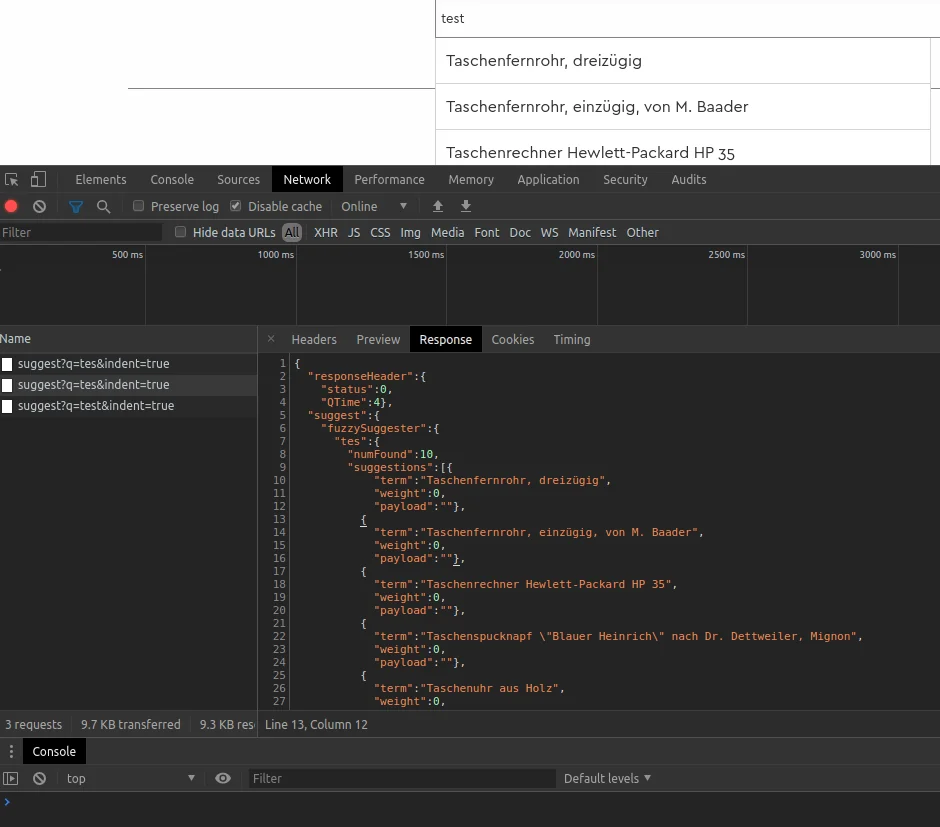
Solr Fuzzy Suggester and Solr Infix Suggester over Ajax
For effective website search, it is important that users quickly and easily find relevant results. Solr Fuzzy Suggester and Solr Infix Suggester offer an efficient solution for this. They can be called and filtered via Ajax queries.
Digitalization portal for Archive Museum Library
The Deutsche Museum Digital is dedicated to the digitalization and scientific exploration of the collections of objects, archives, and library of the Deutsches Museum.

From Vision to Value: Maximizing POS ROI Through Consistent CI Creation and Strategic Branding
In modern retail, bridging the gap from creative vision to financial value requires aligning Corporate Identity (CI) with the Point of Sale (POS). This case study explores the framework for eliminating cognitive friction to enhance ROI.

From Global Business to the Kitchen — Enterprise Media OS That Scales Calmly (stajic.de + Showcase Portals)
Global strategy only works if it survives the kitchen: constraints, cadence, clarity, and measurable output. Here’s how an Enterprise Media OS turns market noise into repeatable systems — with figure.rocks and loving.rocks as showcase implementations.