
Local Roots, Global Reach: Implementing the Enterprise Business OS

Most businesses are forced to operate in two realities at once: local constraints (team size, delivery, reputation, cashflow) and global exposure (search, feeds, marketplaces, reviews). The reliable way to scale isn’t louder marketing — it’s a communication and media system that turns real operations into a consistent market signal.
A system means repeatability: what you say, how you package it, where it travels, and how it improves — without depending on luck, hype, or constant reinvention.
The Core Thesis
Local roots are an unfair advantage: proximity to reality, real outcomes, real constraints, real stories. Global reach is not a budget problem — it’s a structure problem. The job is to translate local proof into globally readable trust signals.
In practice, that translation requires engineering discipline: fewer moving parts, clear interfaces, and measurable feedback loops.
Definition
A communication & media system is a set of repeatable decisions that produce consistent understanding in the market: positioning rules, content formats, distribution channels, and measurement loops.
Why Most Communication Doesn’t Scale
Most teams confuse activity with structure. They post, publish, and launch campaigns — but they don’t define the rules that make the output consistent. Without rules, quality oscillates, distribution becomes random, and trust is fragile.
Common Failure Modes
- Message drift: different pages promise different things.
- Format chaos: every piece is reinvented from scratch.
- Channel roulette: publishing where it feels good, not where it converts.
- No learning loop: output increases, outcomes stay flat.
- Trust debt: exaggerated claims, unclear testing, hidden incentives.
The Operating System
The system below works because it treats communication as infrastructure: a repeatable pipeline from truth → clarity → reach → action → learning.
1) Strategy: Positioning & Messaging Rules
Professional messaging is not wordplay. It’s a constraint system that prevents drift. You don’t need more claims — you need fewer, stronger ones that are provable.
The One-Page Message Map
- Audience: who this is specifically for (and who it is not for).
- Job-to-be-done: what problem is solved in plain language.
- Promise: the outcome you reliably deliver.
- Proof: evidence types you can show (cases, measurements, constraints).
- Offer: what the buyer gets, and how it is packaged.
- Boundary: conditions where you won’t claim performance.
Professional Claims
Avoid absolute promises. A stronger, safer stance is outcome discipline: scope definition, KPI instrumentation, and optimization cadence. Say what you measure, measure what you say.
2) Content: Repeatable Formats That Build Trust
Content scales when it becomes a library of assets, not a stream of posts. The trick is choosing formats that match how people decide.
High-Trust Formats
- Comparisons: structured tradeoffs (not hype).
- Decision guides: criteria-first selection frameworks.
- Compatibility answers: clear yes/no with constraints.
- Field notes: what changed and why it matters.
- Evergreen FAQs: remove friction from buying and onboarding.
Editorial Standard (The Anti-AI Smell Test)
- Specificity: concrete constraints, not generic adjectives.
- Tradeoffs: what is worse, not only what is better.
- Transparency: tested/not tested, assumptions, and scope.
- Structure: headings that let a reader skim to decisions.
- Tone: calm confidence; no exaggerated certainty.
3) Distribution: Design How Content Travels
Distribution is not “share on socials.” Distribution is choosing the correct path for each content type: capture demand, create demand, and borrow trust.
Three Modes
- Demand capture: search intent pages that answer specific queries.
- Demand creation: short-form and narratives that create awareness.
- Borrowed trust: partnerships, features, and community mentions.
Internal Linking as a Growth Lever
The highest leverage SEO is often internal: decision hubs linking into comparisons, guides, and FAQs. This turns scattered posts into a navigable library and increases conversion because readers don’t hit dead ends.
4) Measurement: Weekly Learning Loop
Measurement is not vanity dashboards. It’s a weekly loop that connects content and distribution to qualified actions — inquiries, demo requests, purchases, or shortlist clicks.
What to Track
- Discovery: impressions and new users from search and feeds.
- Engagement quality: scroll depth, return rate, saved/shared signals.
- Conversion: inquiry rate, shortlist clicks, lead quality.
- Retention: email subscribers, repeat visitors, revisit cycles.
- Efficiency: time-to-publish and update cadence.
Governance (Staying Professional and Safe)
- Separate editorial judgment from commercial incentives.
- Disclose monetization relationships when applicable.
- Avoid absolute promises; define scope and measurement.
- Maintain correction/update policy for accuracy.
Illustrations: figure.rocks and loving.rocks
Two portal products illustrate the same system applied to different trust dynamics. One focuses on high-signal tech decisions. The other focuses on calm decision support for meaningful life moments.
figure.rocks: How it can beat “big media noise”
The advantage is structural: intent-matching pages, predictable formats, and transparent constraints. It wins trust by being consistent and specific rather than loud.
Advantages
- Fewer, stronger pages that match search intent (comparisons, compatibility, price guides).
- Predictable formats that readers learn to trust.
- Transparent review constraints (tested/not tested, what was measured).
- Evergreen pages with planned update cycles.
- A library feel: readers navigate decisions, not news.
Suggestions & Opportunities
- Build decision hubs that route into comparisons/guides/compatibility (internal linking).
- Standardize scorecards so evaluations are consistent across categories.
- Use refresh cycles instead of endless new posts to grow authority.
- Grow an owned channel (newsletter/watchlist) to reduce platform dependency.
- Make transparency a visible brand signature (constraints, assumptions, updates).
loving.rocks: Quiet, high-trust decision help
This portal archetype wins by reducing anxiety. The experience is calm, criteria-led, and curated — more like a private guide than a storefront.
Advantages
- Premium tone and structure increase trust and time-on-page.
- Decision support first: conversions happen naturally without pressure.
- Curated comparison pages can feel like a tasteful showroom.
- Evergreen demand: planning and decision queries are stable year-round.
- Trust compounds: consistent guidance becomes a reference.
Suggestions & Opportunities (Classy + Compliant)
- Comparisons based on criteria (fit, material, durability, symbolism, timeline).
- Use shortlists instead of aggressive “buy now” language.
- Avoid hidden persuasion: disclose relationships if links are monetized.
- Publish decision frameworks that route into shortlists (editorial first).
- Add micro-tools (checklists, timelines, question prompts) for retention.
Closing: Why This Is Worth Building
This approach is worth it because it creates compounding assets. Instead of spending effort on endless campaigns, you build a library that improves with time: clearer positioning, stronger formats, better distribution paths, and a weekly loop that turns reality into advantage.
The Minimal Commitments
- One-page message map (prevents drift).
- Three to five repeatable formats (prevents chaos).
- Designed distribution paths (prevents randomness).
- Weekly measurement loop (prevents stagnation).
Local Roots, Global Reach — Communication & Media Systems for Modern Business
Most businesses are forced to operate in two realities at once: local constraints (team size, delivery, reputation, cashflow) and global exposure (search, feeds, marketplaces, reviews). The reliable way to scale isn’t louder marketing — it’s a communication and media system that turns real operations into a consistent market signal.
A system means repeatability: what you say, how you package it, where it travels, and how it improves — without depending on luck, hype, or constant reinvention.
The Core Thesis
Local roots are an unfair advantage: proximity to reality, real outcomes, real constraints, real stories. Global reach is not a budget problem — it’s a structure problem. The job is to translate local proof into globally readable trust signals.
In practice, that translation requires engineering discipline: fewer moving parts, clear interfaces, and measurable feedback loops.
Definition
A communication & media system is a set of repeatable decisions that produce consistent understanding in the market: positioning rules, content formats, distribution channels, and measurement loops.
Why Most Communication Doesn’t Scale
Most teams confuse activity with structure. They post, publish, and launch campaigns — but they don’t define the rules that make the output consistent. Without rules, quality oscillates, distribution becomes random, and trust is fragile.
Common Failure Modes
- Message drift: different pages promise different things.
- Format chaos: every piece is reinvented from scratch.
- Channel roulette: publishing where it feels good, not where it converts.
- No learning loop: output increases, outcomes stay flat.
- Trust debt: exaggerated claims, unclear testing, hidden incentives.
The Operating System
The system below works because it treats communication as infrastructure: a repeatable pipeline from truth → clarity → reach → action → learning.
1) Strategy: Positioning & Messaging Rules
Professional messaging is not wordplay. It’s a constraint system that prevents drift. You don’t need more claims — you need fewer, stronger ones that are provable.
The One-Page Message Map
- Audience: who this is specifically for (and who it is not for).
- Job-to-be-done: what problem is solved in plain language.
- Promise: the outcome you reliably deliver.
- Proof: evidence types you can show (cases, measurements, constraints).
- Offer: what the buyer gets, and how it is packaged.
- Boundary: conditions where you won’t claim performance.
Professional Claims
Avoid absolute promises. A stronger, safer stance is outcome discipline: scope definition, KPI instrumentation, and optimization cadence. Say what you measure, measure what you say.
2) Content: Repeatable Formats That Build Trust
Content scales when it becomes a library of assets, not a stream of posts. The trick is choosing formats that match how people decide.
High-Trust Formats
- Comparisons: structured tradeoffs (not hype).
- Decision guides: criteria-first selection frameworks.
- Compatibility answers: clear yes/no with constraints.
- Field notes: what changed and why it matters.
- Evergreen FAQs: remove friction from buying and onboarding.
Editorial Standard (The Anti-AI Smell Test)
- Specificity: concrete constraints, not generic adjectives.
- Tradeoffs: what is worse, not only what is better.
- Transparency: tested/not tested, assumptions, and scope.
- Structure: headings that let a reader skim to decisions.
- Tone: calm confidence; no exaggerated certainty.
3) Distribution: Design How Content Travels
Distribution is not “share on socials.” Distribution is choosing the correct path for each content type: capture demand, create demand, and borrow trust.
Three Modes
- Demand capture: search intent pages that answer specific queries.
- Demand creation: short-form and narratives that create awareness.
- Borrowed trust: partnerships, features, and community mentions.
Internal Linking as a Growth Lever
The highest leverage SEO is often internal: decision hubs linking into comparisons, guides, and FAQs. This turns scattered posts into a navigable library and increases conversion because readers don’t hit dead ends.
4) Measurement: Weekly Learning Loop
Measurement is not vanity dashboards. It’s a weekly loop that connects content and distribution to qualified actions — inquiries, demo requests, purchases, or shortlist clicks.
What to Track
- Discovery: impressions and new users from search and feeds.
- Engagement quality: scroll depth, return rate, saved/shared signals.
- Conversion: inquiry rate, shortlist clicks, lead quality.
- Retention: email subscribers, repeat visitors, revisit cycles.
- Efficiency: time-to-publish and update cadence.
Governance (Staying Professional and Safe)
- Separate editorial judgment from commercial incentives.
- Disclose monetization relationships when applicable.
- Avoid absolute promises; define scope and measurement.
- Maintain correction/update policy for accuracy.
Illustrations: figure.rocks and loving.rocks
Two portal products illustrate the same system applied to different trust dynamics. One focuses on high-signal tech decisions. The other focuses on calm decision support for meaningful life moments.
figure.rocks: How it can beat “big media noise”
The advantage is structural: intent-matching pages, predictable formats, and transparent constraints. It wins trust by being consistent and specific rather than loud.
Advantages
- Fewer, stronger pages that match search intent (comparisons, compatibility, price guides).
- Predictable formats that readers learn to trust.
- Transparent review constraints (tested/not tested, what was measured).
- Evergreen pages with planned update cycles.
- A library feel: readers navigate decisions, not news.
Suggestions & Opportunities
- Build decision hubs that route into comparisons/guides/compatibility (internal linking).
- Standardize scorecards so evaluations are consistent across categories.
- Use refresh cycles instead of endless new posts to grow authority.
- Grow an owned channel (newsletter/watchlist) to reduce platform dependency.
- Make transparency a visible brand signature (constraints, assumptions, updates).
loving.rocks: Quiet, high-trust decision help
This portal archetype wins by reducing anxiety. The experience is calm, criteria-led, and curated — more like a private guide than a storefront.
Advantages
- Premium tone and structure increase trust and time-on-page.
- Decision support first: conversions happen naturally without pressure.
- Curated comparison pages can feel like a tasteful showroom.
- Evergreen demand: planning and decision queries are stable year-round.
- Trust compounds: consistent guidance becomes a reference.
Suggestions & Opportunities (Classy + Compliant)
- Comparisons based on criteria (fit, material, durability, symbolism, timeline).
- Use shortlists instead of aggressive “buy now” language.
- Avoid hidden persuasion: disclose relationships if links are monetized.
- Publish decision frameworks that route into shortlists (editorial first).
- Add micro-tools (checklists, timelines, question prompts) for retention.
Closing: Why This Is Worth Building
This approach is worth it because it creates compounding assets. Instead of spending effort on endless campaigns, you build a library that improves with time: clearer positioning, stronger formats, better distribution paths, and a weekly loop that turns reality into advantage.
The Minimal Commitments
- One-page message map (prevents drift).
- Three to five repeatable formats (prevents chaos).
- Designed distribution paths (prevents randomness).
- Weekly measurement loop (prevents stagnation).
Related Projects

Digitalization portal for Archive Museum Library
The Deutsche Museum Digital is dedicated to the digitalization and scientific exploration of the collections of objects, archives, and library of the Deutsches Museum.

SEO Mobile Web Application Munich
SEO for Mobile Web Applications in Munich: clean indexing, analytics, structured sitemaps and Google News optimization as a solid foundation for sustainable visibility.

From Global Business to the Kitchen — Enterprise Media OS That Scales Calmly (stajic.de + Showcase Portals)
Global strategy only works if it survives the kitchen: constraints, cadence, clarity, and measurable output. Here’s how an Enterprise Media OS turns market noise into repeatable systems — with figure.rocks and loving.rocks as showcase implementations.

From Global Business to the Kitchen — A Reverse Communication System That Still Scales
Stop scaling by noise. Start with global signals, reduce them to a few stable truths, and turn them into weekly templates, checklists, and repeatable “menus” that ship real value.

From Raw Data to Verifiable AI Context: A Practical Architecture for Agent-Ready Information
AI systems do not mainly fail because they lack more text. They fail because identity, provenance, conflicts, unknowns and validity are often missing from the context they receive. This article documents a practical architecture for turning heterogeneous business data into controlled, reusable information objects for humans, applications and agents.

Presence Platforms — Enterprise Communication That Wins Without Competing
A Presence Platform turns operations into decision-grade clarity: governed claims, repeatable formats, internal linking that routes decisions, and a weekly learning loop that compounds trust and pipeline.

Source of Truth Enterprise Intelligence Platform
A self-hosted, evidence-governed enterprise intelligence platform that turns internal company knowledge, documents and business data into traceable intelligence for research, decisions, monitoring and controlled AI execution.

From Vision to Value: Maximizing POS ROI Through Consistent CI Creation and Strategic Branding
In modern retail, bridging the gap from creative vision to financial value requires aligning Corporate Identity (CI) with the Point of Sale (POS). This case study explores the framework for eliminating cognitive friction to enhance ROI.
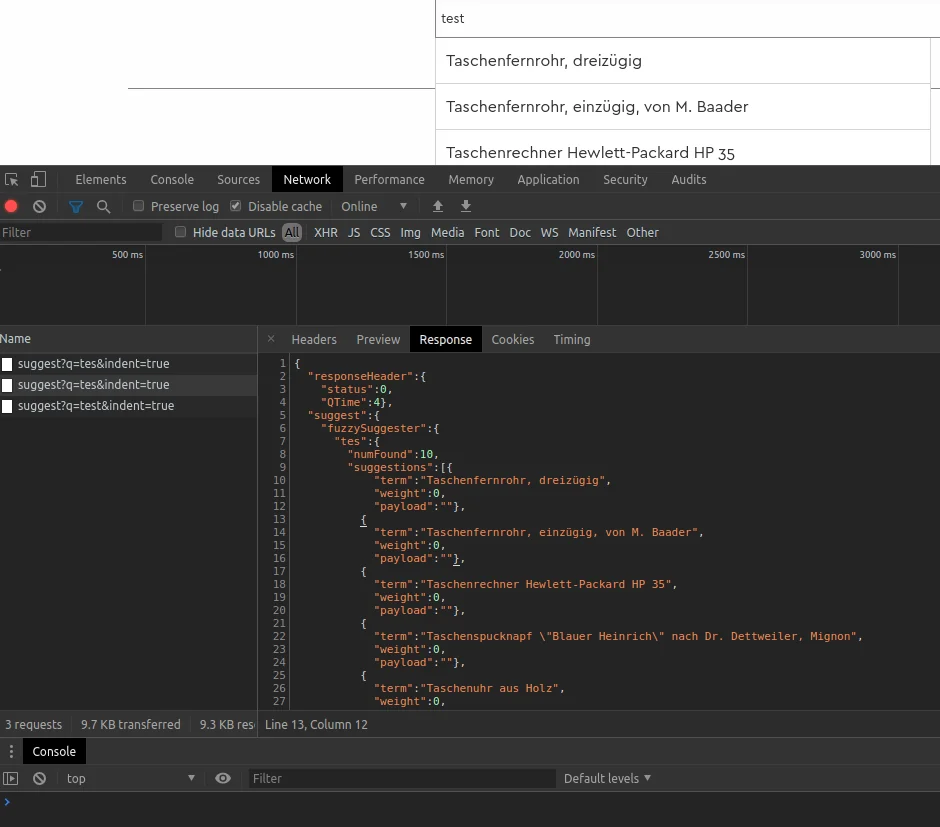
Solr Fuzzy Suggester and Solr Infix Suggester over Ajax
For effective website search, it is important that users quickly and easily find relevant results. Solr Fuzzy Suggester and Solr Infix Suggester offer an efficient solution for this. They can be called and filtered via Ajax queries.

Web Presence Making a Statement - Automobile Bauer Joomla

LibreOffice ChatGPT Macro Integration Case Study
Explore the custom Python OpenAI macro integration for ChatGPT in LibreOffice, enhancing workflows with AI assistance directly in your documents.

Mobile App Creation with Apache Cordova: Cross-Platform Case Study
Explore how Apache Cordova transforms web apps into cross-platform mobile solutions for Android, iOS, and more, with detailed process, tech stack, and benefits.