From Vision to Value: Maximizing POS ROI Through Consistent CI Creation and Strategic Branding

Bridging the Gap Between Creative Vision and Retail Reality
In the high-stakes environment of modern retail, the distance between a creative vision and its financial realization is often where value is lost. Companies frequently invest heavily in high-level brand strategy and Corporate Identity (CI) development, only to see execution falter at the critical moment of purchase. The disconnect between a brand's theoretical promise and its physical manifestation at the Point of Sale (POS) creates what behavioral economists call "cognitive friction"—a subtle mental resistance that causes consumers to hesitate, reducing conversion rates and ultimately diminishing Return on Investment (ROI).
This case study examines the strategic methodology required to transform brand aesthetics from a subjective expense into a measurable asset. By treating CI not merely as a design guideline but as a functional component of the sales funnel, organizations can create a seamless, high-conversion growth framework. The objective is to move from abstract vision to tangible value, ensuring that every visual element at the POS serves a specific, measurable commercial purpose.
Overview: The Challenge of Consistency and the Strategic Solution
The primary challenge facing multi-location retailers and global brands is the degradation of brand integrity as it scales. As a brand moves from the design studio to hundreds or thousands of physical locations, inconsistencies inevitably arise. These inconsistencies are not merely aesthetic annoyances; they are financial liabilities. When a customer encounters a POS environment that contradicts the brand's digital presence or advertising promise, trust is eroded. This erosion manifests as lower dwell times, reduced basket sizes, and a decline in customer loyalty.
The solution requires a paradigm shift: viewing the POS as the ultimate validation of the Corporate Identity. The process begins with a comprehensive audit of the "Experience Gap"—the difference between the intended brand strategy and the actual in-store execution. Following this, a centralized CI governance framework is established. This framework dictates that every physical asset, from signage to shelving, must be modular, scalable, and directly tied to the core brand narrative. By standardizing these elements, brands eliminate the cognitive load on the customer, making the path to purchase intuitive and frictionless.
To read more about strategic branding and ROI, you can visit the latest insights on the topic. This strategic alignment ensures that the POS becomes a high-performance engine for growth, rather than a passive display area. The methodology focuses on repeatability, ensuring that a successful high-ROI setup in a flagship store can be replicated cost-effectively across a franchise network or global footprint.
Key Benefits of CI-Driven POS Optimization
- Elimination of Cognitive Friction: A consistent visual language across digital and physical channels reduces the mental effort required for customers to recognize and trust the brand, leading to faster purchasing decisions.
- Measurable ROI Improvement: By standardizing POS elements, production costs decrease through economies of scale, while conversion rates increase due to improved customer experience, directly impacting the bottom line.
- Enhanced Brand Equity: Consistent execution reinforces brand authority. When the physical environment perfectly matches the marketing promise, customer lifetime value (CLV) increases.
- Operational Efficiency: A defined CI framework simplifies decision-making for store managers and visual merchandisers, reducing time-to-market for new campaigns and seasonal rollouts.
- Scalability: A modular CI approach allows for rapid expansion into new markets without diluting the brand identity, ensuring that the "Vision to Value" pipeline remains intact regardless of geography.
Technical Details: The Infrastructure of Consistency
Achieving this level of synchronization between Corporate Identity and Point of Sale requires a robust technical infrastructure. The days of distributing PDF brand guidelines via email are over. Modern ROI maximization relies on a tech stack that integrates design, logistics, and analytics.
Digital Asset Management (DAM) & PIM Systems: The backbone of this strategy is a centralized DAM system integrated with Product Information Management (PIM). This ensures that the assets used for POS signage are the exact same high-resolution, approved versions used in digital campaigns. This eliminates version control errors and ensures color consistency (CI compliance) across different substrates and printing technologies.
Planogramming and CAD Integration: To maximize ROI per square foot, brands utilize advanced planogramming software that ingests CI rules. These tools allow visual merchandisers to simulate store layouts digitally before physical implementation. By applying CI rules strictly within the software, retailers ensure that no "off-brand" configurations can be deployed, protecting the visual integrity of the POS.
IoT and Computer Vision Analytics: Measuring the ROI of design requires data. Modern POS environments increasingly deploy IoT sensors and computer vision to track customer movement and dwell time in relation to specific branding elements. This data provides the feedback loop necessary to refine CI applications. If a specific signage format drives higher engagement, the CI guidelines can be updated empirically, moving branding from an art to a data-backed science.
Use Cases and Applications
Global Retail Rollouts: For multinational corporations, the primary application of this framework is in global standardization. By defining a modular CI kit for POS, a brand can launch a new product simultaneously in New York, Tokyo, and Berlin with identical visual impact. This consistency amplifies the marketing spend, as global travelers and digital consumers see a unified front, reinforcing brand dominance.
Franchise Network Management: Franchise models often suffer from "brand drift," where individual owners modify the POS environment. Implementing a strict, value-driven CI framework provides franchisees with a "paint-by-numbers" kit for success. It shifts the conversation from policing compliance to enabling sales, as franchisees see the direct correlation between adhering to the CI and their own profitability.
Pop-Up and Experiential Retail: In temporary retail environments, the time to establish trust is measured in seconds. A hyper-focused CI application ensures that a pop-up store is instantly recognizable. The "Vision to Value" methodology is critical here, as the ROI must be generated in a short window. Every square inch of the temporary POS is optimized for brand storytelling and conversion, leaving no room for ambiguity.
Fazit: The ROI of Cohesion
The transition from vision to value is not a passive process; it is an active, strategic discipline. By rigorously aligning Corporate Identity with Point of Sale execution, businesses do more than just make their stores look good—they engineer an environment conducive to revenue growth. The elimination of cognitive friction serves as the catalyst for this growth, allowing customers to navigate the purchase journey with confidence and ease.
Ultimately, the maximization of POS ROI is dependent on the realization that a brand is not a logo, but a system of interactions. When that system is consistent, data-driven, and technically integrated, the creative vision translates directly into financial value. For modern retailers, this alignment is no longer optional; it is the baseline requirement for sustainable competitiveness.
Related Projects
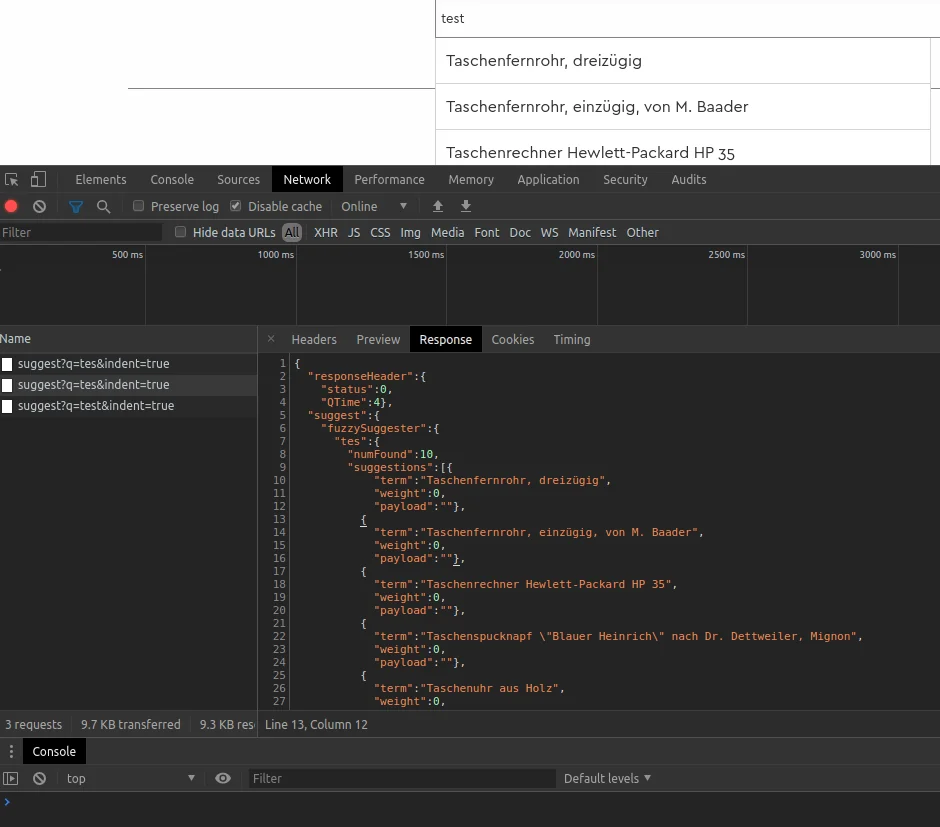
Solr Fuzzy Suggester and Solr Infix Suggester over Ajax
For effective website search, it is important that users quickly and easily find relevant results. Solr Fuzzy Suggester and Solr Infix Suggester offer an efficient solution for this. They can be called and filtered via Ajax queries.

Mobile App Creation with Apache Cordova: Cross-Platform Case Study
Explore how Apache Cordova transforms web apps into cross-platform mobile solutions for Android, iOS, and more, with detailed process, tech stack, and benefits.

From Global Business to the Kitchen — A Reverse Communication System That Still Scales
Stop scaling by noise. Start with global signals, reduce them to a few stable truths, and turn them into weekly templates, checklists, and repeatable “menus” that ship real value.

Enterprise-Grade Production Platform
Enterprise-grade CMS- und Portal-Plattform mit Multi-Database-Architektur, echter Mehrsprachigkeit und professioneller WordPress-Migration. Entwickelt für skalierbare, sichere und zukunftsfähige Publishing-Systeme.

LibreOffice ChatGPT Macro Integration Case Study
Explore the custom Python OpenAI macro integration for ChatGPT in LibreOffice, enhancing workflows with AI assistance directly in your documents.

From Global Business to the Kitchen — Enterprise Media OS That Scales Calmly (stajic.de + Showcase Portals)
Global strategy only works if it survives the kitchen: constraints, cadence, clarity, and measurable output. Here’s how an Enterprise Media OS turns market noise into repeatable systems — with figure.rocks and loving.rocks as showcase implementations.

Local Roots, Global Reach: Implementing the Enterprise Business OS
A deep dive into transforming local business operations through the Enterprise Business OS, focusing on clear positioning, high-output content engines, and strategic distribution systems.
SEO Mobile Web Application Munich
SEO for Mobile Web Applications in Munich: clean indexing, analytics, structured sitemaps and Google News optimization as a solid foundation for sustainable visibility.
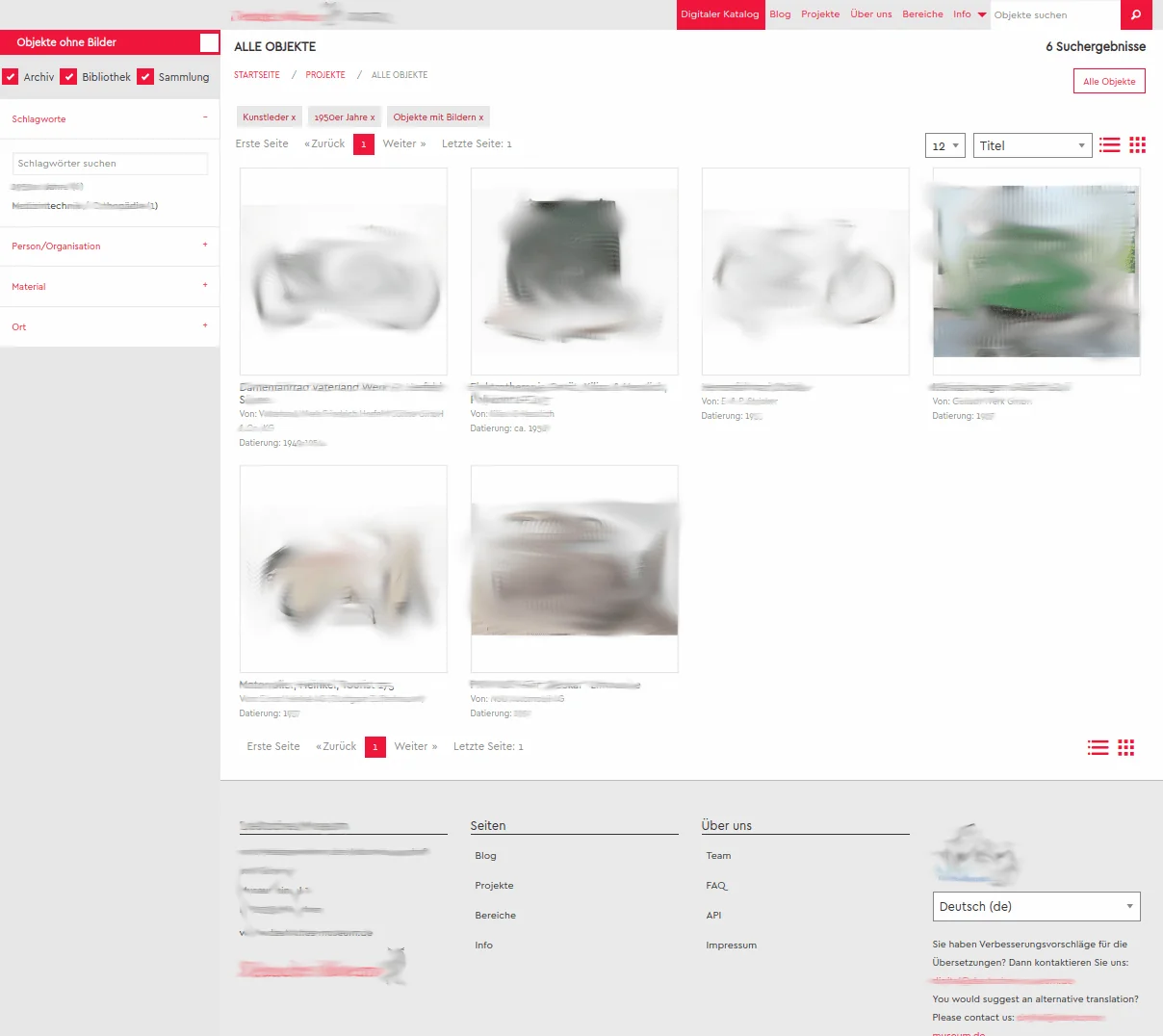
Digitalization portal for Archive Museum Library
The Deutsche Museum Digital is dedicated to the digitalization and scientific exploration of the collections of objects, archives, and library of the Deutsches Museum.

From Raw Data to Verifiable AI Context: A Practical Architecture for Agent-Ready Information
AI systems do not mainly fail because they lack more text. They fail because identity, provenance, conflicts, unknowns and validity are often missing from the context they receive. This article documents a practical architecture for turning heterogeneous business data into controlled, reusable information objects for humans, applications and agents.
Presence Platforms — Enterprise Communication That Wins Without Competing
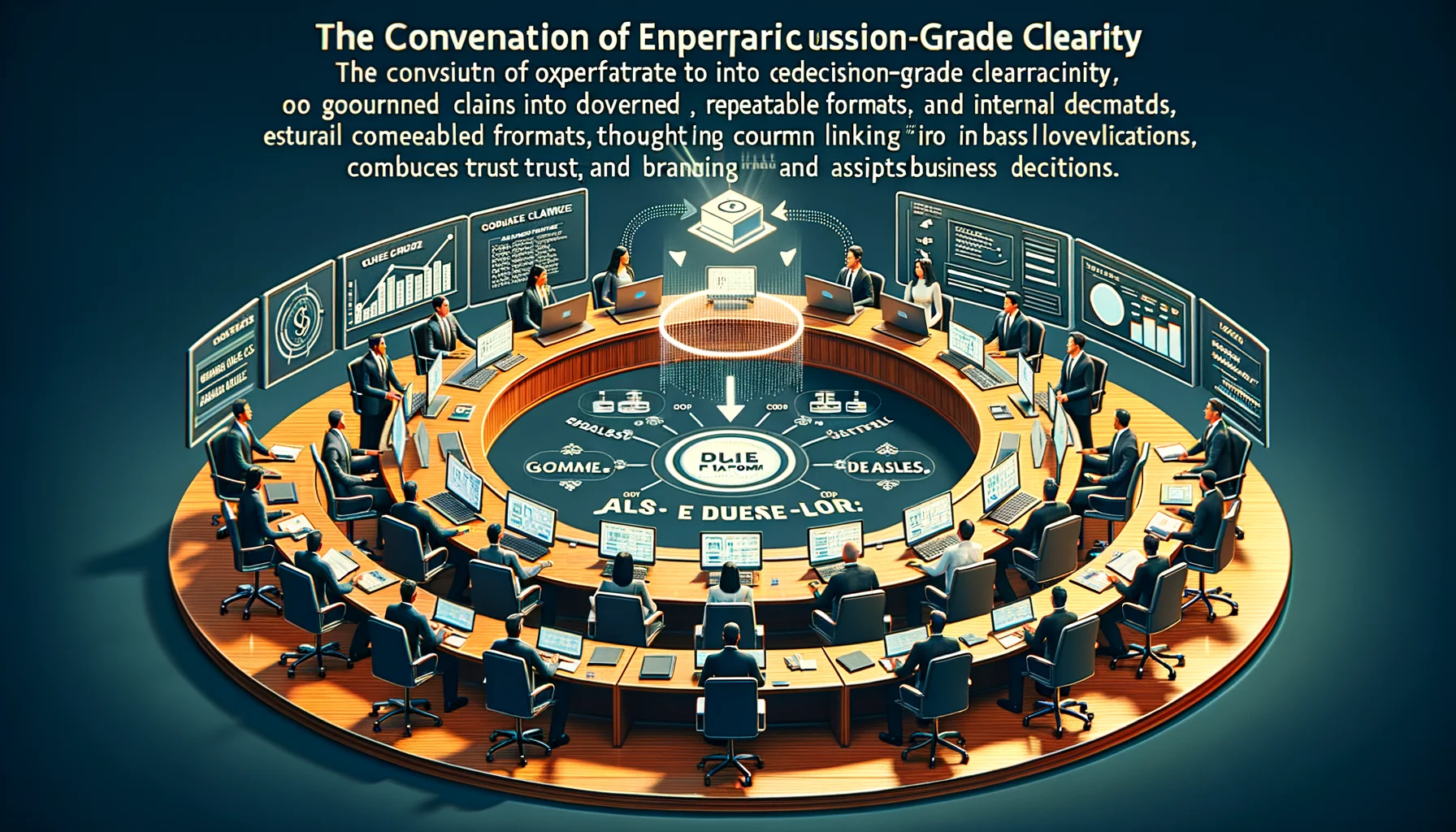
A Presence Platform turns operations into decision-grade clarity: governed claims, repeatable formats, internal linking that routes decisions, and a weekly learning loop that compounds trust and pipeline.