
From Global Business to the Kitchen — Enterprise Media OS That Scales Calmly (stajic.de + Showcase Portals)

Most “global growth” narratives die the moment they meet reality: limited time, competing priorities, legal constraints, fragmented teams, and messy distribution. That reality is the kitchen — where execution is forced to be concrete. If your strategy cannot be reduced into repeatable weekly output, it is not a strategy. It is a presentation.
This article connects two directions of the same discipline: (1) turning local proof into globally readable trust (the classic approach), and (2) reversing the flow — turning global market complexity into calm, repeatable operations. Together, they form what enterprise teams actually need: a Communication & Media Operating System.
In this model, stajic.de is the base layer — the Enterprise Business OS for media operations — and figure.rocks and loving.rocks act as showcase portals that demonstrate how the same OS produces different market outcomes through different trust mechanics.
Why Big Companies Lose to Smaller, Structured Systems
Large organizations rarely lose because they lack budget. They lose because communication behaves like a set of disconnected campaigns: every team ships content differently, every channel has its own logic, and every quarter resets the narrative. The market experiences that as inconsistency — and inconsistency is the fastest way to burn trust.
Symptoms That Look Like “Marketing Problems” (But Aren’t)
- Great campaigns, weak compounding: traffic spikes without durable growth.
- Content volume goes up, clarity goes down.
- Different pages promise different outcomes (message drift).
- Distribution relies on luck (channel roulette).
- Legal review becomes a bottleneck because claims are unstructured.
- Teams measure activity, not decision progress.
The fix is not louder output. It’s a stable operating layer: rules, formats, governance, internal linking, and measurement loops that make quality predictable — even as teams scale.
The Core Thesis (Combined)
Local roots are your proof engine: real constraints, measurable outcomes, credible stories. Global reach is not a budget game — it’s a structure game: packaging proof into formats that match how people search, compare, and decide.
The reverse direction matters just as much: global trends and competitive noise must be reduced into a handful of stable truths that survive the kitchen — weekly workflows, templates, and decision paths that keep shipping value without reinvention.
Reference: The Original System
If you want the full base concept (local proof → global trust signals), use this internal reference: Local Roots, Global Reach — Communication & Media Systems for Modern Business.
stajic.de as the Enterprise Media OS
Think of stajic.de as the operating layer that enterprise teams usually lack. Not “a website.” Not “a blog.” An OS: a repeatable system that translates operations into market clarity across multiple brands, products, regions, and decision-makers.
What an Enterprise Media OS Does
- Defines messaging rules so teams can’t drift.
- Standardizes content formats so quality becomes predictable.
- Builds internal linking structures so content becomes a navigable library (not scattered posts).
- Implements governance for claims, disclosures, updates, and corrections.
- Designs distribution paths that match intent (search) and awareness (feeds/newsletters).
- Closes the loop with measurement that ties content to qualified actions.
This is why OS thinking matters for large companies: the value is not one piece of content. The value is the ability to produce consistent clarity every week — across teams — while staying compliant.
Architecture: The Enterprise Communication Stack
A scalable communication system behaves like an engineered product. It has layers. Each layer reduces variance and increases trust.
Layer 1 — Truth and Constraints
This layer is where enterprises win: you have operations, data, customer outcomes, delivery capabilities, and real limits. The OS forces teams to publish within those limits. Trust grows when boundaries are explicit.
Non-Negotiables
- No absolute promises without measurable scope.
- Every claim ties to a proof type (data, case, measurement, documented constraint).
- Every page declares assumptions and what is not covered.
- Updates and corrections are part of the product, not an afterthought.
Layer 2 — Formats That Match Decisions
Formats are the simplest way to scale quality. Enterprises fail when every team invents a new “tone” and structure. A strong OS chooses a small set of formats and uses them repeatedly until the market learns to trust them.
High-Trust Enterprise Formats
- Decision hubs: overview pages that route to comparisons, FAQs, and next steps.
- Comparisons: structured trade-offs (criteria-first, calm tone).
- Compatibility/requirements pages: clear yes/no with constraints and versions.
- Implementation guides: reduce onboarding friction.
- Change logs / field notes: what changed, why it matters, what to do next.
Layer 3 — Internal Linking as Navigation, Not SEO Tricks
For large companies, internal linking is not a “tactic.” It is information architecture. It turns content into a guided decision journey. Readers should always have a next step that feels natural: compare, verify compatibility, see constraints, request a consult, shortlist options, or read an implementation guide.
Linking Rules That Scale
- Every page links upward to a decision hub (context).
- Every page links sideways to one comparison or alternative (trade-off).
- Every page links downward to one proof asset (evidence).
- Every page links forward to one action (next decision).
Layer 4 — Governance and Legal Safety by Design
Enterprise marketing doesn’t fail because teams are careless. It fails because compliance is bolted on at the end. The OS approach makes governance part of the content format: disclosures, scope, measured/not measured, and update policy are standardized so review becomes faster and safer.
Governance Checklist
- Claims policy: what may be said, and how it must be scoped.
- Disclosure policy: affiliate/partner relationships where applicable.
- Testing policy: tested vs. not tested, and what measurement means.
- Corrections policy: how updates are logged and communicated.
- Review workflow: who approves what, with predictable turnaround.
Layer 5 — Measurement That Improves Decisions
Enterprises have dashboards. What they often lack is a learning loop. A strong OS measures what signals real progress: qualified attention, next-step clicks, shortlist behavior, inquiry quality, and update impact.
KPI Set (Practical, Not Vanity)
- Intent match: which pages attract visitors with decision intent.
- Decision flow: clicks from hub → comparison → proof → action.
- Engagement quality: scroll depth, returns, saves/shares, newsletter replies.
- Conversion quality: inquiry rate and downstream qualification.
- Content efficiency: time-to-publish and time-to-refresh (updates).
Showcase Portals: figure.rocks and loving.rocks
The same OS produces different outcomes depending on the trust dynamics of the market. That’s why showcase portals matter: they demonstrate how structure beats scale. figure.rocks represents high-signal technical decisions; loving.rocks represents calm, high-trust life decisions.
figure.rocks — High-Signal Media That Outperforms Noise
In tech and gaming media, the default market is volume: endless posts and hot takes. The OS approach flips the advantage: fewer pages, stronger intent match, predictable formats, transparent constraints, and update cycles that compound authority.
Enterprise-Grade Advantages
- Search intent becomes a roadmap: comparisons, compatibility, and buying guides lead.
- Readers learn the format and trust it faster than brand claims.
- Constraint transparency reduces backlash and increases credibility.
- Refresh cycles produce compounding rankings and consistent pipelines.
loving.rocks — Quiet Decision Support That Converts Without Pressure
For high-emotion decisions (weddings, engagements, meaningful purchases), the market punishes aggressive persuasion. The OS approach builds a “regal showroom” effect: criteria-first comparisons, shortlists, gentle guidance, and clear disclosures that protect trust.
Enterprise-Grade Advantages
- Tone and structure reduce anxiety, which increases decision completion.
- Shortlists outperform pushy CTAs for high-trust categories.
- Clear criteria makes comparisons feel helpful, not affiliate-driven.
- Micro-tools (checklists/timelines) create repeat visits and loyalty.
These two showcases highlight a critical enterprise lesson: you don’t win by copying big media behaviors. You win by engineering clarity, reducing variance, and publishing within a system the market can recognize and trust.
The Enterprise Playbook (How Big Teams Actually Implement This)
Enterprise execution succeeds when the OS reduces decision overhead. The goal is not “more content.” The goal is a weekly operating rhythm where teams ship into known formats, with known governance, into known distribution paths — and the system learns.
Step 1 — Freeze the Message Map
Create a one-page message map that defines audience, job-to-be-done, promise, proof types, offer packaging, and boundaries. This becomes the single reference that prevents teams from improvising different claims.
Step 2 — Choose 3–5 Formats and Refuse Everything Else
Formats create speed without losing quality. Pick a small set aligned to decision behavior: hubs, comparisons, compatibility pages, implementation guides, and change notes. Then enforce them so output becomes consistent across teams.
Step 3 — Build the Internal Link Graph First
Don’t publish isolated pages. Design the graph: each hub routes to comparisons; comparisons route to proof and next steps; compatibility routes to requirements and implementation. This is how content becomes an OS — not a pile.
Step 4 — Governance Templates (So Legal Review Gets Faster)
Standardize claim wording, disclosures, testing labels, and update notes. When governance is embedded into the format, review becomes predictable. Predictability is what makes enterprises fast.
Step 5 — Weekly Learning Loop (Small, Relentless, Measurable)
Every week, review the winners and double down on what moves the pipeline: which hubs attract qualified visitors, which comparisons drive next-step clicks, which proof assets unlock trust, and which pages need refresh. This is compounding, not campaigning.
The Kitchen Test (Reverse System: Global → Local)
To keep enterprise media from drifting into noise, run the kitchen test: reduce global complexity into local repeatability. If you can’t ship it weekly with stable quality, your system is too complex.
The Kitchen Pipeline
- Collect: only signals tied to demand, friction, cost, and trust.
- Reduce: turn signals into a small truth set (position + proof + boundaries).
- Prep: convert truth into templates, checklists, and page formats.
- Cook: ship small batches on a predictable cadence.
- Taste: measure decision progress and refresh winners.
Closing: High Marketing Isn’t Louder — It’s More Disciplined
High-performance marketing for large companies is not about creative bursts. It’s about operational discipline: clear claims, stable formats, intentional distribution, legal safety by design, and a weekly learning loop. That’s what an Enterprise Media OS provides — and why stajic.de as a base layer matters, with figure.rocks and loving.rocks as living proof that structure beats noise.
Minimal Commitments That Create Maximum Compounding
- One message map to prevent drift.
- 3–5 formats to prevent chaos.
- A link graph to prevent dead ends.
- Governance templates to stay compliant without slowing down.
- A weekly loop to compound results.
Related Projects

From Global Business to the Kitchen — A Reverse Communication System That Still Scales
Stop scaling by noise. Start with global signals, reduce them to a few stable truths, and turn them into weekly templates, checklists, and repeatable “menus” that ship real value.

LibreOffice ChatGPT Macro Integration Case Study
Explore the custom Python OpenAI macro integration for ChatGPT in LibreOffice, enhancing workflows with AI assistance directly in your documents.

Web Presence Making a Statement - Automobile Bauer Joomla

Mobile App Creation with Apache Cordova: Cross-Platform Case Study
Explore how Apache Cordova transforms web apps into cross-platform mobile solutions for Android, iOS, and more, with detailed process, tech stack, and benefits.

SEO Mobile Web Application Munich
SEO for Mobile Web Applications in Munich: clean indexing, analytics, structured sitemaps and Google News optimization as a solid foundation for sustainable visibility.

Source of Truth Enterprise Intelligence Platform
A self-hosted, evidence-governed enterprise intelligence platform that turns internal company knowledge, documents and business data into traceable intelligence for research, decisions, monitoring and controlled AI execution.

From Vision to Value: Maximizing POS ROI Through Consistent CI Creation and Strategic Branding
In modern retail, bridging the gap from creative vision to financial value requires aligning Corporate Identity (CI) with the Point of Sale (POS). This case study explores the framework for eliminating cognitive friction to enhance ROI.
Digitalization portal for Archive Museum Library
The Deutsche Museum Digital is dedicated to the digitalization and scientific exploration of the collections of objects, archives, and library of the Deutsches Museum.

Local Roots, Global Reach: Implementing the Enterprise Business OS
A deep dive into transforming local business operations through the Enterprise Business OS, focusing on clear positioning, high-output content engines, and strategic distribution systems.
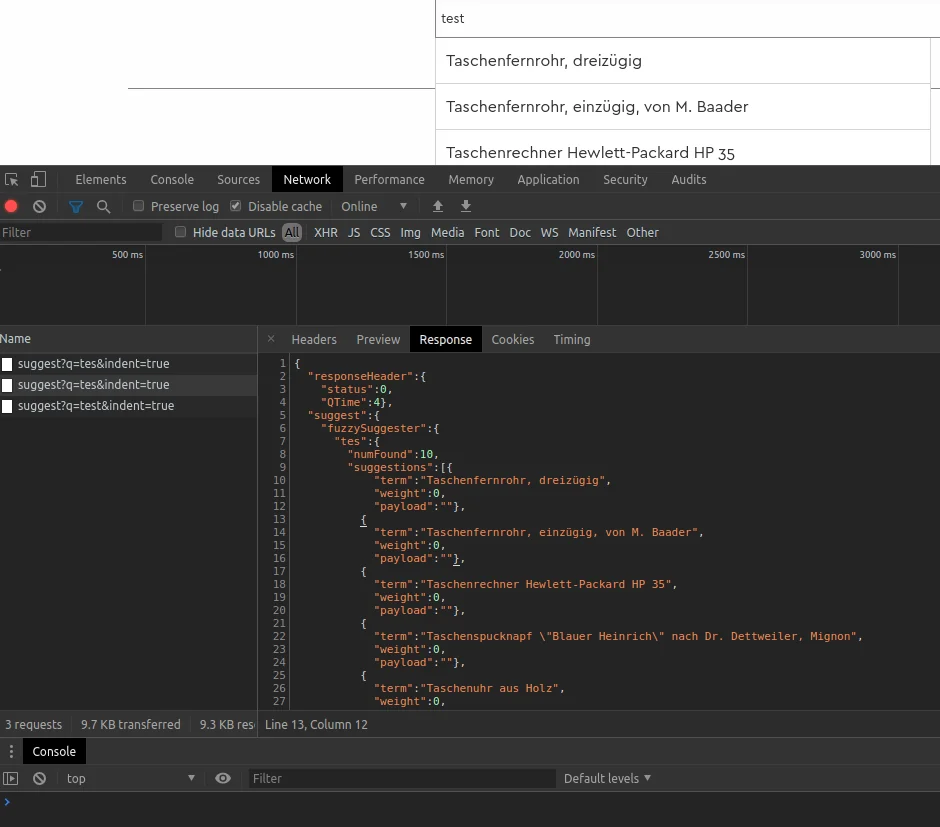
Solr Fuzzy Suggester and Solr Infix Suggester over Ajax
For effective website search, it is important that users quickly and easily find relevant results. Solr Fuzzy Suggester and Solr Infix Suggester offer an efficient solution for this. They can be called and filtered via Ajax queries.
Presence Platforms — Enterprise Communication That Wins Without Competing
A Presence Platform turns operations into decision-grade clarity: governed claims, repeatable formats, internal linking that routes decisions, and a weekly learning loop that compounds trust and pipeline.

From Raw Data to Verifiable AI Context: A Practical Architecture for Agent-Ready Information
AI systems do not mainly fail because they lack more text. They fail because identity, provenance, conflicts, unknowns and validity are often missing from the context they receive. This article documents a practical architecture for turning heterogeneous business data into controlled, reusable information objects for humans, applications and agents.