
AI Knowledge Management for Enterprises and Public Administration

AI knowledge management enables enterprises and public authorities to search, understand, organize, verify and continuously maintain organizational knowledge across documents, databases and information systems. It combines enterprise search, intelligent document processing, Retrieval-Augmented Generation (RAG), internal AI knowledge assistants and evidence-based research to make existing information accessible and useful for operational and strategic decisions.
The next generation of enterprise knowledge management extends beyond document retrieval and conversational access. It preserves the relationships between information, evidence, conclusions and organizational decisions, allowing knowledge to remain useful as sources, requirements and business conditions change.
What Is AI Knowledge Management?
AI knowledge management is the application of artificial intelligence to the acquisition, organization, retrieval, analysis, distribution and maintenance of organizational knowledge. It allows employees to interact with information through natural-language questions while supporting more advanced activities such as document comparison, evidence research and decision preparation.
Organizational knowledge includes more than stored documents. It includes procedures, obligations, technical specifications, institutional experience, research findings, approved interpretations and the reasoning behind previous decisions. An AI knowledge management system becomes particularly valuable when these elements remain connected.
Information, knowledge and intelligence
Information
Knowledge
Intelligence
AI Knowledge Management in Practice
Consider a public authority introducing a revised administrative procedure. Relevant information may exist across legislation, internal instructions, historical decisions, official correspondence, technical documentation and departmental knowledge bases.
An employee needs to understand which requirements apply, whether previous instructions remain valid and which organizational processes are affected. A conventional search engine can locate documents. An internal AI assistant can summarize relevant passages. An evidence-governed knowledge management platform can additionally connect findings, identify conflicting instructions, preserve supporting evidence and maintain the resulting knowledge for future use.
From distributed information to operational knowledge
Enterprise Search and Internal AI Knowledge Assistants
An internal AI knowledge assistant provides employees with a natural-language interface to approved organizational information. Instead of navigating multiple applications, folders and document repositories, employees can formulate questions and receive context-grounded responses.
Enterprise AI search combines conventional information retrieval with semantic search capabilities. Semantic retrieval helps identify relevant information even when documents use different terminology from the user's question. Keyword search remains important for exact identifiers, legal provisions, technical specifications and precise terminology.
| Capability | Organizational application |
|---|---|
| Enterprise search | Find information across organizational knowledge sources. |
| Semantic search | Identify information through meaning and contextual relevance. |
| Hybrid search | Combine exact terminology with semantic relevance. |
| Natural-language questions | Access organizational knowledge without specialized search syntax. |
| Source-grounded answers | Connect generated responses to supporting information. |
| Contextual research | Investigate questions that require multiple information sources. |
| Knowledge discovery | Identify relevant relationships and information previously distributed across separate sources. |
Integration of Structured and Unstructured Enterprise Data
Effective enterprise knowledge management must accommodate heterogeneous information. Organizational knowledge rarely exists in one database or application. It develops across document management systems, content management systems, business applications, databases, correspondence and approved external information sources.
| Information environment | Knowledge management application |
|---|---|
| Document Management Systems (DMS) | Search, analyze and compare organizational documents. |
| Enterprise Content Management (ECM) | Connect managed content with operational knowledge. |
| Databases and business applications | Incorporate authorized structured business information. |
| Intranet and knowledge portals | Provide contextual access to internal procedures and guidance. |
| Technical documentation | Connect specifications, requirements and engineering knowledge. |
| Scanned documents and archives | Make previously inaccessible information searchable through digitization and OCR. |
| Publications and external sources | Extend organizational research with approved external information. |
| Reports and correspondence | Preserve institutional context, statements and historical developments. |
RAG-Based Knowledge Management and Persistent Evidence Intelligence
Retrieval-Augmented Generation (RAG) is an important foundation for AI knowledge assistants. RAG retrieves relevant information from approved knowledge sources and provides it to a generative AI model as contextual input.
However, providing relevant context and maintaining organizational knowledge are different responsibilities. An organization may need to preserve findings, compare competing interpretations, reconstruct previous decisions and identify which conclusions are affected when information changes.
Source of Truth combines retrieval with persistent evidence intelligence and dependency-aware knowledge maintenance. Directed Acyclic Graphs (DAGs) provide an architectural model for representing directional dependencies between findings and their supporting information without circular dependency paths.
Retrieval and persistent knowledge management
| RAG-Based Retrieval | Persistent Evidence Intelligence | |
|---|---|---|
| Primary responsibility | Provide relevant information for AI generation. | Preserve findings and their supporting evidence relationships. |
| Context | Information relevant to the current request. | Persistent organizational objectives and research context. |
| Information changes | Retrieve newly indexed information. | Identify previously established findings that may require reassessment. |
| Knowledge reuse | Provide relevant source material for subsequent requests. | Reuse reviewed findings together with their supporting evidence. |
| Result | Context-grounded AI response. | Traceable and continuously maintainable organizational knowledge. |
AI Knowledge Management for Public Administration
AI knowledge management for public administration supports authorities, municipalities, government institutions and public-sector organizations in accessing administrative knowledge, analyzing documents, maintaining internal guidance and preparing evidence-based decisions.
Public administration has particular requirements for information reliability, institutional accountability, data protection, authorization and documentation. An AI-generated response must remain distinguishable from an officially approved administrative interpretation or decision.
| Public-sector application | Practical value |
|---|---|
| Internal administrative knowledge assistant | Provide employees with contextual access to approved administrative knowledge. |
| Municipal knowledge management | Connect departmental procedures, documentation and institutional experience. |
| Legislation and regulatory research | Identify relevant provisions, amendments and administrative implications. |
| Administrative document analysis | Extract requirements, statements and relevant information from complex records. |
| Case preparation | Organize supporting information and unresolved questions before administrative review. |
| Public procurement support | Compare specifications, requirements and supporting supplier documentation. |
| Employee onboarding | Make reviewed procedures and institutional knowledge accessible to new employees. |
| Institutional knowledge preservation | Reduce dependency on undocumented knowledge held by individual employees. |
| Citizen-service knowledge | Support employees with current and approved information relevant to public services. |
| Regulatory monitoring | Identify relevant information changes requiring organizational reassessment. |
AI Knowledge Management for Enterprises
Enterprise AI knowledge management creates a shared intelligence capability across organizational departments. Employees can access relevant business knowledge while specialized teams can investigate complex questions, compare information, prepare decisions and preserve analytical results.
| Business function | Knowledge management application |
|---|---|
| Management and strategy | Evidence-based decision preparation and organizational intelligence. |
| Research and development | Scientific research, technical literature analysis and technology intelligence. |
| Engineering | Technical knowledge, specifications, requirements and design decisions. |
| Legal and compliance | Regulatory research, document comparison and obligation analysis. |
| Human resources | Internal policies, organizational procedures and employee knowledge. |
| Procurement | Supplier intelligence, requirements analysis and specification comparison. |
| Customer service | Access to approved service knowledge, product information and procedures. |
| Quality management | Documentation, evidence review and investigation of conflicting information. |
| IT operations | Technical documentation, incident research and operational knowledge. |
| Market intelligence | Continuous research into markets, technologies and competitive developments. |
Continuous Knowledge Management and Institutional Memory
Institutional memory is the knowledge an organization retains beyond individual employees, projects and temporary activities. AI knowledge management can strengthen institutional memory by preserving research findings, supporting evidence, reviewed interpretations and relevant organizational context.
Knowledge maintenance becomes especially important when regulations, technical specifications, internal procedures or business information change. Updating a document does not automatically update every conclusion or decision that previously depended on it.
Continuous organizational knowledge lifecycle
A knowledge management system should not only help an organization remember what it knows. It should also help the organization recognize when that knowledge needs to be reconsidered.— Source of Truth — Continuous Knowledge Management Principle
Knowledge Quality, Provenance and Reliable AI Responses
Reliable AI knowledge management requires more than accurate retrieval. Organizations must be able to determine whether a source is applicable, whether a statement is supported, whether relevant information is missing and whether conflicting evidence affects the result.
| Quality dimension | Question addressed |
|---|---|
| Source provenance | Where did the information originate? |
| Evidence grounding | Does the available information support the statement? |
| Temporal validity | Is the information still applicable? |
| Contradiction detection | Do relevant sources disagree? |
| Knowledge completeness | Which information is still missing? |
| Contextual applicability | Does the information apply to the current organizational situation? |
| Review status | Has the finding been evaluated or officially accepted? |
| Traceability | Can the analytical result be reconstructed from its supporting information? |
Secure, Private and Sovereign AI Knowledge Management
Enterprise and public-sector knowledge platforms must accommodate organizational requirements for confidentiality, data protection, information sovereignty and controlled AI execution. Deployment decisions must reflect the sensitivity of information, applicable obligations and existing infrastructure.
Enterprise AI deployment environments
On-Premises AI
Private or Hosted AI
Hybrid AI
The Source of Truth platform follows a model-independent architecture that accommodates different AI environments and organizational requirements. Knowledge, evidence and research history remain conceptually separate from the AI model used to process them.
Autonomous Research and AI Agents in Knowledge Management
An internal knowledge assistant primarily responds to employee requests. Autonomous research extends knowledge management by supporting persistent research objectives, controlled information discovery and multi-step analytical activities.
Research agents can investigate related information, compare sources, identify missing evidence and prepare findings for review. The organization defines the research objectives, authorized information sources and operational boundaries.
Internal AI assistants and autonomous research
| AI Knowledge Assistant | Autonomous Research | |
|---|---|---|
| Initiation | Employee request or natural-language question. | Defined research objective, approved trigger or monitored development. |
| Scope | Information relevant to the request. | An ongoing investigation within defined boundaries. |
| Activity | Retrieve information and generate contextual responses. | Discover, analyze, compare and connect relevant information. |
| Result | Information or assistance for the employee. | Structured research findings and maintained knowledge. |
Requirements for Procuring an AI Knowledge Management Platform
Organizations evaluating AI knowledge management software should define requirements according to actual information environments, employee workflows, security obligations and expected business outcomes. Selecting an AI model alone does not establish a complete knowledge management solution.
| Requirement area | Evaluation question |
|---|---|
| Data source integration | Can relevant existing information systems and document repositories be connected? |
| Intelligent search | Are keyword-based and semantic information retrieval supported? |
| Document processing | Can heterogeneous documents and scanned records be processed? |
| Source-grounded responses | Can employees inspect the information supporting an AI response? |
| Identity and access management | Can existing organizational identities and authorization requirements be accommodated? |
| Data protection and sovereignty | Does the proposed deployment meet organizational information-handling requirements? |
| Knowledge maintenance | How are new information and changes incorporated into existing knowledge? |
| AI quality assurance | How are incomplete, contradictory or insufficiently supported results identified? |
| Interoperability | Can the solution complement existing applications through suitable interfaces? |
| Auditability | Can important research activities and findings be reconstructed? |
| Operational continuity | How are updates, maintenance, support and recovery organized? |
| Modular extensibility | Can capabilities be introduced independently and expanded according to demand? |
| Economic efficiency | Can the business value be evaluated against representative organizational workloads? |
These evaluation areas reflect practical enterprise requirements and terminology found in public procurement. For example, the German public procurement notice for AI knowledge management issued by Postbeamtenkrankenkasse in 2026 identifies an internal AI knowledge assistant, RAG or LLM architecture, semantic retrieval, system integration and operational requirements.
Measuring the Business Value of AI Knowledge Management
The business value of AI knowledge management depends on how effectively information can be transformed into useful organizational knowledge. Productivity, information reliability, knowledge continuity and operational efficiency should be evaluated using representative tasks rather than general AI performance claims.
| KPI | Measurement |
|---|---|
| Information retrieval time | Time required to locate relevant organizational information. |
| Answer accuracy | Correctness of responses against reviewed reference answers. |
| Evidence coverage | Proportion of relevant factual statements supported by identifiable evidence. |
| Research efficiency | Time and manual effort required to complete comparable investigations. |
| Document processing efficiency | Effort required to extract and review relevant information. |
| Knowledge reuse | Use of previous research and reviewed findings in subsequent tasks. |
| Knowledge freshness | Time between a relevant source change and reassessment of affected knowledge. |
| Review efficiency | Effort required to verify and approve analytical findings. |
| Employee adoption | Usefulness and adoption within representative organizational workflows. |
| Operational cost | Infrastructure, AI processing, integration and ongoing operating expenditure. |
Modular AI Knowledge Management Software
Not every organization requires a complete enterprise intelligence platform. Some institutions need an internal AI knowledge assistant, while others require intelligent document processing, advanced research, regulatory monitoring or evidence-based decision support.
Source of Truth follows a modular commercial model. Organizations can procure individual capabilities or combine suitable modules according to their functional requirements, existing systems, infrastructure and governance needs.
| Solution module | Functional objective |
|---|---|
| Enterprise AI Search | Intelligent access to approved organizational information. |
| AI Knowledge Assistant | Natural-language interaction with internal knowledge. |
| Document Intelligence | Structured document analysis and information extraction. |
| Research Intelligence | Multi-source research and analytical investigation. |
| Evidence Intelligence | Traceable findings, supporting evidence and contradiction analysis. |
| Decision Intelligence | Evidence-based preparation of organizational decisions. |
| Continuous Knowledge Maintenance | Preservation and targeted reassessment of evolving knowledge. |
| Monitoring and Regulatory Intelligence | Continuous research into relevant external and internal developments. |
Functional availability, module dependencies, interfaces, deployment requirements and organizational acceptance criteria are established for the selected configuration. This allows the solution to address a specific requirement without introducing unnecessary product scope.
Frequently Asked Questions
AI Knowledge Management for Enterprises and Public Administration
What is AI knowledge management?
How can public administration use AI knowledge management?
What is an internal AI knowledge assistant?
What role does RAG play in enterprise knowledge management?
Can AI knowledge management integrate with existing document management systems?
Can AI knowledge management be deployed on-premises?
How can organizations improve the reliability of AI knowledge assistants?
How does continuous knowledge management handle changing information?
Can organizations purchase individual AI knowledge management capabilities?
What differentiates Source of Truth from a conventional AI knowledge assistant?
Knowledge Management and Enterprise AI Terminology
Core terminology
- Enterprise Knowledge Management
- The systematic acquisition, organization, distribution, preservation and maintenance of knowledge within an organization.
- AI Knowledge Assistant
- An AI application that provides contextual access to organizational information through natural-language interaction.
- Enterprise Search
- Information retrieval across approved organizational information systems and knowledge sources.
- Semantic Search
- Information retrieval based on meaning and contextual relevance rather than exact keyword matching alone.
- Retrieval-Augmented Generation (RAG)
- An AI architecture that retrieves relevant information and supplies it as context for generative model output.
- Directed Acyclic Graph (DAG)
- A directed graph without cycles that can represent dependencies between information, evidence and analytical results.
- Institutional Memory
- Organizational knowledge, experience and context retained beyond individual employees and temporary activities.
- Evidence Governance
- The management of evidence provenance, quality, relationships, validity and organizational review.
- Knowledge Maintenance
- The continuous assessment and updating of organizational knowledge as its supporting information changes.
- Sovereign AI
- An approach to AI deployment emphasizing organizational or jurisdictional control over relevant data, infrastructure, execution and governance.
Primary Sources and Further Reading
AI Knowledge Management — European Public Procurement NoticePostbeamtenkrankenkasse, Germany, 2026. Public procurement requirements for an internal AI knowledge management solution.
Tenders Electronic Daily — European Public ProcurementOfficial European platform for public procurement notices and organizational technology requirements.
Source of Truth — Enterprise AI Knowledge Management and Intelligence
The Source of Truth Enterprise Intelligence Platform brings together AI knowledge management, enterprise search, document intelligence, autonomous research, evidence-based reasoning and continuous knowledge maintenance within a modular product architecture.
Enterprises, public authorities, municipalities and research institutions can define their requirements, select suitable capabilities and evaluate the proposed solution against their actual information environments and organizational objectives.
For enterprise solutions, public-sector procurement, modular software licensing, product demonstrations and integration inquiries, contact info@stajic.de.
Related Projects

From Raw Data to Verifiable AI Context: A Practical Architecture for Agent-Ready Information
AI systems do not mainly fail because they lack more text. They fail because identity, provenance, conflicts, unknowns and validity are often missing from the context they receive. This article documents a practical architecture for turning heterogeneous business data into controlled, reusable information objects for humans, applications and agents.

Autonomous Enterprise Research & Continuous Knowledge Intelligence
Source of Truth combines AI-powered enterprise research, document intelligence, knowledge management, evidence-based reasoning and continuous monitoring in a modular platform for enterprises, research institutions and public administration.
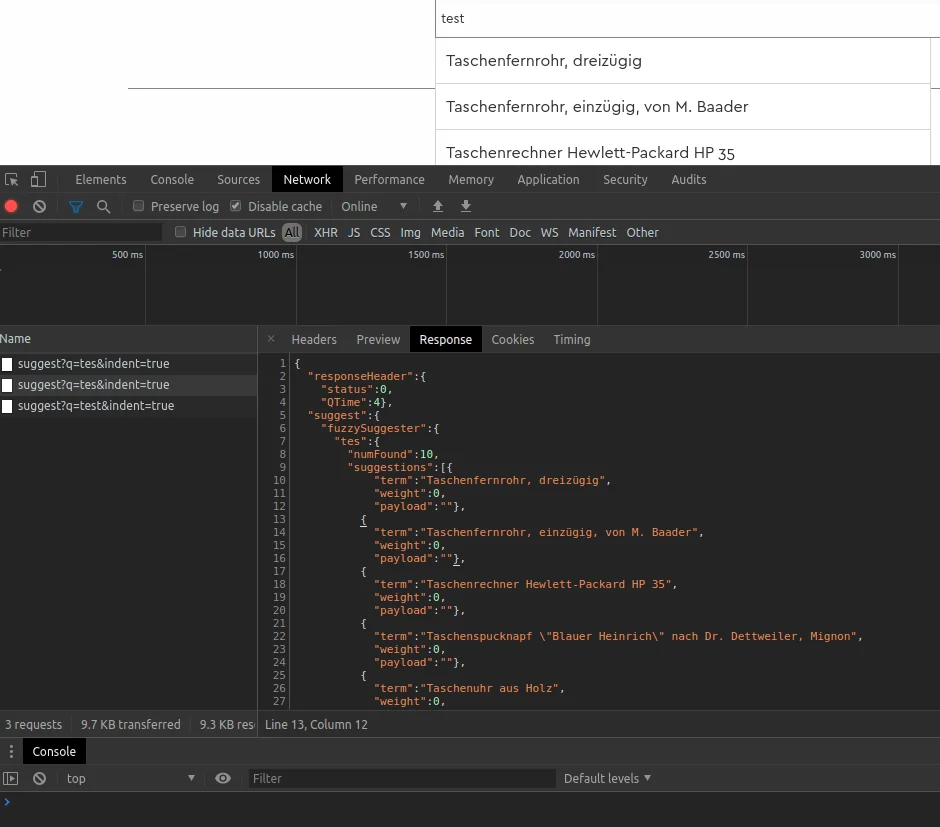
Solr Fuzzy Suggester and Solr Infix Suggester over Ajax
For effective website search, it is important that users quickly and easily find relevant results. Solr Fuzzy Suggester and Solr Infix Suggester offer an efficient solution for this. They can be called and filtered via Ajax queries.

From Global Business to the Kitchen — Enterprise Media OS That Scales Calmly (stajic.de + Showcase Portals)
Global strategy only works if it survives the kitchen: constraints, cadence, clarity, and measurable output. Here’s how an Enterprise Media OS turns market noise into repeatable systems — with figure.rocks and loving.rocks as showcase implementations.

SEO Mobile Web Application Munich
SEO for Mobile Web Applications in Munich: clean indexing, analytics, structured sitemaps and Google News optimization as a solid foundation for sustainable visibility.

Digitalization portal for Archive Museum Library
The Deutsche Museum Digital is dedicated to the digitalization and scientific exploration of the collections of objects, archives, and library of the Deutsches Museum.

Enterprise-Grade Production Platform
Enterprise-grade CMS- und Portal-Plattform mit Multi-Database-Architektur, echter Mehrsprachigkeit und professioneller WordPress-Migration. Entwickelt für skalierbare, sichere und zukunftsfähige Publishing-Systeme.
LibreOffice ChatGPT Macro Integration Case Study
Explore the custom Python OpenAI macro integration for ChatGPT in LibreOffice, enhancing workflows with AI assistance directly in your documents.

Source of Truth Enterprise Intelligence Platform
A self-hosted, evidence-governed enterprise intelligence platform that turns internal company knowledge, documents and business data into traceable intelligence for research, decisions, monitoring and controlled AI execution.

From Global Business to the Kitchen — A Reverse Communication System That Still Scales
Stop scaling by noise. Start with global signals, reduce them to a few stable truths, and turn them into weekly templates, checklists, and repeatable “menus” that ship real value.
Presence Platforms — Enterprise Communication That Wins Without Competing
A Presence Platform turns operations into decision-grade clarity: governed claims, repeatable formats, internal linking that routes decisions, and a weekly learning loop that compounds trust and pipeline.
Source of Truth Beyond RAG: Evidence-Governed Research, Traceability and Business Value
How the Source of Truth Enterprise Intelligence Platform moves beyond retrieval by combining controlled case scope, RAG, research agents, evidence reasoning, contradiction handling, RBAC, namespaces and human review into an auditable path from enterprise question to supported decision.