
Google I/O 2026: Architectural Pivots, Agentic AI, and the Unified Ecosystem Reality Check
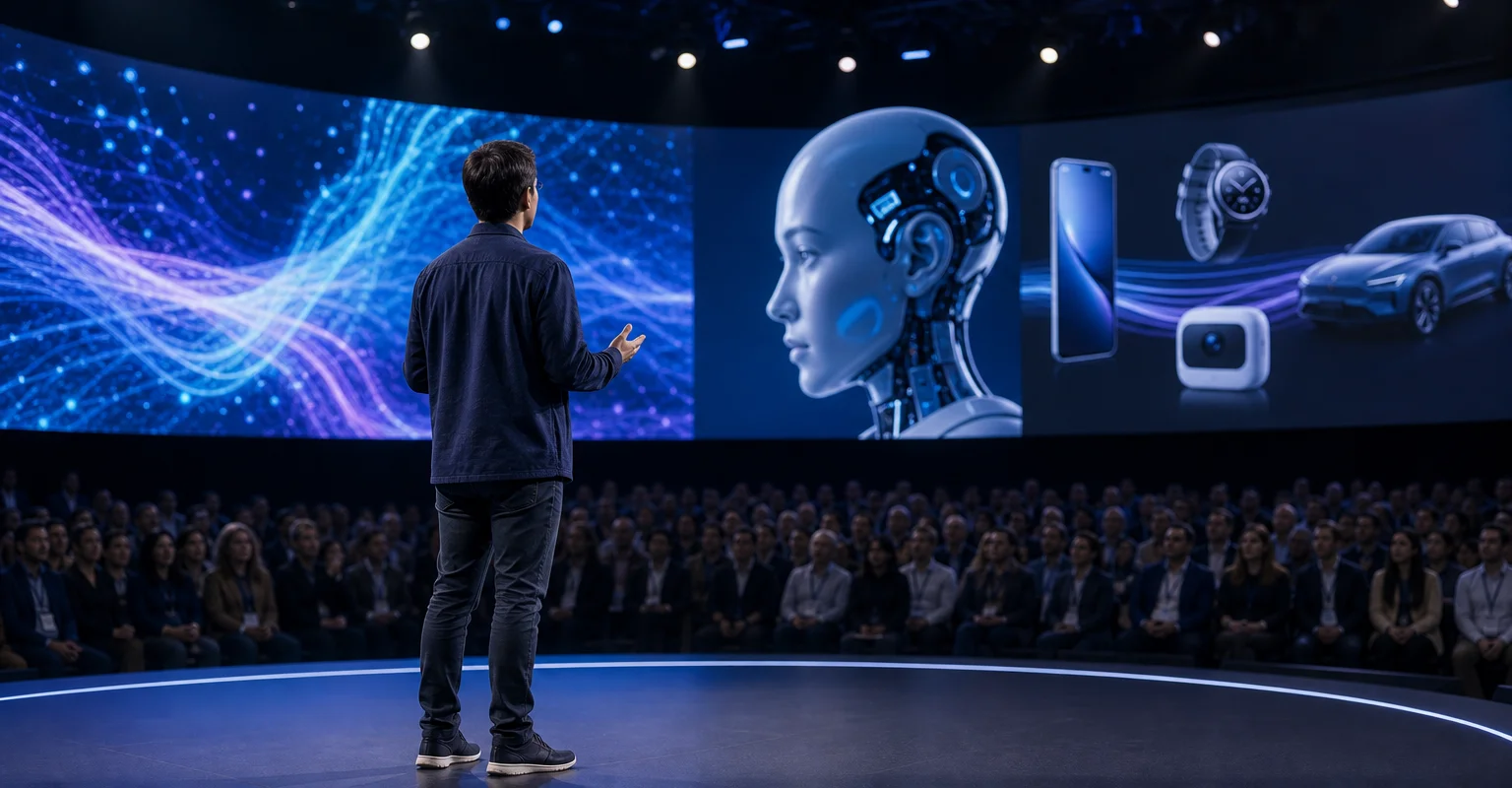
Let’s skip the stage fog. Google I/O 2026 was not another round of cosmetic AI announcements. The keynote showed a more structural shift: Google is pushing AI deeper into the runtime, deeper into the operating surface, and deeper into the developer workflow. The important change is not that more products now have AI labels. The important change is that model behavior, tool orchestration, multimodal input, and product execution are being treated as one connected system.
That matters for anyone building real software. If your mental model is still "LLM as an API call" plus some UI polish, the I/O 2026 direction should reset that thinking. Google is aligning models, developer tools, product surfaces, and device form factors into a much tighter operational stack. This is not just model progress. It is a platform strategy.
This hub is the central overview for the cluster. The deeper technical breakdowns continue in the linked spoke articles covering Gemini Omni and Gemini 3.5, Antigravity, AI Studio, and Google DevTools, Android XR and Intelligent Eyewear, and agentic products across Search, Workspace, and Shopping.
The Hub: What Google Actually Announced
The official I/O 2026 collection frames the event around four major forces: new model capability, agentic developer tooling, broader product-level agents, and new device surfaces. Google’s own summary highlights Gemini Omni, Gemini 3.5, the Antigravity development platform, more agentic product experiences, and Gemini expansion into new form factors such as intelligent eyewear. That is the real blueprint.
- Gemini Omni extends Gemini from reasoning into multimodal creation, starting with video.
- Gemini 3.5 Flash is positioned as a fast, strong model for complex agentic workflows.
- Antigravity 2.0 moves developer tooling further from assistance toward orchestration.
- Google AI Studio gets native Android support and stronger product-to-runtime integration.
- Intelligent eyewear and Android-linked surfaces show that the AI story is moving beyond the phone screen.
That combination makes this keynote more important than a pure model launch. The models matter, but the bigger story is that Google is designing around agents that operate across tools, products, and devices instead of remaining trapped inside one chat window.
Core Compute: Gemini Omni and Gemini 3.5
Two model lines sit at the center of the keynote: Gemini Omni and Gemini 3.5. They are not doing the same job. Omni is Google’s attempt to fuse reasoning and generation into a genuinely multimodal creative system. Google describes it as a model that can create anything from any input, starting with video. That is a strong signal that multimodality is no longer being treated only as understanding. It is now an editing and generation interface.
Gemini 3.5 Flash plays a different role. Google positions it as a high-speed frontier model built for complex agentic workflows. The emphasis is not only intelligence. It is intelligence at operational speed, which matters if you want models to work as persistent tools inside IDEs, CLIs, product agents, and automation surfaces. For the full compute-layer breakdown, continue with Google I/O 2026: Gemini Omni and Gemini 3.5.
The real story is not model branding. It is role separation: one track is pushing multimodal creation, the other is pushing high-speed action inside live workflows.— Architectural reading of the keynote
From Prompting to Acting
One of the clearest shifts in the official developer materials is the language move from prompts to action. Google’s I/O 2026 developer highlights page explicitly says the company is accelerating the shift from prompts to action with Gemini 3.5 Flash, a new Antigravity 2.0 desktop application, Managed Agents in the Gemini API, and native Android support in Google AI Studio. That is a meaningful architectural signal.
This matters because it changes how teams should think about AI integration. The older pattern was: call a model, get text, render output. The newer pattern is: define a task boundary, bind model behavior to tools, control execution, collect evidence, and manage failure like any other runtime component. Google is clearly building for the second pattern now. The strongest developer-tools reading of that shift is in Google I/O 2026: Antigravity, AI Studio, and Google DevTools.
Developer Tooling: Antigravity, AI Studio, and Codebase Autonomy
For developers, the most consequential announcements are not the keynote demos but the tooling implications behind them. Antigravity 2.0 is being presented as a central home for agent interaction, including orchestration of multiple agents, dynamic subagents, scheduled tasks, and connections across surfaces like AI Studio, Android, and Firebase. That is a much more ambitious posture than autocomplete or single-turn copilot assistance.
In plain terms, Google is trying to make the development environment itself agent-native. That means repository context, editor state, terminal actions, and task execution are converging into one managed system. The engineering role does not disappear, but it shifts. More of the job moves from manually writing syntax toward defining intent, constraints, evaluation criteria, and rollback boundaries. The deeper breakdown is here: Google I/O 2026: Antigravity, AI Studio, and Google DevTools.
- Antigravity 2.0 pushes toward multi-agent orchestration rather than one-shot assistance.
- Antigravity CLI suggests Google wants serious terminal-native adoption, not just GUI demos.
- The Antigravity SDK matters because it exposes the orchestration surface programmatically.
- Google AI Studio becomes more interesting when it starts acting as a runtime surface instead of only a sandbox.
Client-Side Shift: On-Device Intelligence and Operating Surfaces
The deeper trend is obvious: Google wants more intelligence to live closer to the user context, closer to the operating surface, and closer to device-level interaction. That reduces friction, improves continuity, and opens a larger design space for context-aware products. From an architecture perspective, this is bigger than mobile UI refreshes. It changes assumptions around latency budgets, privacy tradeoffs, fallback behavior, state synchronization, and how much intent resolution should happen locally before a cloud system even gets involved.
Android XR and Intelligent Eyewear
Google’s device and Android announcements make it clear that the company wants AI to move beyond phones and laptops into ambient, persistent surfaces. The official I/O 2026 collection includes intelligent eyewear arriving this fall, and Google had already been using Android XR as the software foundation for a broader class of headsets and glasses. This is not a side narrative. It is the physical extension of the same agentic strategy.
For product teams, XR and eyewear are not just hardware curiosities. They force a different interaction model: less app-centric, more context-centric; less screen-driven, more event-driven; less explicit user navigation, more continuous assistance. That has consequences for telemetry, state design, notification systems, privacy boundaries, and multimodal interface contracts. Continue with Google I/O 2026: Android XR and Intelligent Eyewear.
Agentic Products Across Search, Workspace, and Shopping
The keynote was not only about infrastructure and tooling. Google is also pushing agentic behavior into consumer-facing surfaces where search, work, and buying decisions start to blend with model-mediated execution. That matters because product agents are where platform strategy becomes business reality. The spoke article for that layer is Google I/O 2026: Agentic Products Across Search, Workspace, and Shopping.
Why This Keynote Deserves a Dedicated Cluster
Yes, this deserves a dedicated Google I/O 2026 cluster because the story is broad enough and the search demand is durable enough. The right structure is a hub-and-spoke model rather than a flat stream of short updates. The hub captures the full architectural shift, while the spoke articles win long-tail queries and allow much more technical depth.
- Google I/O 2026: Gemini Omni and Gemini 3.5
- Google I/O 2026: Antigravity, AI Studio, and Google DevTools
- Google I/O 2026: Android XR and Intelligent Eyewear
- Google I/O 2026: Agentic Products Across Search, Workspace, and Shopping
That structure is strong because it mirrors how Google itself is presenting the story while still translating it into a better editorial and SEO system for stajic.de. The hub page captures intent and context. The spoke articles carry the deeper implementation reality.
The Real Engineering Takeaway
The correct reading of Google I/O 2026 is not that everything suddenly became agentic because the keynote said so. The correct reading is that Google is aligning models, tools, products, and devices around a common direction: systems that reason across modalities, act through tools, and stay present across different surfaces. That direction is strategically coherent. It is also operationally difficult.
The hard part now is not being impressed by demos. The hard part is deciding what is mature enough for production, what requires isolation, what needs evaluation harnesses, which SDKs are truly stable, and how much lock-in you are accepting when you build around one vendor’s orchestration stack. That is where serious engineering starts.
This keynote was less about AI features and more about control planes. Whoever owns the model, the tools, the device surfaces, and the workflow runtime owns the developer gravity too.— Strategic takeaway
Next Articles in This Cluster
If you want the deeper implementation and product-level analysis, continue with the dedicated follow-up articles below.
- Compute Layer: Google I/O 2026: Gemini Omni and Gemini 3.5
- Developer Tooling: Google I/O 2026: Antigravity, AI Studio, and Google DevTools
- Android, XR, and Device Surfaces: Google I/O 2026: Android XR and Intelligent Eyewear
- Agentic Consumer Products: Google I/O 2026: Agentic Products Across Search, Workspace, and Shopping
Together, these follow-up articles turn the keynote from a general event recap into a structured technical cluster: models, tooling, device surfaces, and product execution. That is the right way to cover Google I/O 2026 if the goal is long-term SEO value and real technical clarity.
Final Perspective
Google I/O 2026 should be read as a platform consolidation moment. Gemini Omni expands what multimodal creation looks like. Gemini 3.5 Flash pushes fast agentic execution. Antigravity and AI Studio shift the developer environment toward orchestration. Intelligent eyewear and Android-linked surfaces extend that same logic into the physical interface layer. The right response is not hype or dismissal. The right response is structured analysis, fast testing, and a content strategy that separates the hub story from the deeper implementation realities.
Related Articles
Comprehensive Guide to Evaluation Harness: Mastering LLM Performance Evaluation
This guide provides a detailed walkthrough of Evaluation Harness, an essential framework for rigorously assessing large language model (LLM) capabilities in enterprise LLMOps pipelines. Learn setup, best practices, and advanced techniques to ensure reliable model benchmarking and optimization.
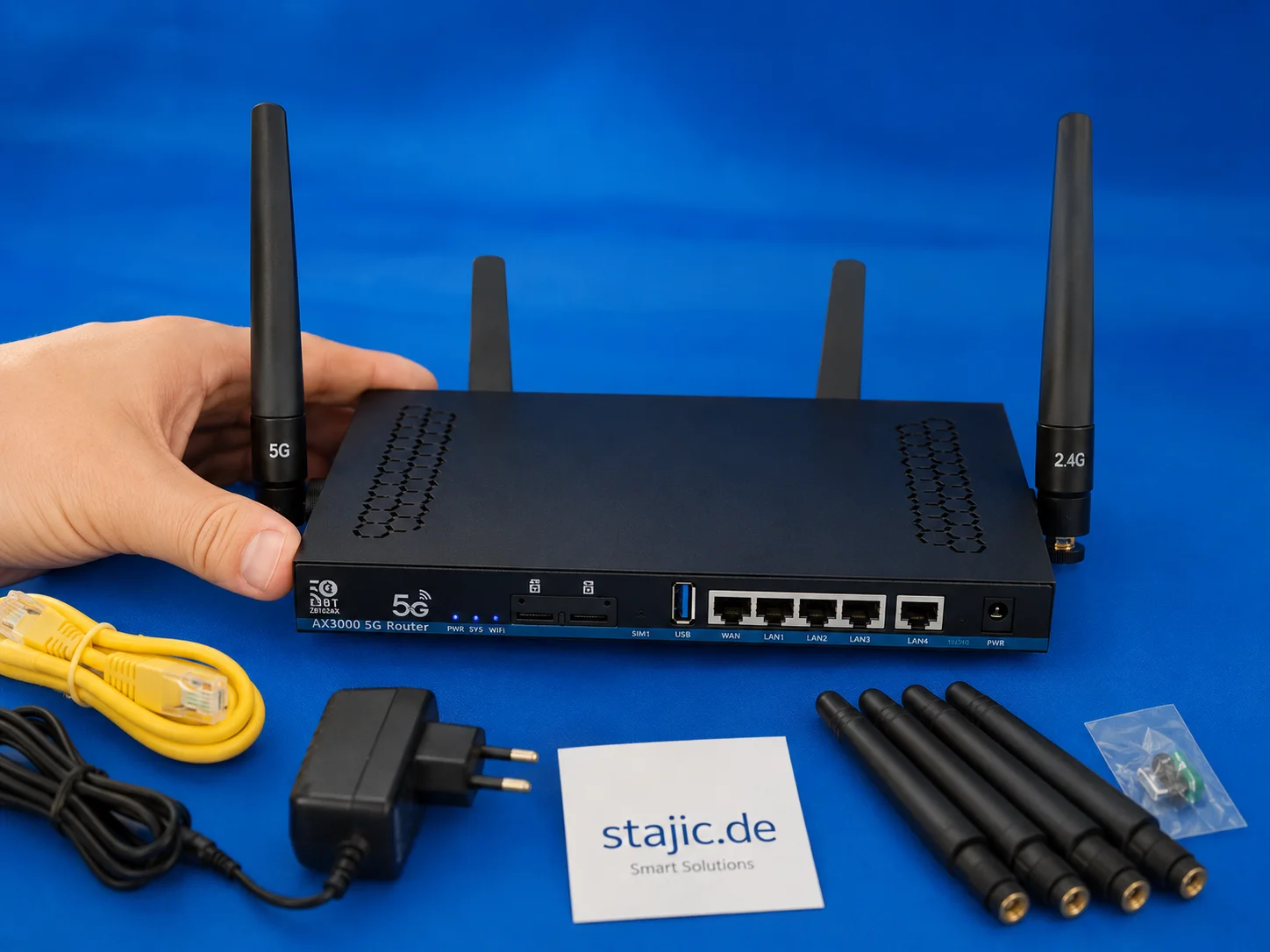
ZBT Z8102AX 5G OpenWrt Router Review: Dual SIM, RM500U-EA and an Honest Assessment
The ZBT Z8102AX is an unusual 5G router with an OpenWrt base, a dual-SIM concept, and a Quectel RM500U-EA modem. In testing, it shows clear strengths in flexibility, interfaces, and mobile connectivity, but also the typical weaknesses of a vendor-modified OpenWrt build.

Vector Databases, Embeddings and Reranking: Three Different Parts of Retrieval
Embeddings represent meaning, vector databases retrieve candidates, and rerankers refine results. Learn how these three retrieval layers differ and work together in RAG.
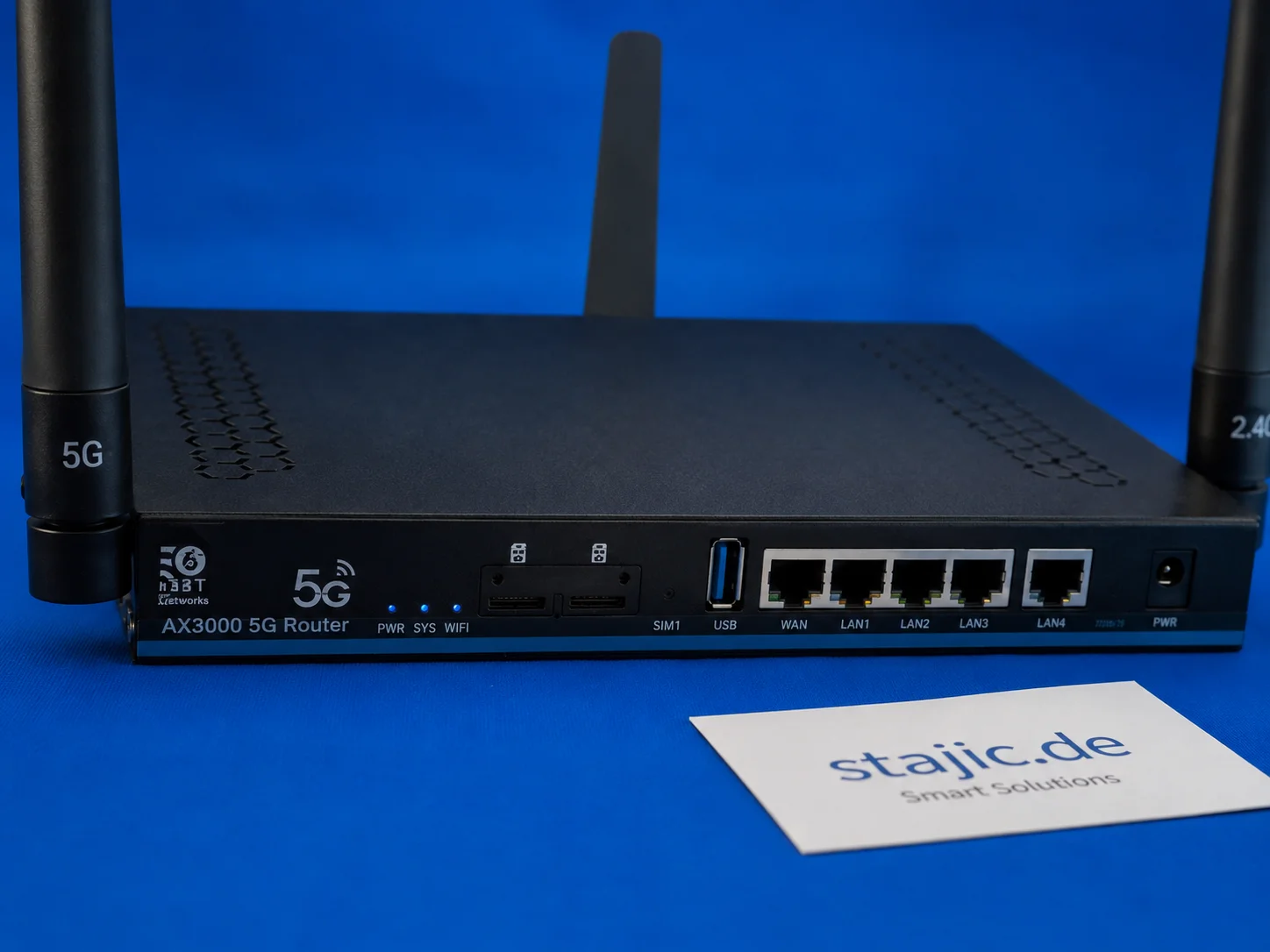
Quectel RM500U-EA in the ZBT Z8102AX: 5G Bands, o2 Germany and Real-World Signal Behavior
The ZBT Z8102AX uses a Quectel RM500U-EA modem for 4G and 5G connectivity. In the first practical test, the router connected successfully to o2 Germany with LTE Band 3 and NR n28. The modem works, but deeper diagnostics such as RSRP, RSRQ, SINR, band locking and cell behavior still need proper testing.

Why Does AI Retrieve Some Sources and Ignore Others? — The Retrieval Authority Layer
Finding a relevant document is not enough. AI systems also need to distinguish sources that are current, authoritative, applicable and traceable from sources that merely look similar. The Retrieval Authority Layer defines that source-selection boundary.

What Is an AI Solution Architect? System Boundaries, Responsibilities and Trade-offs
An AI Solution Architect turns business requirements into a production-ready AI system across data, models, tools, security, runtime, evaluation and operations.

The GPU Is Not the Product: Future-Proof Private AI Architecture
Private AI infrastructure should not be designed around one GPU or one model. A more resilient approach combines fast inference GPUs, memory-rich AI systems, physical-AI nodes and optional frontier cloud models behind a capability-aware routing layer.

Google I/O 2026: Gemini Omni, Gemini 3.5, and the Compute Layer Behind Agentic AI
Google I/O 2026 put Gemini Omni and Gemini 3.5 at the center of Google’s agentic AI strategy. This article breaks down the difference between multimodal creation and action-grade intelligence, why Gemini 3.5 Flash matters for agents and coding, and how these models power the wider Google I/O 2026 platform shift.

Google I/O 2026: Antigravity, AI Studio, and the Shift to Agentic DevTools
Google I/O 2026 made one thing clear for engineers: AI tooling is moving beyond autocomplete into managed agentic execution. This article breaks down Antigravity 2.0, the expanding role of Google AI Studio, Gemini 3.5 Flash, and the real trade-offs around orchestration, lock-in, verification, and developer workflow design.
A Practical Monorepo Architecture with Next.js, Fastify, Prisma, and NGINX
Explore a practical monorepo architecture using Next.js, Fastify, Prisma, and NGINX, highlighting real-world integration and workflow.
The Next OpenWrt 5G Router: Why Wi-Fi 7, a Stronger CPU and Better Firmware Matter
The ZBT Z8102AX is a useful first sample, but the next step should be stronger: Wi-Fi 7, a more powerful four-core platform, better firmware clarity, improved packaging and a more stable pricing policy. The goal is not just another 5G router, but a better configured OpenWrt-based prosumer device.

Ollama Is Not the Product: Building Production-Ready Open-LLM Applications
Running a local model with Ollama is easy. Building a production-ready Open-LLM application is harder: it requires RAG, access control, provider abstraction, evaluation, logging, deployment discipline and a controlled application layer around the model.