
Enterprise-Grade Multi-Tenant Architecture for an International Platform
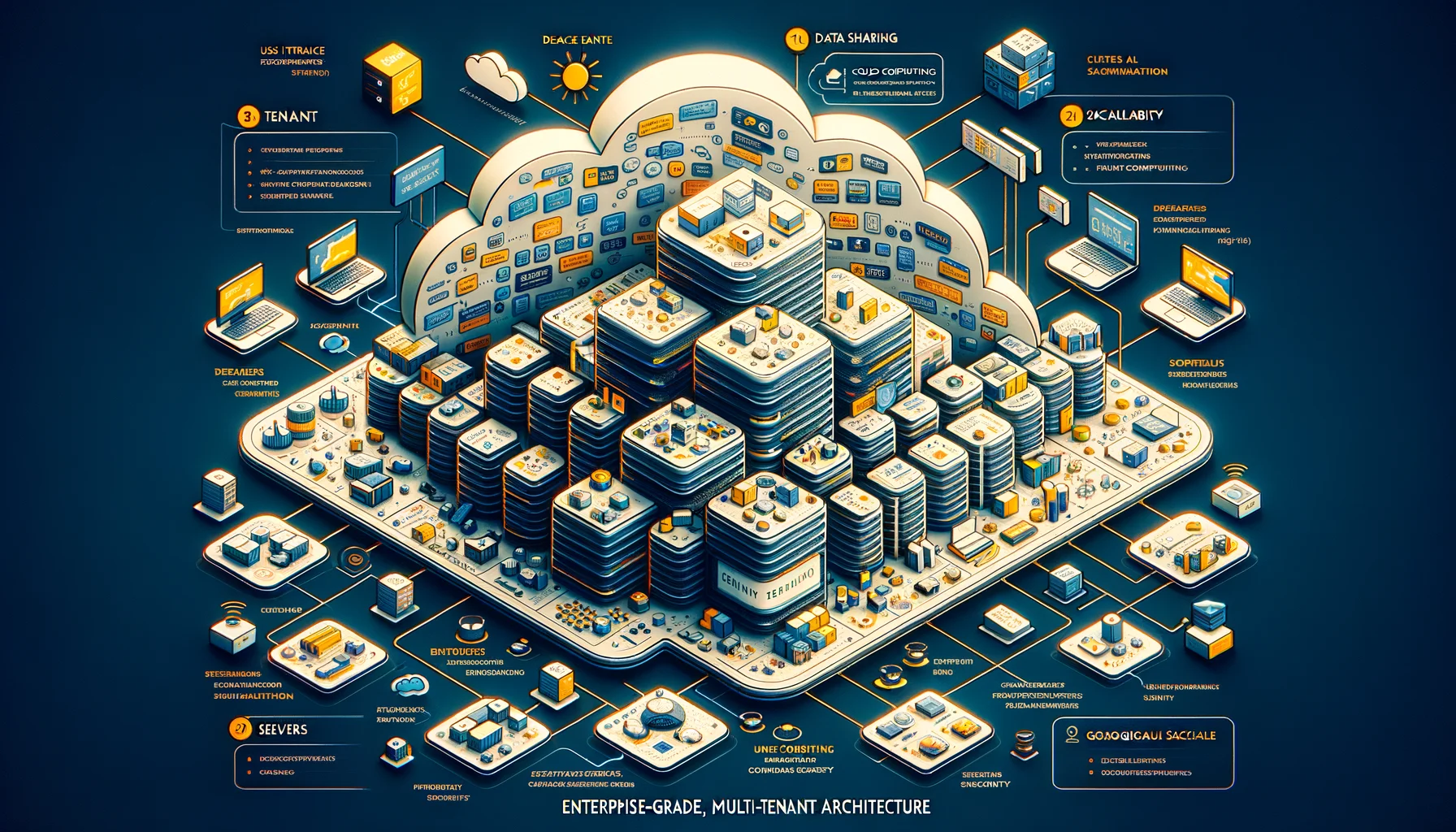
Loving Rocks
Enterprise-Grade Multi-Tenant Architecture for an International Wedding Platform
Loving Rocks is an international wedding platform engineered as a multi-tenant, multi-language, data-isolated system, designed for long-term scalability, operational stability, and market expansion. From an IT leadership perspective, the platform follows principles commonly found in enterprise SaaS architectures rather than traditional content websites.
1. Architectural Philosophy
The core architectural goal of Loving Rocks is controlled scalability without cross-tenant risk.
Instead of building a monolithic, single-database content system, the platform adopts:
- strict tenant isolation
- independent data ownership
- centralized application logic
- predictable operational behavior under growth
This allows the platform to scale across multiple domains, countries, languages, and legal contexts without structural refactoring.
2. Multi-Tenant Model (Tenant Isolation by Design)
Loving Rocks is implemented as a true multi-tenant system, not a shared-table workaround.
Key characteristics
- One database per tenant
- No shared tenant data at the persistence layer
- Tenant context resolved at request level (domain / locale / configuration)
Benefits
- Data isolation by default: a failure, corruption, or misconfiguration in one tenant cannot affect others.
- Security & compliance: tenant-specific GDPR, legal texts, and retention policies are handled independently.
- Operational flexibility: backup, restore, migration, or decommissioning can be performed per tenant without impacting others.
- Future monetization readiness: supports premium tenants, white-label deployments, and region-specific feature sets without branching the codebase.
This is the same isolation strategy used in mature enterprise SaaS platforms.
3. Data Layer Strategy
Each tenant operates on its own dedicated database.
Consequences (intentional)
- No cross-tenant joins
- No global content tables
- No accidental data leakage vectors
Structure overview
- Content schema: articles, guides, categories, tags, metadata
- Localization schema: language-normalized content, translations, locale-specific metadata
- Tenant configuration schema: domain mapping, enabled languages, branding, legal pages
This approach trades a small increase in infrastructure complexity for long-term safety and predictability.
4. Internationalization at Platform Level
Internationalization is not treated as a frontend feature, but as a core platform capability.
Current capabilities
- 8+ supported languages
- Language-aware content storage
- Localized URLs and metadata
- Market-specific legal and privacy pages
Technical implications
- Language switching does not duplicate content logic
- SEO signals (metadata, structure) are generated per locale
- New languages can be enabled without touching existing tenants
This avoids the common anti-pattern of “translated UI over single-language content”.
5. Frontend Delivery Model
The frontend is optimized for performance, predictability, and SEO stability.
Key principles
- Pre-rendered HTML for primary content
- Minimal runtime JavaScript
- No unnecessary SPA complexity
- Fully responsive layout
From a CTO perspective, this ensures consistent load times globally, low operational risk, clean separation between content delivery and business logic, and excellent search engine indexability across markets.
6. Why Multi-Tenant Architecture Matters (CTO Perspective)
For a platform intended to operate internationally, multi-tenant design is not optional.
Without it, growth introduces cross-market coupling, legal risk, operational fragility, and scaling bottlenecks.
With the chosen architecture, Loving Rocks gains:
- horizontal scalability
- regional independence
- clear ownership boundaries
- enterprise-grade maintainability
This makes the platform suitable not only for content delivery, but also for future integrations, partnerships, and white-label use cases.
7. High-Level Architecture Overview
Logical architecture layers:
┌──────────────────────────────┐
│          Frontend            │
│  (Pre-rendered, responsive)  │
└──────────────┬───────────────┘
               │
┌──────────────▼───────────────┐
│     Application Layer        │
│  - Tenant resolution         │
│  - Localization logic        │
│  - Content orchestration     │
└──────────────┬───────────────┘
               │
┌──────────────▼───────────────┐
│      Tenant Databases        │
│  - One DB per tenant         │
│  - Isolated schemas          │
│  - Independent lifecycle     │
└──────────────────────────────┘
Key design rule: A tenant is never aware of another tenant’s existence.
8. Operational Stability & Risk Management
From an operations standpoint, the platform supports:
- tenant-level rollback
- tenant-level maintenance windows
- tenant-level backups
- controlled rollout of changes
Failures are contained, observable, and reversible, which is a fundamental enterprise requirement.
Conclusion
Loving Rocks is not a traditional wedding website. It is a multi-tenant, international content platform built with enterprise architectural principles: isolated databases, language-first design, scalable backend, performance-focused frontend, and long-term operational safety.
This architecture provides a solid foundation for sustained growth, regional expansion, and future platform evolution without technical debt accumulation.
Related Articles
MCP expliqué : ce qu'il connecte, ce qu'il ne fait pas et où il s'intègre
Le protocole de contexte de modèle connecte les applications d’IA à des outils, des ressources et des invites externes par le biais d’une frontière standard client-serveur. Découvrez ce que fait le MCP, ce qu’il ne fait pas et où il s’intègre dans l’architecture des agents.

L'IA générative expliquée : modèles, recherche, outils et applications ne sont pas la même chose
L'IA générative est plus qu'un modèle. Découvrez comment les modèles, la récupération, les outils, le contexte, les environnements d'exécution et les applications s'articulent dans les systèmes d'IA en production.
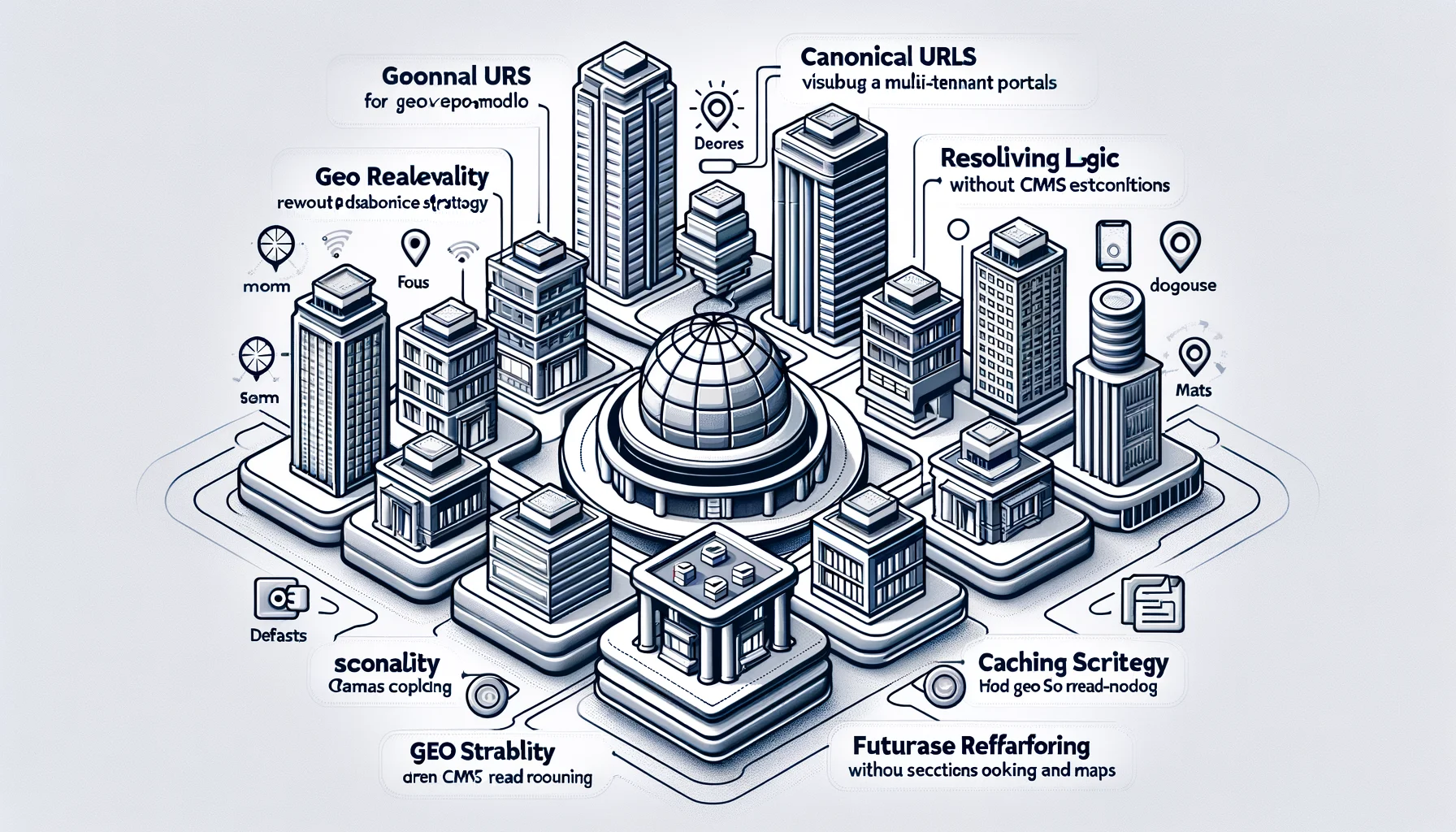
Architecture Canonique, Conception d'URL, Logique de Résolution, Spécification d'API et d'Évolutivité
Architecture de découverte géolocalisée pour les portails multi-locataires. Définit les URL canoniques, la logique de résolution, la stratégie de mise en cache et un modèle de lecture géo sans couplage CMS ni refactorisation de base de données. Conçue pour la stabilité SEO, l'évolutivité et les futures extensions comme la réservation et les cartes.

Quand une IA devrait-elle cesser de faire confiance à ses propres connaissances ? — Le déclencheur de récupération
Un modèle d'IA n'a pas besoin de récupération pour chaque question. Le problème important est de savoir quand ses connaissances internes ne suffisent plus. Le Déclencheur de Récupération est une frontière de décision pratique qui détermine quand un système d'IA devrait cesser de se fier uniquement aux connaissances du modèle et obtenir des preuves externes avant de répondre.

OpenAI Agents API vs Agents SDK vs Responses API : sur quoi devriez-vous construire en 2026 ?
La stack d'agents d'OpenAI a changé en septembre 2026. Ce guide d'architecture sépare l'API Agents, le SDK Agents, l'API Responses et le SDK Codex selon la propriété du runtime — afin que les équipes puissent choisir la bonne limite de contrôle au lieu de comparer des noms de produits.

IA souveraine : contrôle des modèles, des données, des infrastructures et des dépendances
L'IA souveraine concerne le contrôle effectif sur les modèles, les données, l'infrastructure, les logiciels, les opérations et les dépendances stratégiques — et non simplement l'endroit où un modèle d'IA est hébergé.

Architecture de l’IA en entreprise : ce qui change lorsque l’IA entre dans une entreprise
L'architecture de l'IA en entreprise explique comment l'IA transforme les systèmes d'entreprise à travers l'autorité des données, l'identité, les autorisations, les fournisseurs, les risques, la gouvernance, l'évaluation, la conformité et les opérations.

D'où un LLM tire-t-il ses données ? Sources de données RAG en Python
Un LLM ne connaît pas magiquement vos fichiers, bases de données ou API. Cette suite pratique de la série sur le RAG montre, avec du Python simple, comment des données externes deviennent des preuves récupérables : des fichiers texte et du SQL à la recherche en texte intégral, aux embeddings, à l'assemblage du contexte et à l'appel final au LLM.

Qwen 3.6 en production : Runbook de déploiement, Rollback IA et Versionnage LLMOps
Qwen 3.6 n'est pas seulement une autre mise à jour de modèle. C'est à la fois un événement de déploiement, un scénario de rollback et un problème de versionnage. Cet article explique comment Qwen 3.6 doit être géré en production à travers la discipline LLMOps, la traçabilité des prompts et des modèles, le déploiement contrôlé et une préparation au rollback basée sur des preuves.

Ollama n'est pas le produit : construire des applications Open-LLM prêtes pour la production
Exécuter un modèle local avec Ollama est facile. Construire une application Open-LLM prête pour la production est plus difficile : cela nécessite du RAG, du contrôle d'accès, de l'abstraction de fournisseur, de l'évaluation, de la journalisation, de la discipline de déploiement et une couche applicative contrôlée autour du modèle.

À quelle distance se trouve une affirmation d’IA des preuves ? — Distance aux preuves
Toutes les réponses étayées ne sont pas également proches de leurs preuves. La distance aux preuves est un moyen pratique de décrire combien de transformations, de résumés, d'hypothèses et d'étapes inferentielles séparent une affirmation de l'IA de preuves directement inspectables.
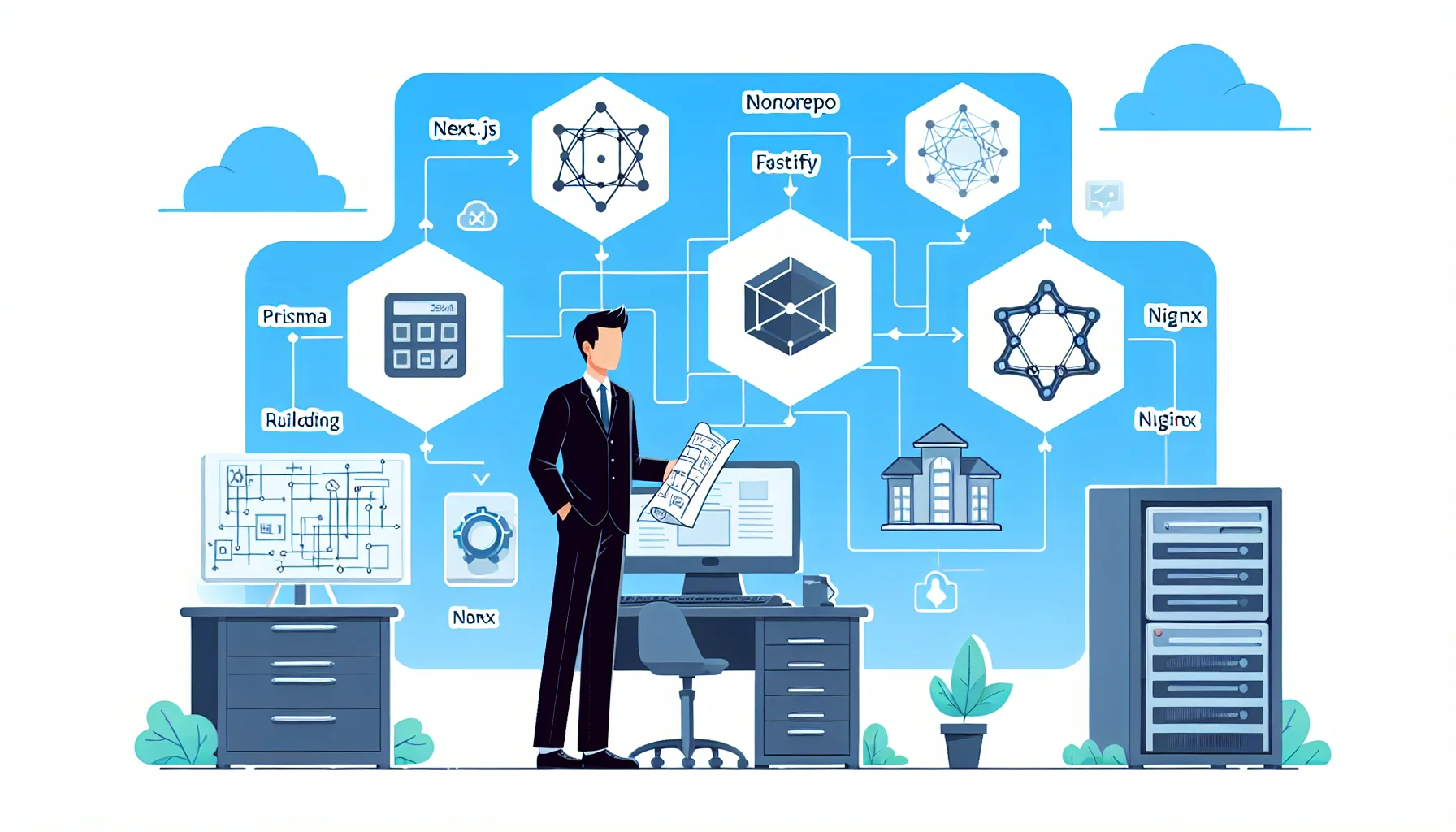
Une Architecture Monorepo Pratique avec Next.js, Fastify, Prisma, et NGINX
Explorez une architecture de monorepo pratique utilisant Next.js, Fastify, Prisma et NGINX, mettant en évidence l'intégration et le flux de travail concrets.