
Comprehensive Metrics Guide for Delivery and Change Management

Comprehensive Metrics Guide for Delivery and Change Management
In enterprise environments, effective delivery and change management rely on data-driven insights. Metrics serve as the foundation for assessing performance, identifying bottlenecks, and ensuring alignment with strategic goals. This guide covers core metrics across delivery pipelines, change processes, and overall value realization, with practical steps for implementation.
Why Metrics Matter in Delivery and Change
Metrics transform subjective opinions into objective data, enabling teams to:
- Track progress against objectives
- Predict and mitigate risks
- Optimize resource allocation
- Demonstrate ROI to stakeholders
Without robust metrics, organizations risk siloed efforts, prolonged downtimes, and failed transformations.
Core Delivery Metrics
1. Deployment Frequency
Measures how often code is deployed to production.
- Target: Daily or multiple times per day for elite performers (DORA standards)
- Calculation: Number of deployments per day/week/month
- Practical Steps: Integrate deployment tracking into your CI/CD pipeline; segment by environment (dev/staging/prod); benchmark against industry standards
2. Lead Time for Changes
Time from commit to production deployment.
- Target: Less than one day
- Calculation: Average time across all changes
- Practical Steps: Use tools like GitHub Actions or Jenkins for automated logging; identify delays in review, testing, or approval stages; automate where possible to reduce human bottlenecks
3. Change Failure Rate
Percentage of deployments causing failures in production.
- Target: 0–15%
- Calculation: (Failed changes / Total changes) × 100
- Practical Steps: Define “failure” such as rollback, hotfix, or degraded service >1hr; implement canary releases and feature flags; conduct post-mortems on failures
4. Mean Time to Recovery (MTTR)
Average time to restore service after a failure.
- Target: Less than one hour
- Calculation: Total downtime / Number of incidents
- Practical Steps: Set up alerting with PagerDuty or Opsgenie; automate rollback procedures; run chaos engineering drills
Key Change Management Metrics
1. Change Success Rate
Proportion of changes implemented without issues.
- Target: >85%
- Calculation: (Successful changes / Total changes) × 100
- Practical Steps: Standardize change request templates; require risk assessments and peer reviews; track via ITSM tools like ServiceNow
2. Change Volume and Backlog
Number of changes processed vs. pending.
- Target: Backlog <10% of monthly volume
- Calculation: Pending changes / Total submitted
- Practical Steps: Prioritize using the MoSCoW method; implement change advisory boards (CAB); monitor cycle time from request to approval
3. Emergency Change Percentage
Ratio of urgent changes to total changes.
- Target: <10%
- Calculation: (Emergency changes / Total) × 100
- Practical Steps: Analyze root causes of emergencies; shift to proactive maintenance; enforce post-change reviews
Value Realization Metrics
1. Business Value Delivered
Quantifies impact of changes on key outcomes.
- Examples: Revenue uplift, cost savings, user engagement
- Calculation: Pre/post change KPIs delta
- Practical Steps: Tag changes with expected business outcomes; use OKR frameworks for alignment; report quarterly value scorecards
2. Customer Satisfaction (CSAT)
Feedback on delivered changes.
- Target: >4/5 score
- Calculation: Average post-deployment survey score
- Practical Steps: Automate NPS/CSAT surveys; correlate with deployment metrics; iterate based on qualitative feedback
Implementing a Metrics Framework
- Select Metrics: Start with DORA’s four key metrics, then add change-specific ones.
- Tooling: Use observability platforms such as Datadog or New Relic integrated with ITSM.
- Dashboards: Build real-time views in Grafana or Tableau.
- Benchmarking: Compare against industry peers via the Accelerate State of DevOps report.
- Review Cadence: Weekly team reviews and monthly leadership updates.
- Action Loops: Tie metrics to retrospectives and PI planning.
Common Pitfalls and Best Practices
- Pitfall: Vanity metrics such as lines of code — focus on outcomes.
- Best Practice: Context matters; segment by team/service.
- Pitfall: Overloading with metrics — limit to 7–10 core ones.
- Best Practice: Automate collection to ensure accuracy.
Regularly refine your metrics to reflect evolving priorities. For enterprise-scale success, integrate these into your reference models for delivery and change.
Comprehensive Metrics Guide for Delivery and Change Management
In enterprise environments, effective delivery and change management rely on data-driven insights. Metrics serve as the foundation for assessing performance, identifying bottlenecks, and ensuring alignment with strategic goals. This guide covers core metrics across delivery pipelines, change processes, and overall value realization, with practical steps for implementation.
Why Metrics Matter in Delivery and Change
Metrics transform subjective opinions into objective data, enabling teams to:
- Track progress against objectives
- Predict and mitigate risks
- Optimize resource allocation
- Demonstrate ROI to stakeholders
Without robust metrics, organizations risk siloed efforts, prolonged downtimes, and failed transformations.
Core Delivery Metrics
1. Deployment Frequency
Measures how often code is deployed to production.
- Target: Daily or multiple times per day for elite performers (DORA standards)
- Calculation: Number of deployments per day/week/month
- Practical Steps: Integrate deployment tracking into your CI/CD pipeline; segment by environment (dev/staging/prod); benchmark against industry standards
2. Lead Time for Changes
Time from commit to production deployment.
- Target: Less than one day
- Calculation: Average time across all changes
- Practical Steps: Use tools like GitHub Actions or Jenkins for automated logging; identify delays in review, testing, or approval stages; automate where possible to reduce human bottlenecks
3. Change Failure Rate
Percentage of deployments causing failures in production.
- Target: 0–15%
- Calculation: (Failed changes / Total changes) × 100
- Practical Steps: Define “failure” such as rollback, hotfix, or degraded service >1hr; implement canary releases and feature flags; conduct post-mortems on failures
4. Mean Time to Recovery (MTTR)
Average time to restore service after a failure.
- Target: Less than one hour
- Calculation: Total downtime / Number of incidents
- Practical Steps: Set up alerting with PagerDuty or Opsgenie; automate rollback procedures; run chaos engineering drills
Key Change Management Metrics
1. Change Success Rate
Proportion of changes implemented without issues.
- Target: >85%
- Calculation: (Successful changes / Total changes) × 100
- Practical Steps: Standardize change request templates; require risk assessments and peer reviews; track via ITSM tools like ServiceNow
2. Change Volume and Backlog
Number of changes processed vs. pending.
- Target: Backlog <10% of monthly volume
- Calculation: Pending changes / Total submitted
- Practical Steps: Prioritize using the MoSCoW method; implement change advisory boards (CAB); monitor cycle time from request to approval
3. Emergency Change Percentage
Ratio of urgent changes to total changes.
- Target: <10%
- Calculation: (Emergency changes / Total) × 100
- Practical Steps: Analyze root causes of emergencies; shift to proactive maintenance; enforce post-change reviews
Value Realization Metrics
1. Business Value Delivered
Quantifies impact of changes on key outcomes.
- Examples: Revenue uplift, cost savings, user engagement
- Calculation: Pre/post change KPIs delta
- Practical Steps: Tag changes with expected business outcomes; use OKR frameworks for alignment; report quarterly value scorecards
2. Customer Satisfaction (CSAT)
Feedback on delivered changes.
- Target: >4/5 score
- Calculation: Average post-deployment survey score
- Practical Steps: Automate NPS/CSAT surveys; correlate with deployment metrics; iterate based on qualitative feedback
Implementing a Metrics Framework
- Select Metrics: Start with DORA’s four key metrics, then add change-specific ones.
- Tooling: Use observability platforms such as Datadog or New Relic integrated with ITSM.
- Dashboards: Build real-time views in Grafana or Tableau.
- Benchmarking: Compare against industry peers via the Accelerate State of DevOps report.
- Review Cadence: Weekly team reviews and monthly leadership updates.
- Action Loops: Tie metrics to retrospectives and PI planning.
Common Pitfalls and Best Practices
- Pitfall: Vanity metrics such as lines of code — focus on outcomes.
- Best Practice: Context matters; segment by team/service.
- Pitfall: Overloading with metrics — limit to 7–10 core ones.
- Best Practice: Automate collection to ensure accuracy.
Regularly refine your metrics to reflect evolving priorities. For enterprise-scale success, integrate these into your reference models for delivery and change.
Related Articles

RBAC vs Tenant Isolation: Two Different Security Boundaries
RBAC controls what a user may do; tenant isolation controls which tenant’s resources that action may reach. Learn why multi-tenant SaaS security requires both boundaries.
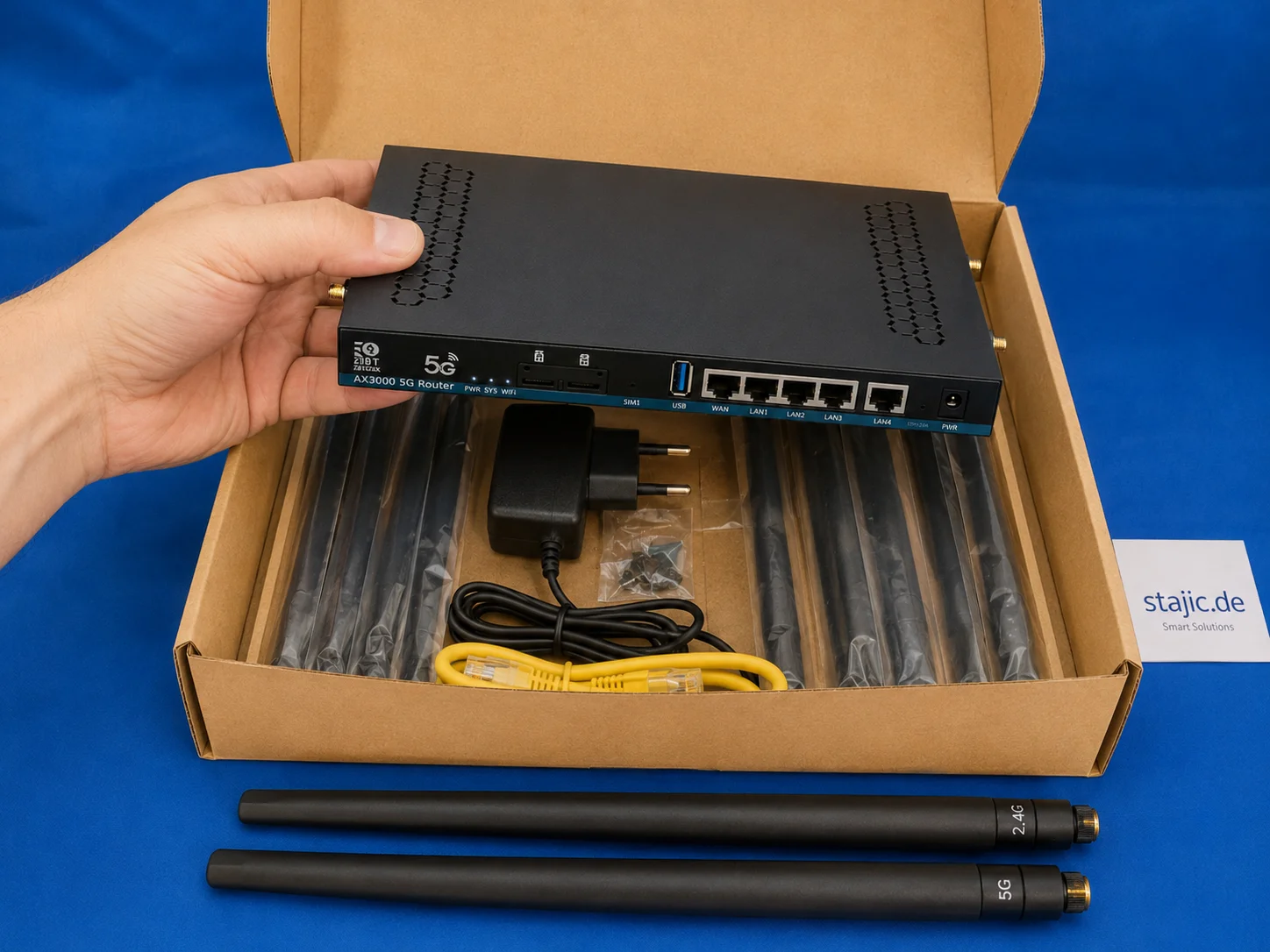
ZBT Z8102AX Hardware and Packaging Review: Strong Router, Weak Box
The ZBT Z8102AX makes a solid first impression as a slim black metal 5G OpenWrt router with multiple antenna connectors, dual-SIM slots, USB, LAN/WAN ports and a practical accessory set. The hardware feels useful and serious, but the packaging is clearly the weak point.

The Prompt Is Part of the Bias: How AI Framing Shapes Reasoning
Prompt wording is not neutral. Explore how framing, assumptions, instruction-following and sycophancy can shape AI reasoning—and why reliable conclusions require testing beyond the original prompt.

Google I/O 2026: Architectural Pivots, Agentic AI, and the Unified Ecosystem Reality Check
Google I/O 2026 was not just a model event. It showed a deeper platform shift across Gemini models, developer tooling, Android-linked surfaces, and intelligent devices. This article breaks down the keynote as a hub story for engineers, architects, and product teams who need to separate real runtime implications from stage-level hype.

Vector Databases, Embeddings and Reranking: Three Different Parts of Retrieval
Embeddings represent meaning, vector databases retrieve candidates, and rerankers refine results. Learn how these three retrieval layers differ and work together in RAG.

The GPU Is Not the Product: Future-Proof Private AI Architecture
Private AI infrastructure should not be designed around one GPU or one model. A more resilient approach combines fast inference GPUs, memory-rich AI systems, physical-AI nodes and optional frontier cloud models behind a capability-aware routing layer.

RAG Failed — But Which Layer Actually Failed? A Diagnostic Method
When a RAG answer is wrong, blaming retrieval or the model is too vague. This diagnostic method isolates source coverage, query construction, retrieval, ranking, context assembly, generation, evidence attribution, and freshness—so the actual failure can be reproduced and fixed.

Google I/O 2026: Agentic Products Across Search, Workspace, and Shopping
Google I/O 2026 showed that agentic AI is moving beyond model demos and developer tools into everyday product surfaces. This article breaks down how Search, Workspace, Gemini Spark, and Universal Cart point toward a new product model where Google agents help users research, work, shop, and act across connected services.

New Qwen 3.5-Plus: Open-source AI is getting serious now
Discover the groundbreaking features and benefits of Alibaba's Qwen 3.5-Plus, a revolutionary open-source AI for developers.

Streamlining Code Quality: Testing with ESLint and Prettier
This article details the integration of ESLint and Prettier into modern development and testing workflows, focusing on practical implementation for consistent code quality and style.

Falsification for AI Reasoning: From Answers to Tested Hypotheses
AI models can generate convincing evidence for almost any plausible hypothesis. A more reliable methodology asks the opposite question: what evidence would weaken, contradict or force us to abandon the conclusion? This article develops falsification-oriented reasoning for LLMs using competing hypotheses, discriminating tests, counter-evidence and explicit rejection criteria.

Google I/O 2026: Android XR, Intelligent Eyewear, and the Ambient AI Interface
Google I/O 2026 pushed Android XR and intelligent eyewear from concept toward a real platform direction. This article breaks down audio glasses, display glasses, Gemini-powered context awareness, developer implications, privacy risks, and why wearable AI is less about replacing phones and more about creating ambient assistance surfaces.