
Quectel RM500U-EA in the ZBT Z8102AX: 5G Bands, o2 Germany and Real-World Signal Behavior
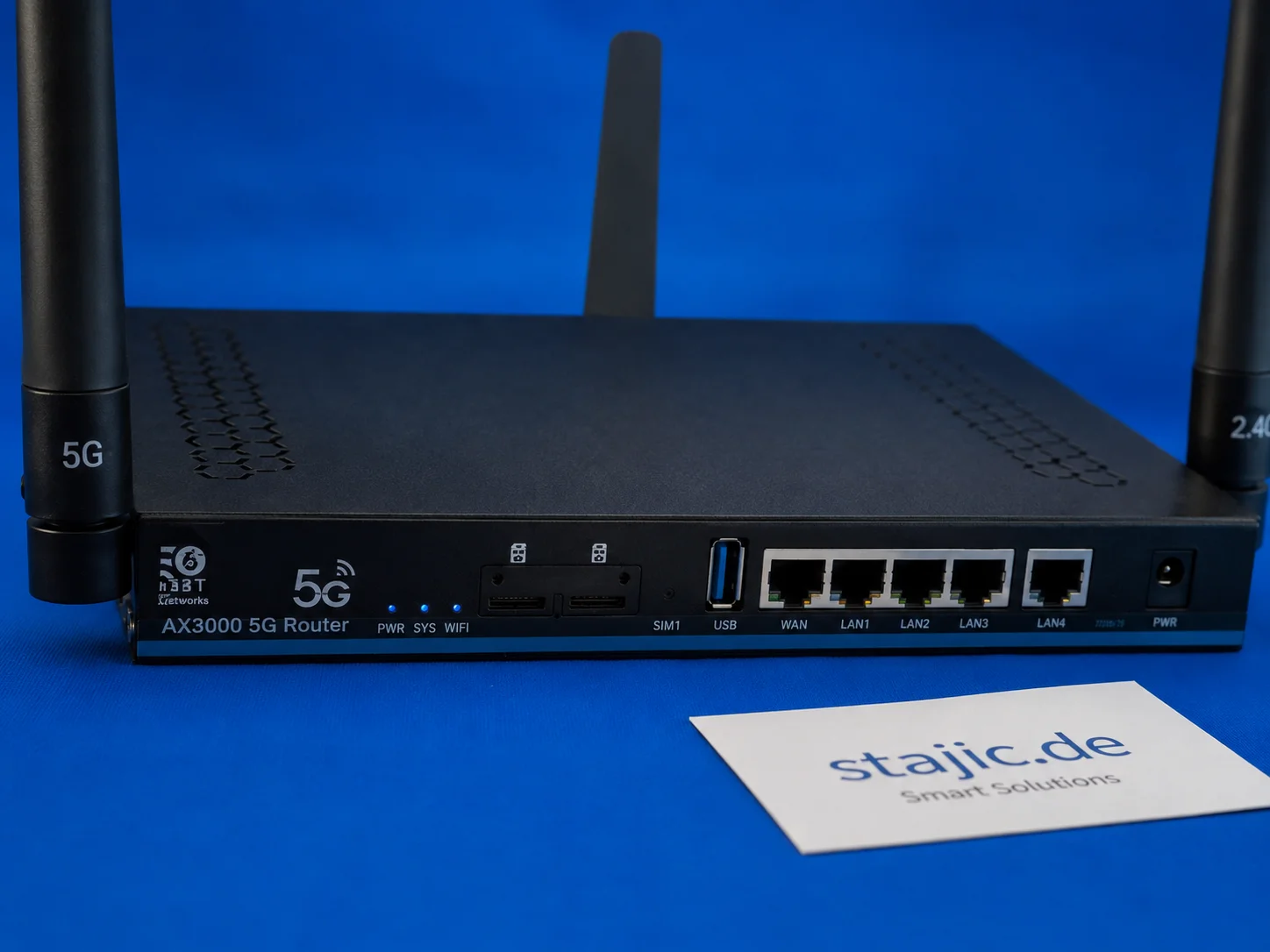
ZBT Z8102AX RM500U-EA Modem Test: 5G Bands, Signal Quality and Mobile Network Behavior
The ZBT Z8102AX tested here uses a Quectel RM500U-EA modem for mobile network connectivity. This is one of the most important parts of the router, because a 5G router is only as useful as its modem behavior, antenna setup, band support and firmware integration.
In the first test period, the modem worked successfully. The SIM card was recognized, the APN was accepted, the modem connected to the mobile network and the router provided internet access. The first observed network was o2 Germany with LTE Band 3 and NR n28.
Part of the ZBT Z8102AX Test Series
This article focuses on the RM500U-EA modem and mobile network behavior. The main review is available at /blog/zbt-z8102ax-5g-openwrt-router-review. The hardware and packaging review is available at /blog/zbt-z8102ax-hardware-packaging-review. The firmware article is available at /blog/zbt-z8102ax-openwrt-2102-firmware-review.
Current Modem State
The router interface identifies the modem as Quectel RM500U-EA. During the first test, the SIM status was ready, the APN was set to internet and the network search mode was set to automatic. The observed operator was o2 Germany.
- Modem: Quectel RM500U-EA
- SIM status: ready
- APN: internet
- Network search mode: automatic
- Observed operator: o2 Germany
- Observed 4G band: LTE Band 3
- Observed 5G band: NR n28
- Router signal display: 66 percent
Observed Band Combination: LTE B3 and NR n28
The first observed mobile network state was LTE Band 3 combined with NR n28. In simple terms, LTE Band 3 acts as the 4G anchor and NR n28 provides the 5G layer. This is a common practical configuration in real mobile networks, especially when coverage and stability matter more than maximum peak speed.
NR n28 is a low-frequency 5G band and is useful for coverage. It can provide better reach and indoor penetration than higher-frequency 5G bands, but it usually does not deliver the same peak speed as n78. That makes the first result positive for coverage, but not yet a final speed or performance conclusion.
Why 66 Percent Signal Is Not Enough Information
The router interface showed a signal value of 66 percent. That is useful as a quick status indicator, but it is not enough for serious modem testing. A percentage value does not show the real quality of the radio connection.
For a proper evaluation, more detailed values are needed: RSRP, RSRQ, SINR, cell ID, frequency information, band combination and possibly carrier aggregation or EN-DC state. Without these values, it is difficult to know whether the connection is truly strong, merely acceptable or unstable under load.
- RSRP for signal strength
- RSRQ for signal quality
- SINR for signal-to-noise quality
- Cell ID and physical cell ID
- LTE and NR frequency information
- Band combination
- Connection mode such as LTE, NSA or SA
- Reconnect behavior under weak signal
Antennas Matter More Than the Spec Sheet
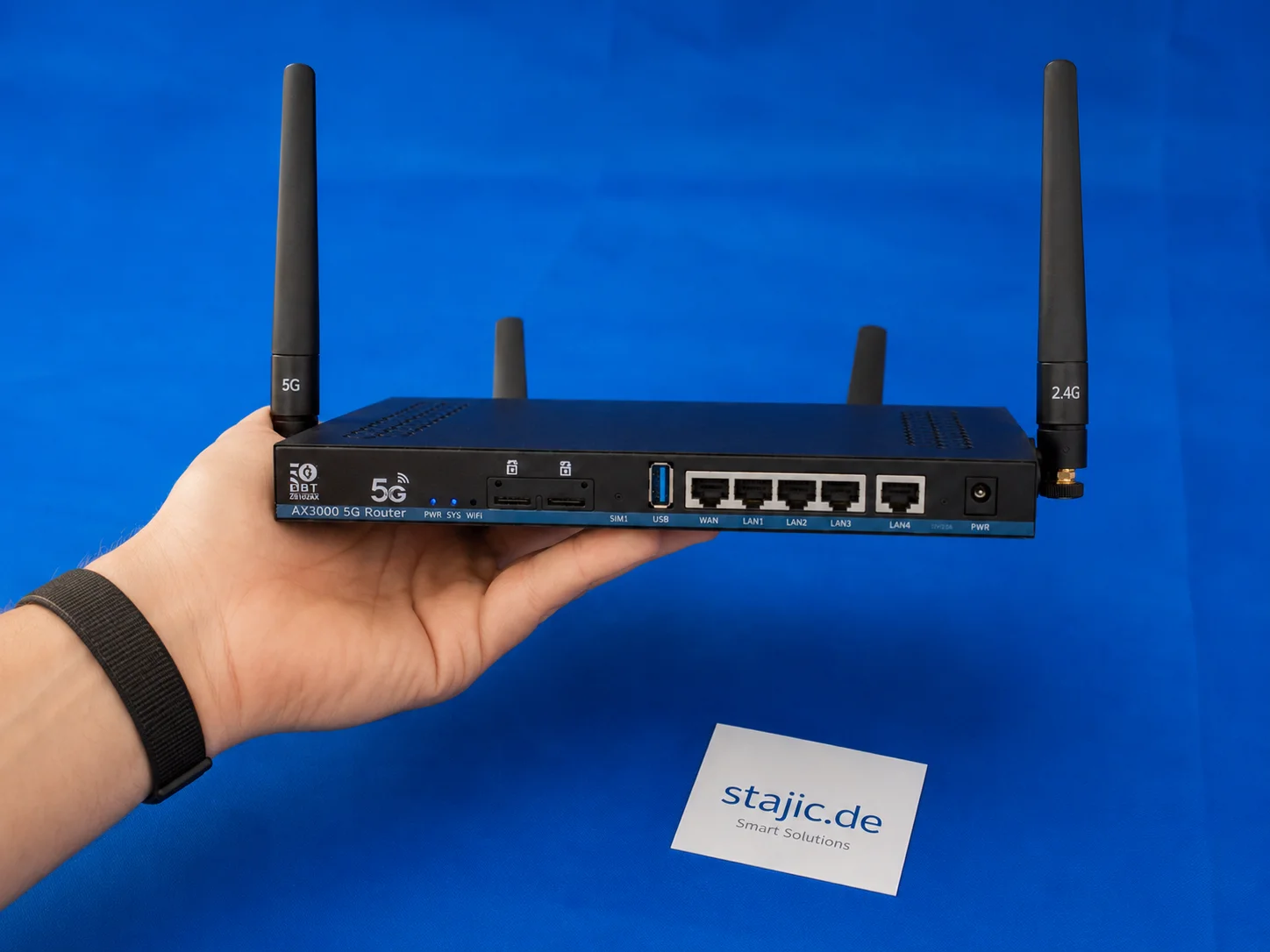
A 5G modem test is never only a modem test. Antennas, placement, cable losses, building structure and the selected mobile bands can change the result dramatically. The ZBT Z8102AX uses external antennas, which is a major advantage for experimentation and optimization.
The next practical test should compare different antenna positions, different room locations and possibly stronger external antennas. A router that performs only average in one position can become much better when placed near a window or connected to a better antenna setup.
Band Locking and Automatic Band Selection
One of the most important open questions is band locking. A good 5G router should allow the user to test and control which bands are used. Automatic mode is convenient, but it does not always select the best combination for stability, latency or throughput.
For example, a router may select a band combination with good coverage but lower speed, or it may move between cells in a way that causes unstable performance. Band locking can help test whether another band or combination gives better results in a specific location.
- Test automatic band selection
- Check whether manual band locking is available
- Compare LTE anchor bands
- Compare NR n28 with other available 5G bands
- Measure speed, latency and stability after each change
- Document signal values before and after antenna changes
Speed Is Not the Only Metric
It is tempting to judge a 5G router only by speed tests. That would be too simple. For real use, stability, latency, reconnect behavior, signal quality and failover behavior can be more important than one high peak download number.
A good mobile router should stay online, recover from network changes, handle temporary signal drops and provide predictable performance. This is especially important if the router is used as a backup WAN, mobile office connection or homelab internet source.
What Works So Far
The first practical result is positive. The RM500U-EA modem was detected, the SIM card worked, the router connected to the mobile network and the device remained stable for several days. That is enough to continue with deeper testing.
- Modem detection works
- SIM recognition works
- APN configuration works
- Mobile connection works
- 5G connection is active
- Router stayed stable during the first test period
- Hardware is worth further testing
Open Questions
The modem works, but many important questions are still open. These questions decide whether the router is only a working sample or a serious platform for long-term use.
- Can the firmware show detailed RSRP, RSRQ and SINR values?
- Can bands be locked reliably?
- Can the router prefer better bands automatically?
- How stable is the connection under load?
- How does the modem recover after signal loss?
- How does the modem behave after reboot?
- How much do better antennas improve the result?
- Can another firmware improve modem control?
Modem Behavior as a Product Factor
For a private test setup, it is enough that the modem works and stays online. For a professional product, modem behavior becomes one of the most important quality factors. Customers do not only buy a modem model. They buy reliable connectivity.
That means antenna quality, firmware integration, diagnostics, recovery behavior and documentation are part of the real product. A cheaper router can become more expensive in practice if the modem is difficult to control or unstable in everyday use.
Next Modem Tests
The next tests should go deeper than the first connection status. The focus should be on signal quality, antenna positioning, band behavior, reconnect reliability and whether another firmware can expose better modem controls.
- Record RSRP, RSRQ and SINR if available
- Test router position near a window
- Test different antenna orientations
- Compare automatic mode with possible band locking
- Measure speed and latency over time
- Test reconnect after modem restart
- Test behavior after router reboot
- Compare firmware options later
Conclusion
The Quectel RM500U-EA inside the ZBT Z8102AX works and successfully provided mobile connectivity in the first test. The observed LTE Band 3 and NR n28 combination on o2 Germany is a useful starting point and shows that the router is capable of real 5G operation.
The modem test is not finished. The basic result is positive, but the next step is deeper diagnostics: real signal values, antenna experiments, band control, reconnect behavior and firmware comparison. Only after that can the modem performance be judged properly.
Related Articles
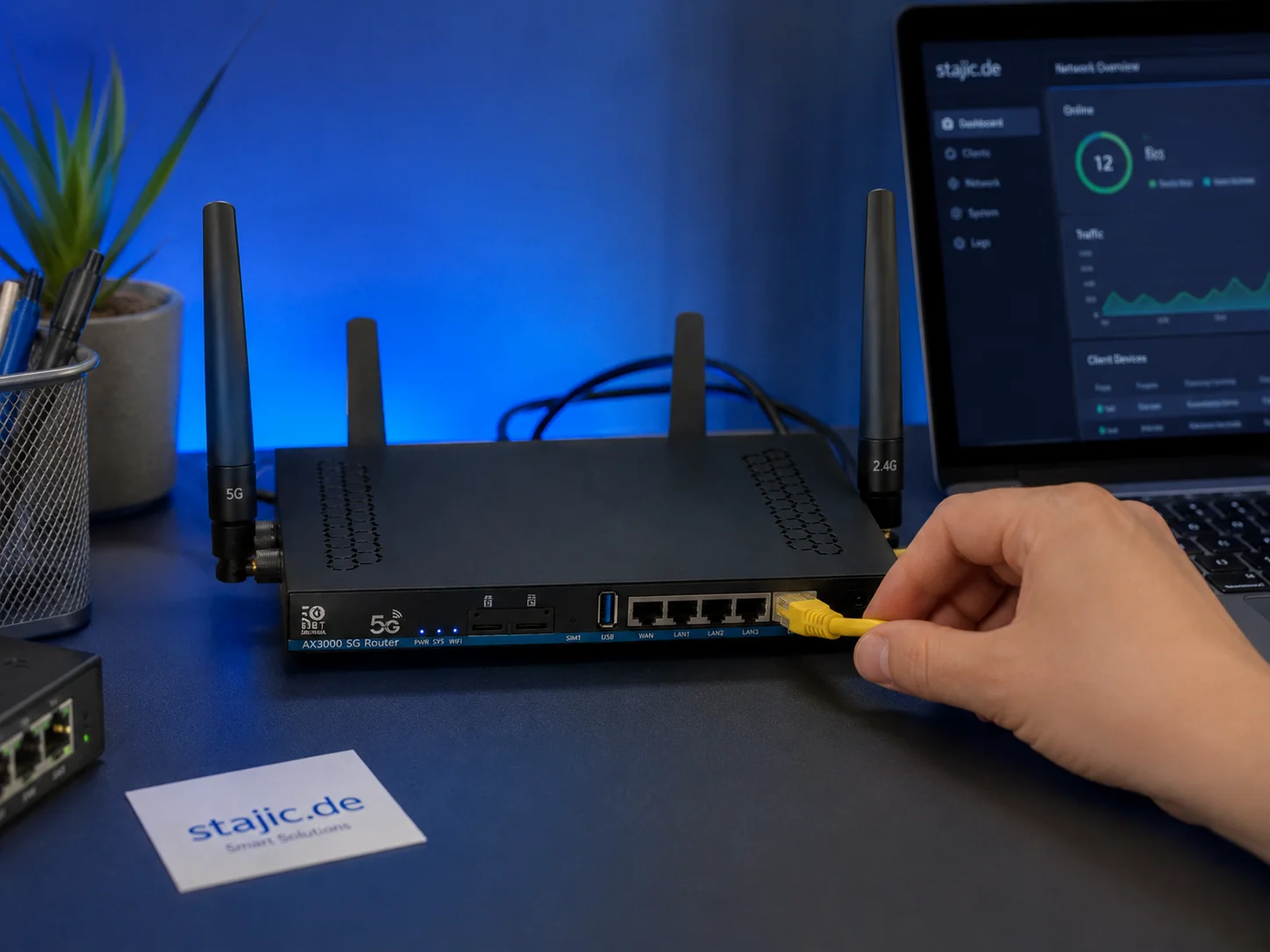
ZBT Z8102AX OpenWrt 21.02 Firmware Review: Stable Enough, but Is It Future-Proof?
The ZBT Z8102AX runs a vendor-modified OpenWrt 21.02 build with kernel 5.4.246. In practical testing, the firmware worked successfully and kept the router stable for several days, but the old base raises important questions about security, modem control, upgrade paths and long-term maintainability.
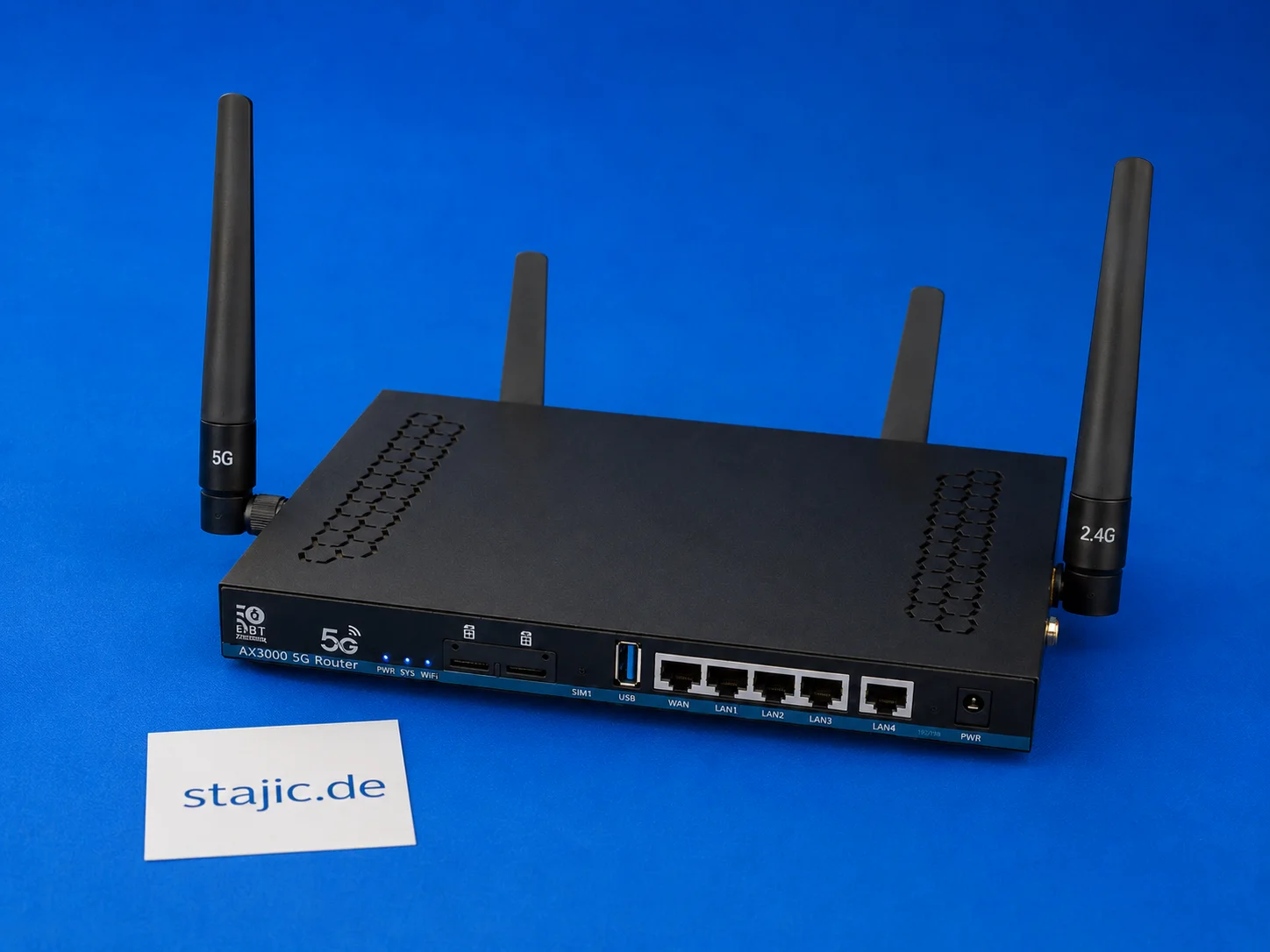
ZBT Z8102AX Dual-SIM Failover: What Works, What Is Missing and What Needs Better Firmware
The ZBT Z8102AX is a dual-SIM 5G OpenWrt router, but dual-SIM hardware alone is not the same as intelligent failover. The router recognizes the SIM and connects successfully, but automatic switching, modem recovery, signal-based decisions and clean failover logic still need deeper testing.
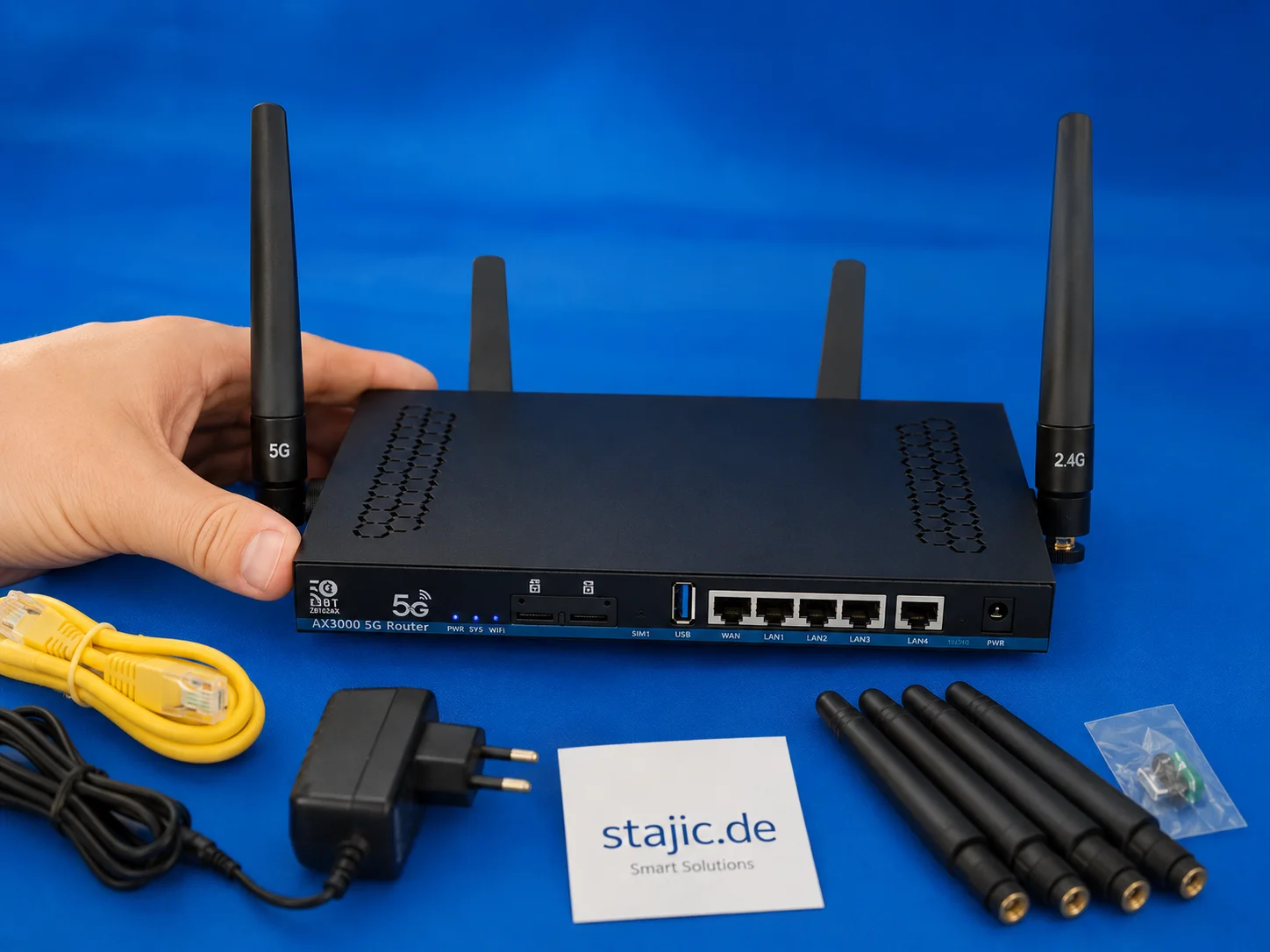
The Next OpenWrt 5G Router: Why Wi-Fi 7, a Stronger CPU and Better Firmware Matter
The ZBT Z8102AX is a useful first sample, but the next step should be stronger: Wi-Fi 7, a more powerful four-core platform, better firmware clarity, improved packaging and a more stable pricing policy. The goal is not just another 5G router, but a better configured OpenWrt-based prosumer device.
Should You Buy a 5G OpenWrt Router with Old Firmware? ZBT Z8102AX as a Practical Example
Buying a 5G OpenWrt router with older firmware can make sense, but only under the right conditions. The ZBT Z8102AX shows both sides clearly: the hardware is useful, the modem works, and the router stayed stable in testing, but OpenWrt 21.02, weak packaging and unclear upgrade paths require a careful buying decision.

How to Know Whether an AI Agent Actually Used the Right Evidence
An AI agent can cite sources and still use the wrong evidence. This article introduces a practical method for checking claim support, source authority, applicability, provenance, and whether the evidence actually influenced the answer.

Canonical Architecture, URL Design, Resolver Logic, API & Scalability Specification
Geo-based discovery architecture for multi-tenant portals. Defines canonical URLs, resolver logic, caching strategy, and a geo read-model without CMS coupling or database refactoring. Designed for SEO stability, scalability, and future extensions like booking and maps.
ZBT Z8102AX 5G OpenWrt Router Review: Dual SIM, RM500U-EA and an Honest Assessment
The ZBT Z8102AX is an unusual 5G router with an OpenWrt base, a dual-SIM concept, and a Quectel RM500U-EA modem. In testing, it shows clear strengths in flexibility, interfaces, and mobile connectivity, but also the typical weaknesses of a vendor-modified OpenWrt build.
ZBT Z8102AX Hardware and Packaging Review: Strong Router, Weak Box
The ZBT Z8102AX makes a solid first impression as a slim black metal 5G OpenWrt router with multiple antenna connectors, dual-SIM slots, USB, LAN/WAN ports and a practical accessory set. The hardware feels useful and serious, but the packaging is clearly the weak point.