
The Next OpenWrt 5G Router: Why Wi-Fi 7, a Stronger CPU and Better Firmware Matter
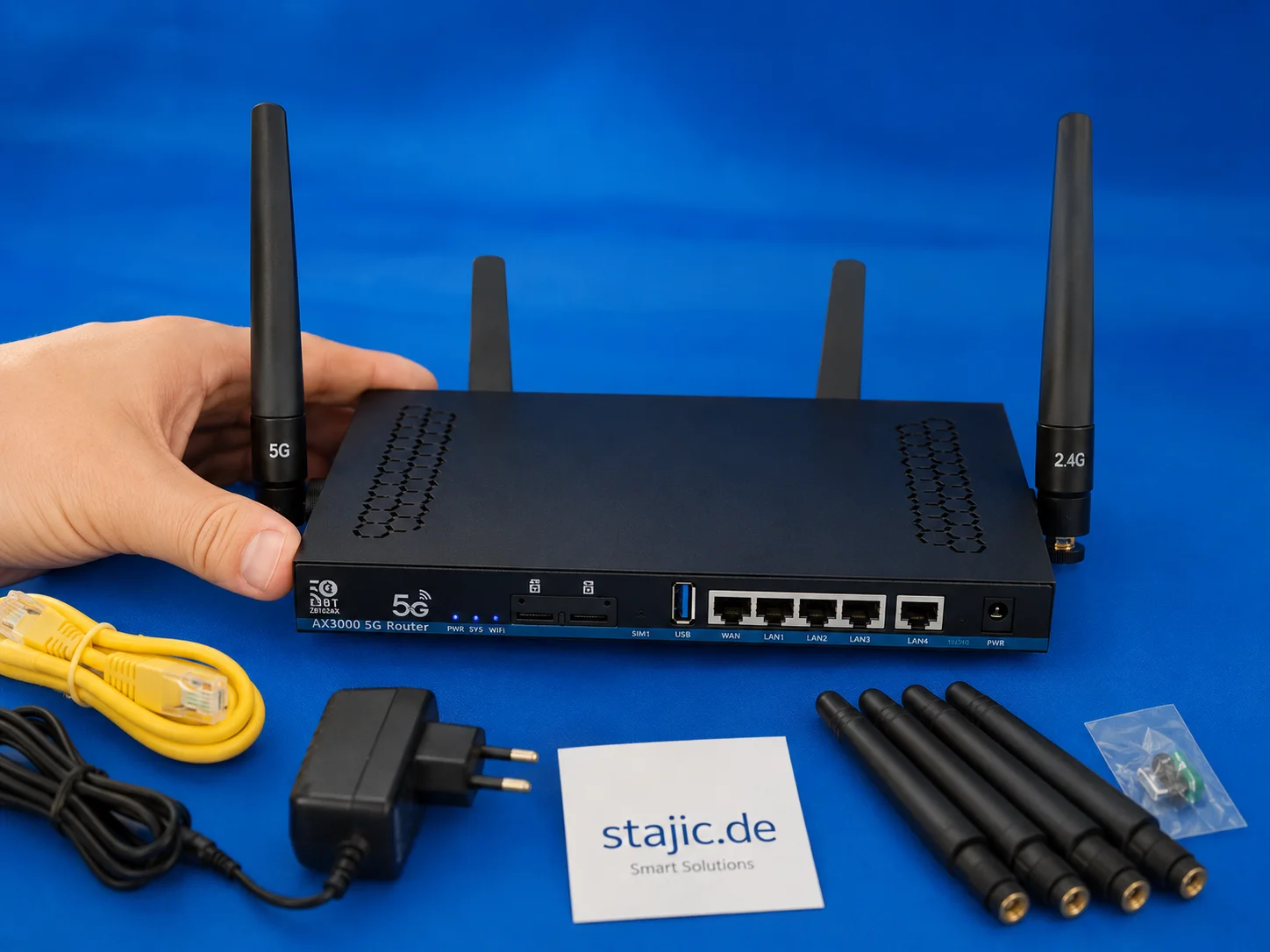
Next Step: Wi-Fi 7, Stronger CPU and a Better OpenWrt 5G Router Configuration
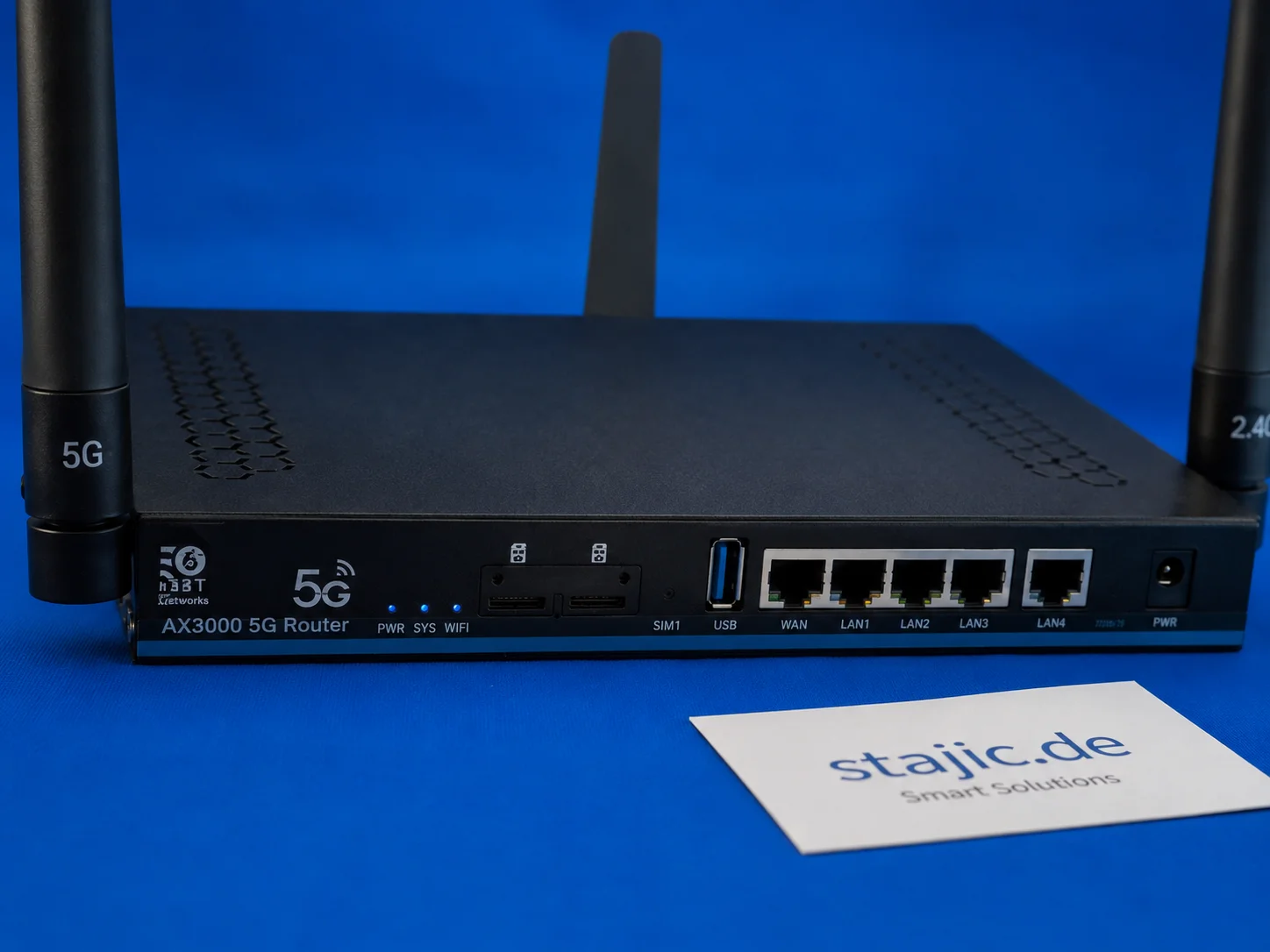
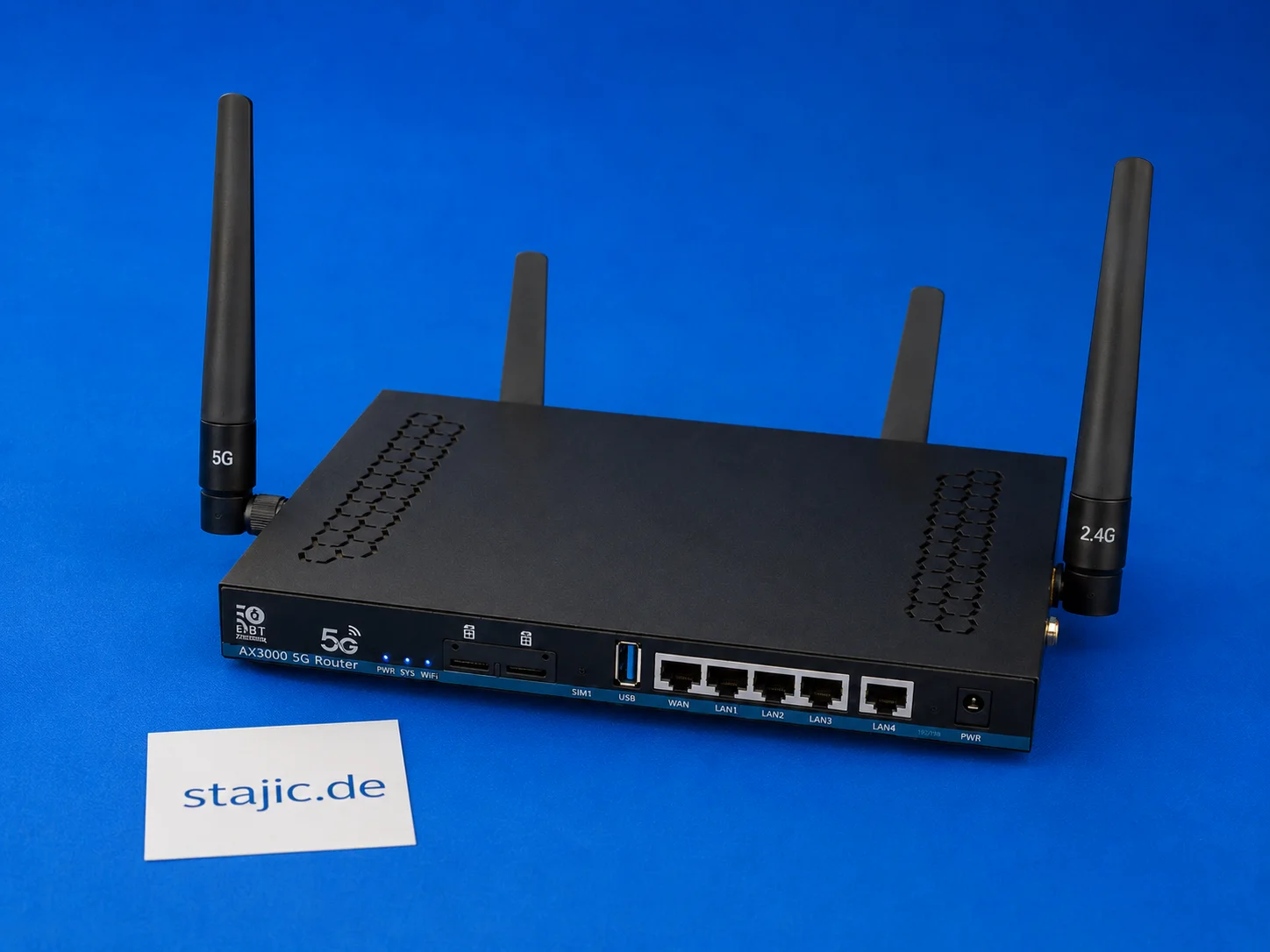
The ZBT Z8102AX was a useful first sample. It proved that a 5G OpenWrt-based router with dual-SIM hardware, external antennas and a real mobile modem can be interesting, practical and stable enough for further testing. But it also showed clearly where the next device should be better.
The next step should not simply be another router from the same class. The next step should be a stronger Wi-Fi 7 device with a more powerful four-core platform, better firmware clarity, better OpenWrt support, improved packaging and a more stable pricing policy. The goal is to move from a useful sample toward a more serious product direction.
Part of the ZBT Z8102AX Test Series
This article is the final part of the first ZBT Z8102AX test series. The main review is available at /blog/zbt-z8102ax-5g-openwrt-router-review. The hardware and packaging review is available at /blog/zbt-z8102ax-hardware-packaging-review. The firmware article is available at /blog/zbt-z8102ax-openwrt-2102-firmware-review. The RM500U-EA modem article is available at /blog/zbt-z8102ax-rm500u-ea-5g-modem-test. The dual-SIM and failover article is available at /blog/zbt-z8102ax-dual-sim-failover-test. The buying decision article is available at /blog/should-you-buy-5g-openwrt-router-old-firmware.
What the First Sample Taught
The first sample confirmed several important points. The hardware is not useless, the modem works, the SIM card is recognized, the router can stay online for several days and the OpenWrt-based firmware is functional enough for practical testing. That is a positive foundation.
At the same time, the sample also showed the limits of this generation. The firmware is old, the packaging is weak, automatic dual-SIM failover still needs deeper proof and the long-term upgrade path is not clear enough. These are exactly the areas where a next-generation configuration should improve.
- The 5G modem works and connects successfully
- The router can remain stable for several days
- OpenWrt-based firmware is useful but not automatically future-proof
- Dual-SIM hardware is valuable only with good firmware control
- Packaging matters more than expected
- A clear recovery and upgrade path is essential
- A stronger next device should be selected more carefully
Why Wi-Fi 7 Is the Logical Next Step
Wi-Fi 6 is still useful, but the next serious OpenWrt 5G router should move toward Wi-Fi 7. A modern 5G router should not only provide mobile internet access. It should also distribute that connection efficiently inside the local network. This becomes more important when the router is used for mobile office work, homelabs, high-speed devices or future multi-gigabit setups.
Wi-Fi 7 alone does not make a router good. But combined with a stronger CPU, better Ethernet ports, clean firmware and a capable 5G modem, it can create a much more future-oriented platform than a basic Wi-Fi 6 sample.
A Stronger Four-Core Platform Matters
The next router should use a stronger four-core platform. A 5G OpenWrt router can do much more than basic routing: firewall, VPN, VLANs, SQM, monitoring, logging, multi-WAN logic, modem watchdogs and package-based extensions. These functions need CPU headroom.
A weak router may work in simple mode, but it can quickly become limited when more advanced OpenWrt features are enabled. A stronger CPU gives more room for real use instead of only basic testing.
The Better Configuration Target
The next device should be selected as a better configuration from the beginning. The goal is not only to buy a faster box, but to choose a platform with better balance between CPU, Wi-Fi, modem, Ethernet, firmware, support and packaging.
- Wi-Fi 7 instead of Wi-Fi 6
- Stronger four-core CPU platform
- Better Ethernet configuration, ideally with at least one 2.5G port
- Clearly documented 5G modem option
- Good EU band support
- Better OpenWrt firmware path
- Clear recovery method
- Better packaging
- Stable pricing policy
- Useful accessory set with good antennas
Firmware Must Be Clear Before Buying
The first sample showed that firmware can decide whether good hardware becomes a useful router or a support problem. For the next device, firmware questions should be clarified before the purchase: exact OpenWrt version, whether it is stock or vendor-modified, upgrade path, recovery image, modem support and dual-SIM handling.
A newer firmware is not automatically better if it breaks modem control or SIM switching. The ideal direction is a modern OpenWrt-based system with reliable hardware-specific support and clear documentation.
The 5G Modem Choice Should Be Verified
The modem is one of the most expensive and important components in a 5G router. For the next router, the exact modem model should be confirmed clearly before ordering. Marketing terms are not enough. The real module, supported bands, firmware behavior and OpenWrt integration matter.
The ideal next test would compare a stronger Wi-Fi 7 router platform with a clearly documented 5G modem, good EU band coverage and better diagnostics for RSRP, RSRQ, SINR, band locking and reconnect behavior.
Pricing Policy Must Be More Stable
The next purchase should also consider pricing policy. A technically interesting product becomes difficult to position if pricing changes too much, if similar configurations appear at very different prices or if the final price does not match the quality of firmware, packaging and support.
A stable pricing policy is not only about buying cheaper. It is about building a realistic product strategy. If the price is too unstable, it becomes difficult to plan resale, branding, support or a serious market position.
Packaging Should Not Be an Afterthought
The first sample arrived safely, but only because it was shipped in double packaging. The inner cardboard was too weak and was damaged easily by the router. For a professional product direction, this is not acceptable.
The next configuration should include better packaging from the start. A technically strong device loses perceived value if it arrives in a weak box. Stronger protection, cleaner presentation and safer shipping are part of the real product.
The Market Will Become More Competitive
The market for 5G OpenWrt routers will probably become more competitive. More sellers will enter, prices will move and similar devices will appear. That can create good opportunities, but it can also start a race to the bottom where price falls together with quality.
This is why the next step should not be only about finding the cheapest device. The better strategy is to look for a configuration that can justify its value: better CPU, Wi-Fi 7, good modem, stable firmware, better packaging and a clear support boundary.
The Right Product Positioning
The right direction is not a cheap mass-market hotspot. The better direction is a prosumer OpenWrt 5G router for advanced users, homelabs, mobile office setups, backup WAN and technically experienced buyers who want more control than a locked consumer router can provide.
- Prosumer 5G router
- OpenWrt-based network platform
- Mobile office internet
- Backup WAN
- Homelab connectivity
- Advanced user device
- Not a beginner plug-and-play hotspot
Next Test Plan
The next router test should be planned more strictly than the first sample. The goal is to verify the full configuration before judging the device: hardware, firmware, modem, antennas, packaging, recovery and price stability.
- Confirm exact router model and hardware revision
- Confirm exact CPU and Wi-Fi chipset
- Confirm exact 5G modem model
- Confirm OpenWrt version and firmware type
- Request real product photos before ordering
- Check EU band compatibility
- Check recovery and factory image availability
- Check packaging quality
- Test modem diagnostics
- Test antennas and placement
- Test SIM behavior and failover
- Compare against the ZBT Z8102AX first sample
Conclusion
The ZBT Z8102AX was a useful first step. It showed that a 5G OpenWrt router in this class can be practical, stable enough for testing and technically interesting. But it also showed that the next device should be selected more carefully.
The better direction is clear: Wi-Fi 7, a stronger four-core CPU, better modem documentation, cleaner firmware, safer recovery, better packaging and a more stable pricing policy. The goal is not just to buy another router. The goal is to move toward a better configured OpenWrt-based 5G platform with real prosumer potential.
Related Articles
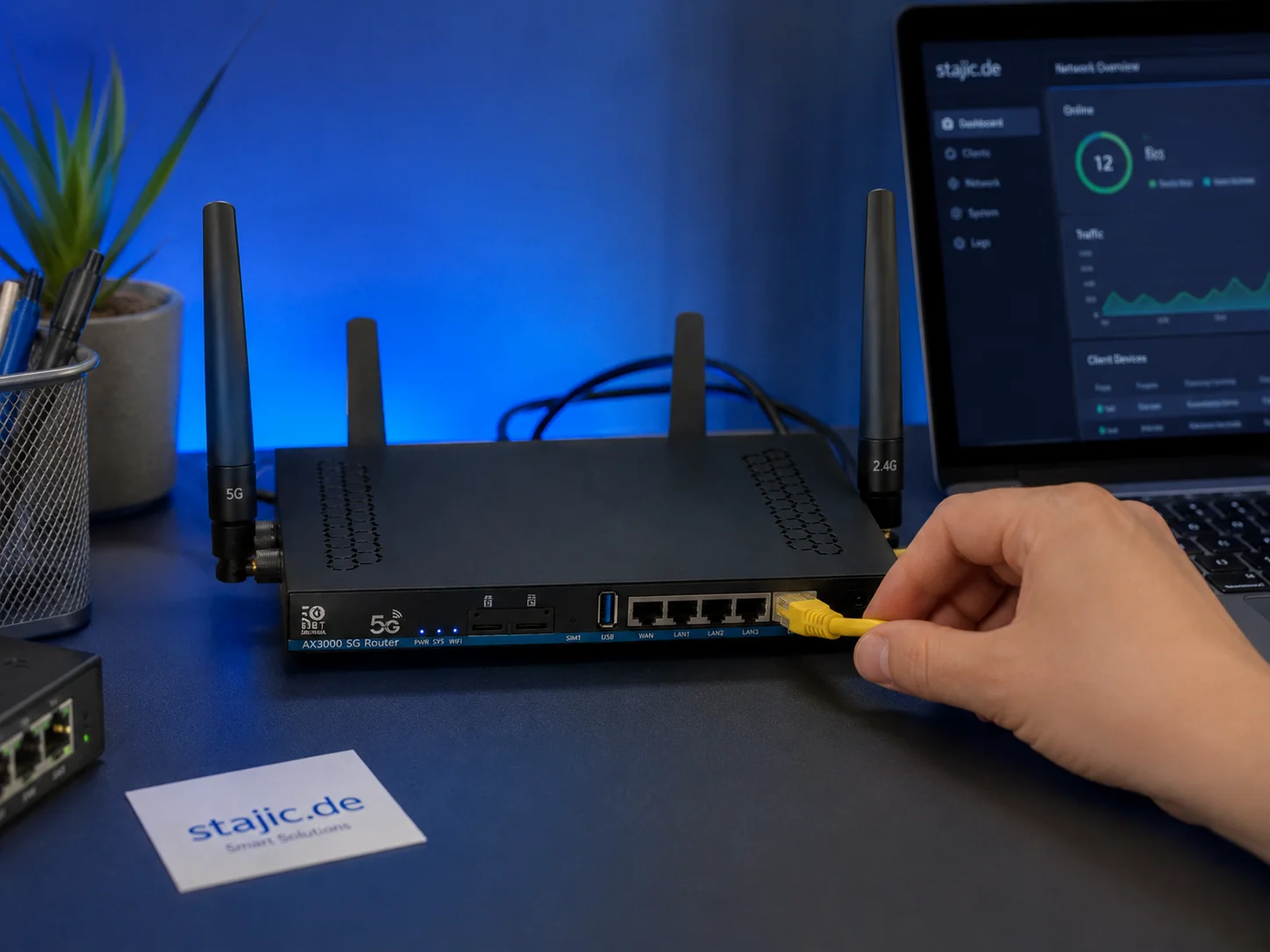
ZBT Z8102AX OpenWrt 21.02 Firmware Review: Stable Enough, but Is It Future-Proof?
The ZBT Z8102AX runs a vendor-modified OpenWrt 21.02 build with kernel 5.4.246. In practical testing, the firmware worked successfully and kept the router stable for several days, but the old base raises important questions about security, modem control, upgrade paths and long-term maintainability.
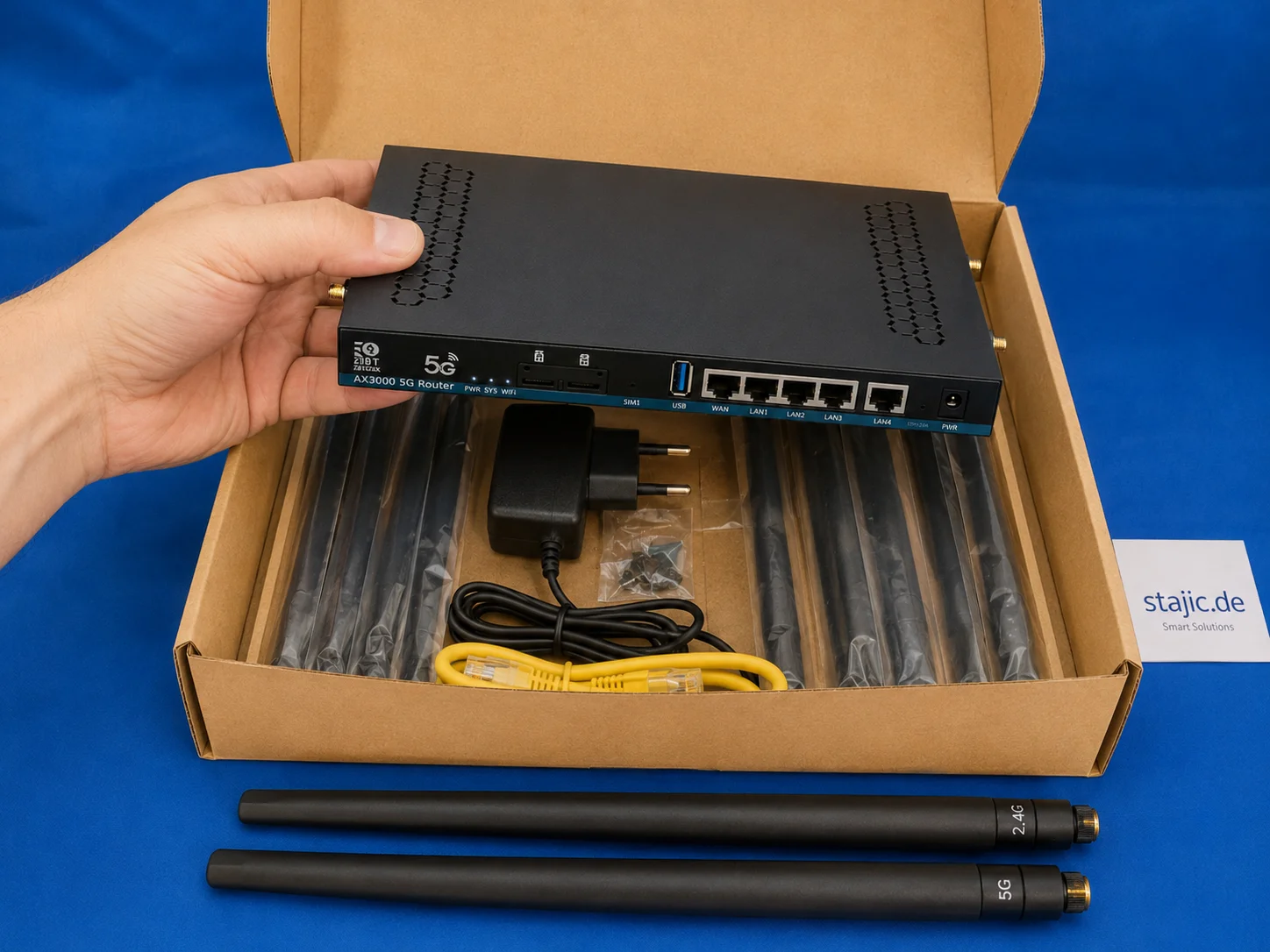
ZBT Z8102AX Hardware and Packaging Review: Strong Router, Weak Box
The ZBT Z8102AX makes a solid first impression as a slim black metal 5G OpenWrt router with multiple antenna connectors, dual-SIM slots, USB, LAN/WAN ports and a practical accessory set. The hardware feels useful and serious, but the packaging is clearly the weak point.
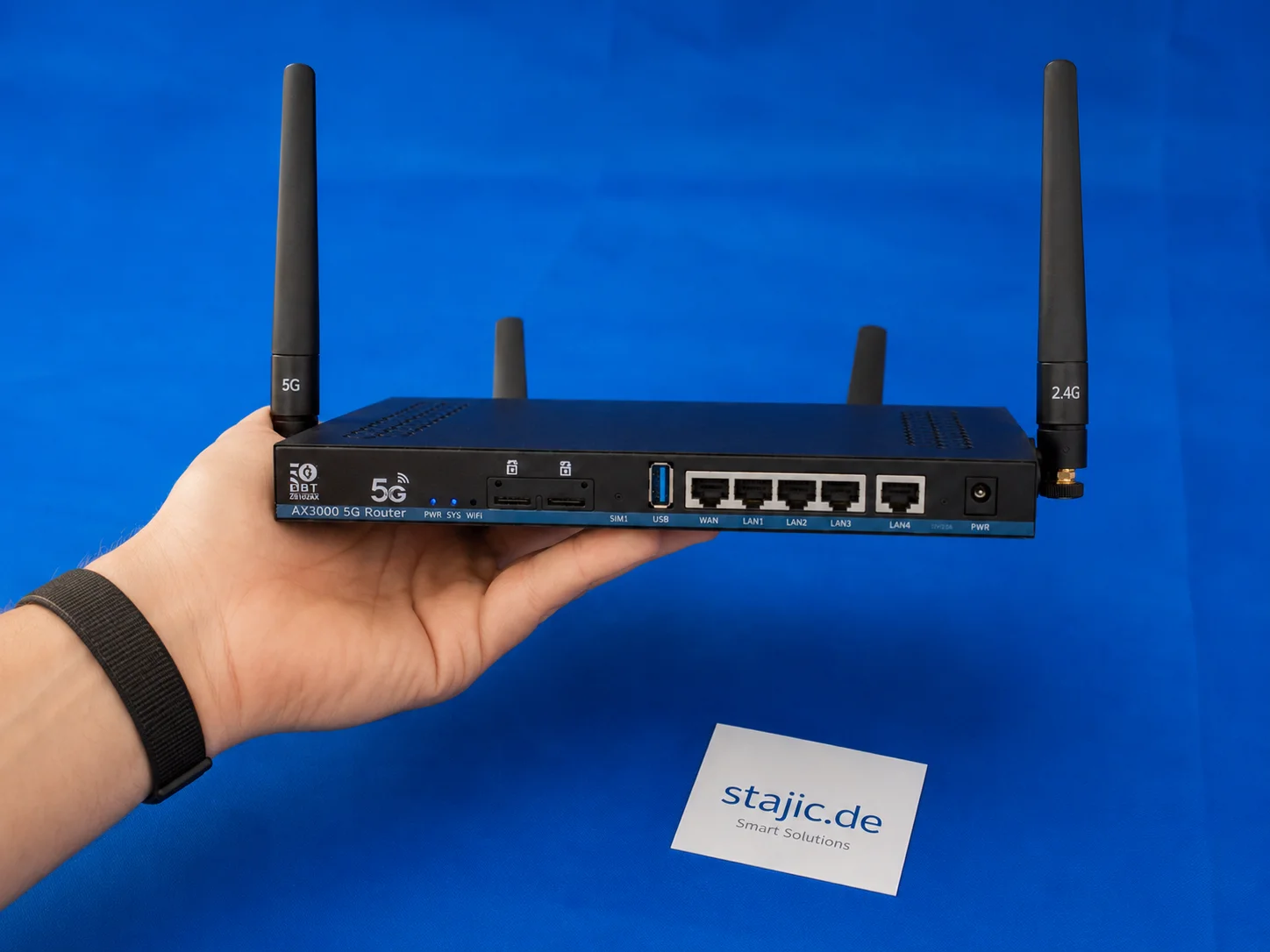
Should You Buy a 5G OpenWrt Router with Old Firmware? ZBT Z8102AX as a Practical Example
Buying a 5G OpenWrt router with older firmware can make sense, but only under the right conditions. The ZBT Z8102AX shows both sides clearly: the hardware is useful, the modem works, and the router stayed stable in testing, but OpenWrt 21.02, weak packaging and unclear upgrade paths require a careful buying decision.
ZBT Z8102AX 5G OpenWrt Router Review: Dual SIM, RM500U-EA and an Honest Assessment
The ZBT Z8102AX is an unusual 5G router with an OpenWrt base, a dual-SIM concept, and a Quectel RM500U-EA modem. In testing, it shows clear strengths in flexibility, interfaces, and mobile connectivity, but also the typical weaknesses of a vendor-modified OpenWrt build.
Quectel RM500U-EA in the ZBT Z8102AX: 5G Bands, o2 Germany and Real-World Signal Behavior
The ZBT Z8102AX uses a Quectel RM500U-EA modem for 4G and 5G connectivity. In the first practical test, the router connected successfully to o2 Germany with LTE Band 3 and NR n28. The modem works, but deeper diagnostics such as RSRP, RSRQ, SINR, band locking and cell behavior still need proper testing.
ZBT Z8102AX Dual-SIM Failover: What Works, What Is Missing and What Needs Better Firmware
The ZBT Z8102AX is a dual-SIM 5G OpenWrt router, but dual-SIM hardware alone is not the same as intelligent failover. The router recognizes the SIM and connects successfully, but automatic switching, modem recovery, signal-based decisions and clean failover logic still need deeper testing.