
ZBT Z8102AX Hardware and Packaging Review: Strong Router, Weak Box
ZBT Z8102AX Hardware and Packaging Review: Strong Router, Weak Box
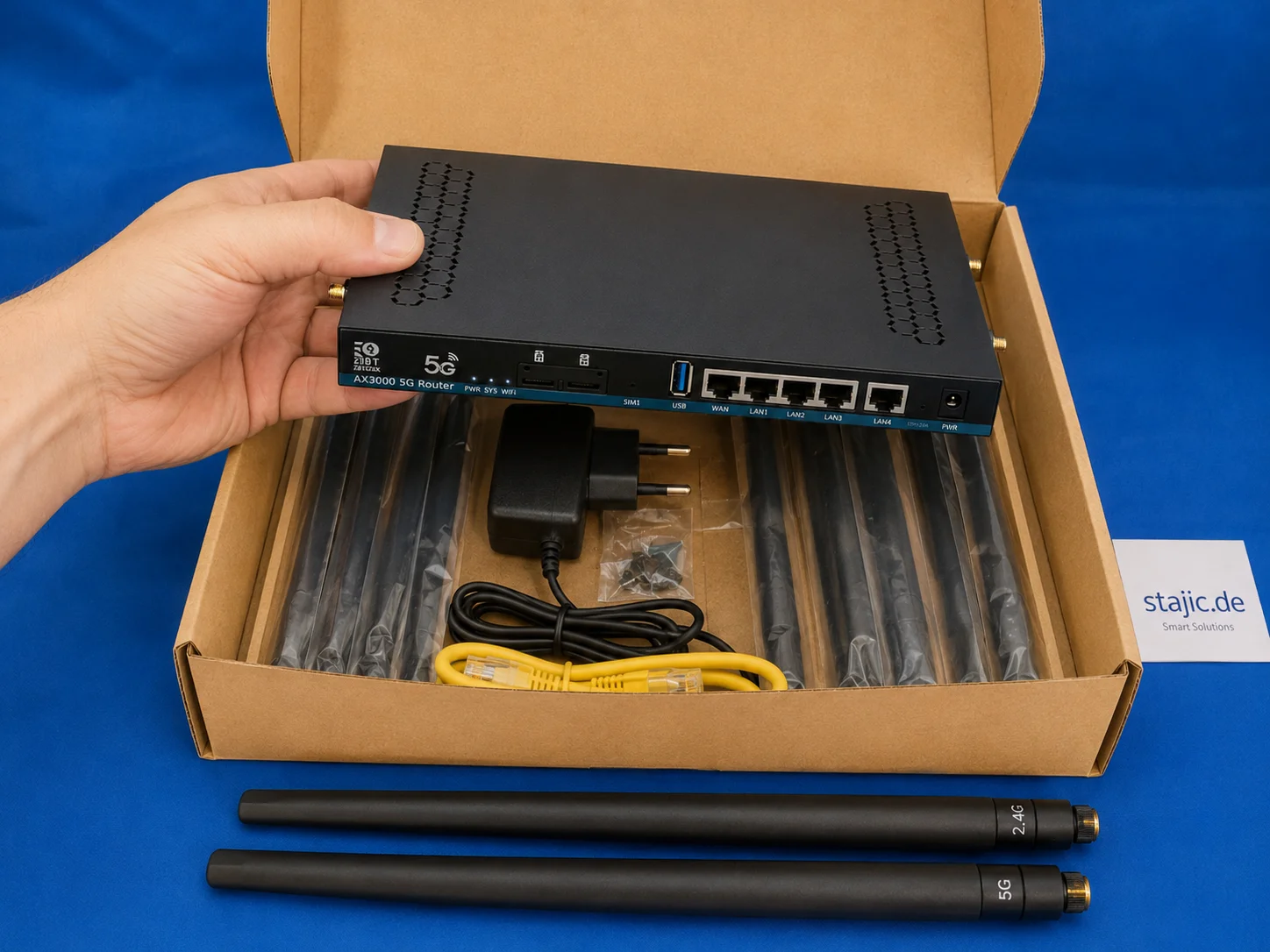
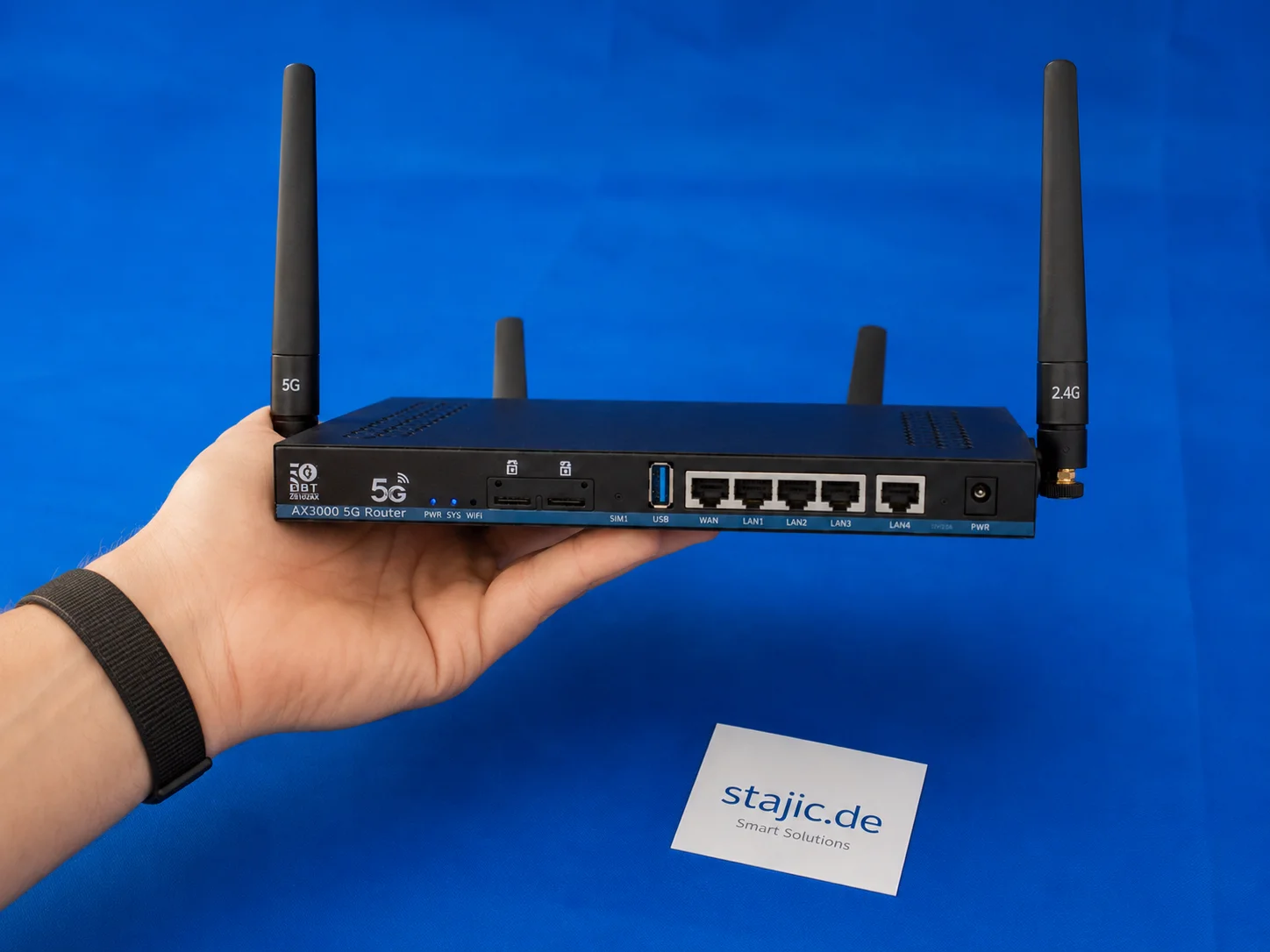
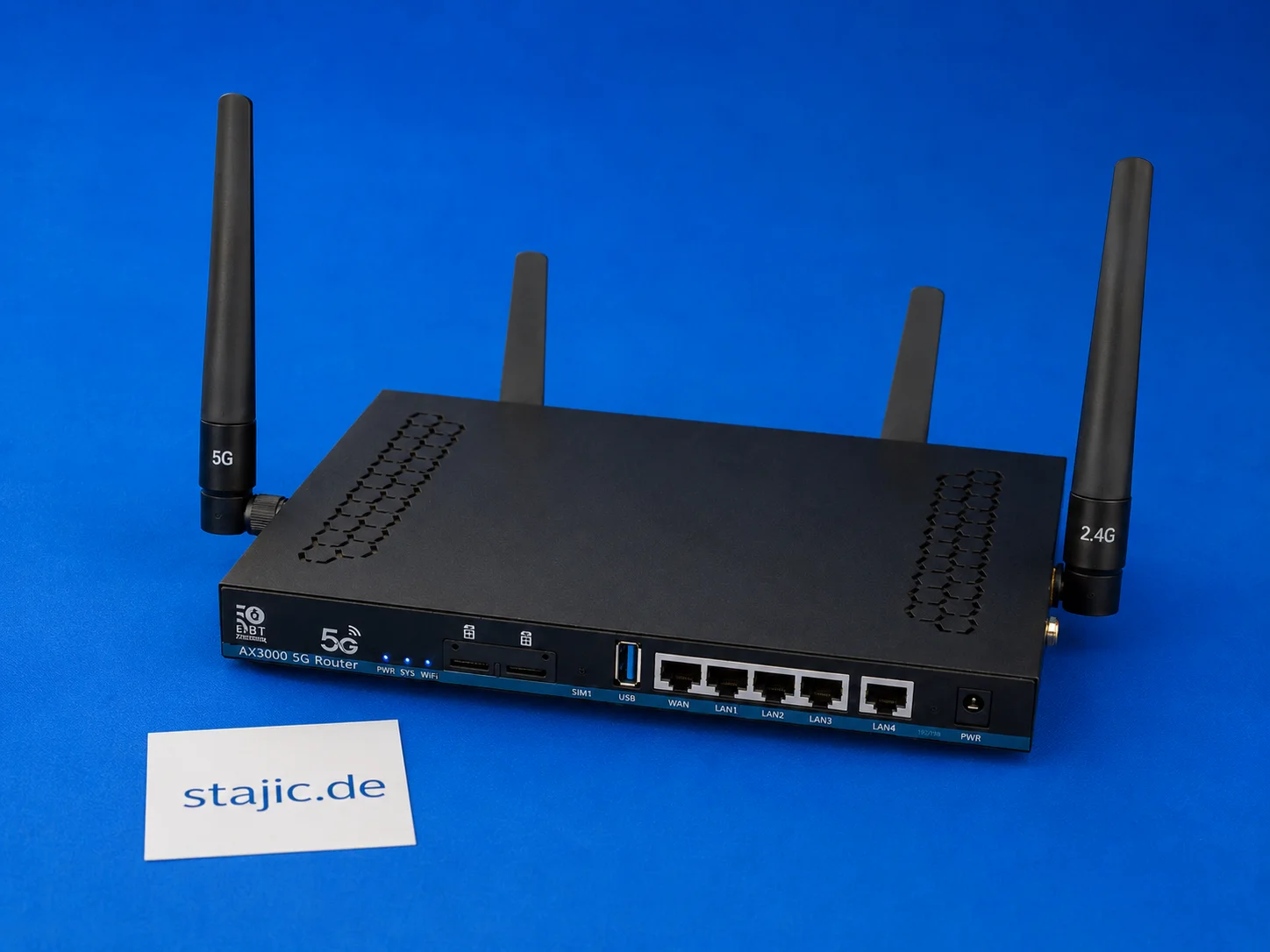
The ZBT Z8102AX makes a much better impression in the hand than the packaging suggests. The router itself is a slim black 5G OpenWrt device with a flat metal-looking case, external antenna connectors, dual-SIM access, USB, multiple Ethernet ports and a practical industrial-router character. It does not feel like a cheap plastic hotspot.
At the same time, the first physical impression is not perfect. The device looks useful and serious, but the cardboard packaging is clearly too weak for a router of this weight and format. Fortunately, the device arrived in double packaging and survived the shipment without visible damage.
Part of the ZBT Z8102AX Test Series
This article focuses only on the hardware, packaging, ports, antennas and first physical impressions. The main review is available at /blog/zbt-z8102ax-5g-openwrt-router-review. Separate articles will cover the OpenWrt 21.02 firmware, the RM500U-EA modem, dual-SIM behavior, failover and the next step toward a stronger Wi-Fi 7 OpenWrt router.
What Is Inside the Box
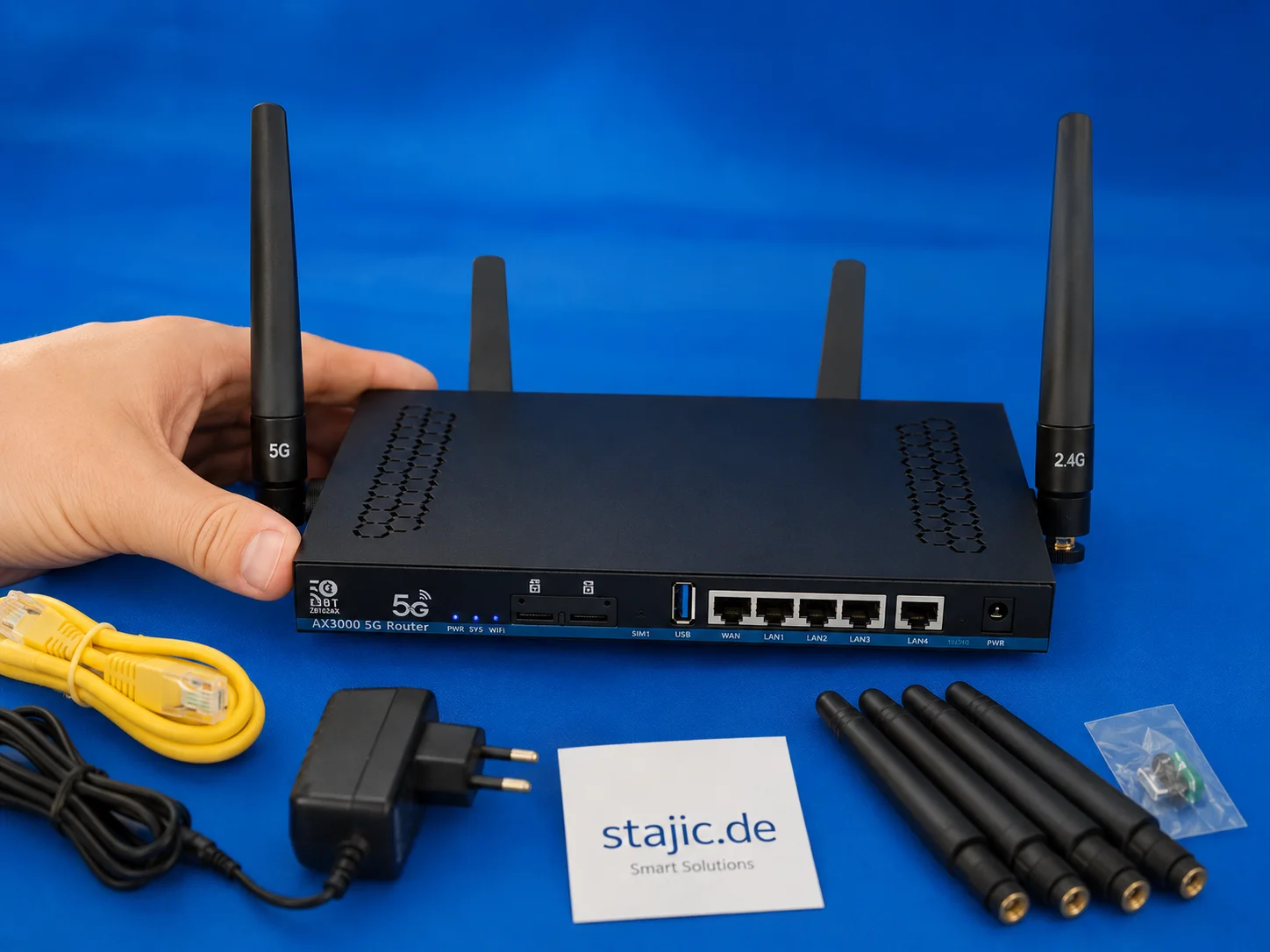
The package includes the router itself, several external antennas, a power adapter, an Ethernet cable and small accessory parts. The accessory set is practical and complete enough for a first setup. The antennas are separated and can be attached manually to the corresponding SMA connectors.
- ZBT Z8102AX 5G router
- External 5G antennas
- External 2.4G Wi-Fi antennas
- Power adapter
- Ethernet cable
- Small accessory parts
- Basic cardboard box with inner form
Case and Build Impression
The router uses a slim rectangular black case with ventilation openings on the top and underside. The design is not luxurious, but it is functional and more serious than many small consumer 5G boxes. The device has a flat industrial look and feels more like a prosumer or light-industrial networking platform than a simple home router.
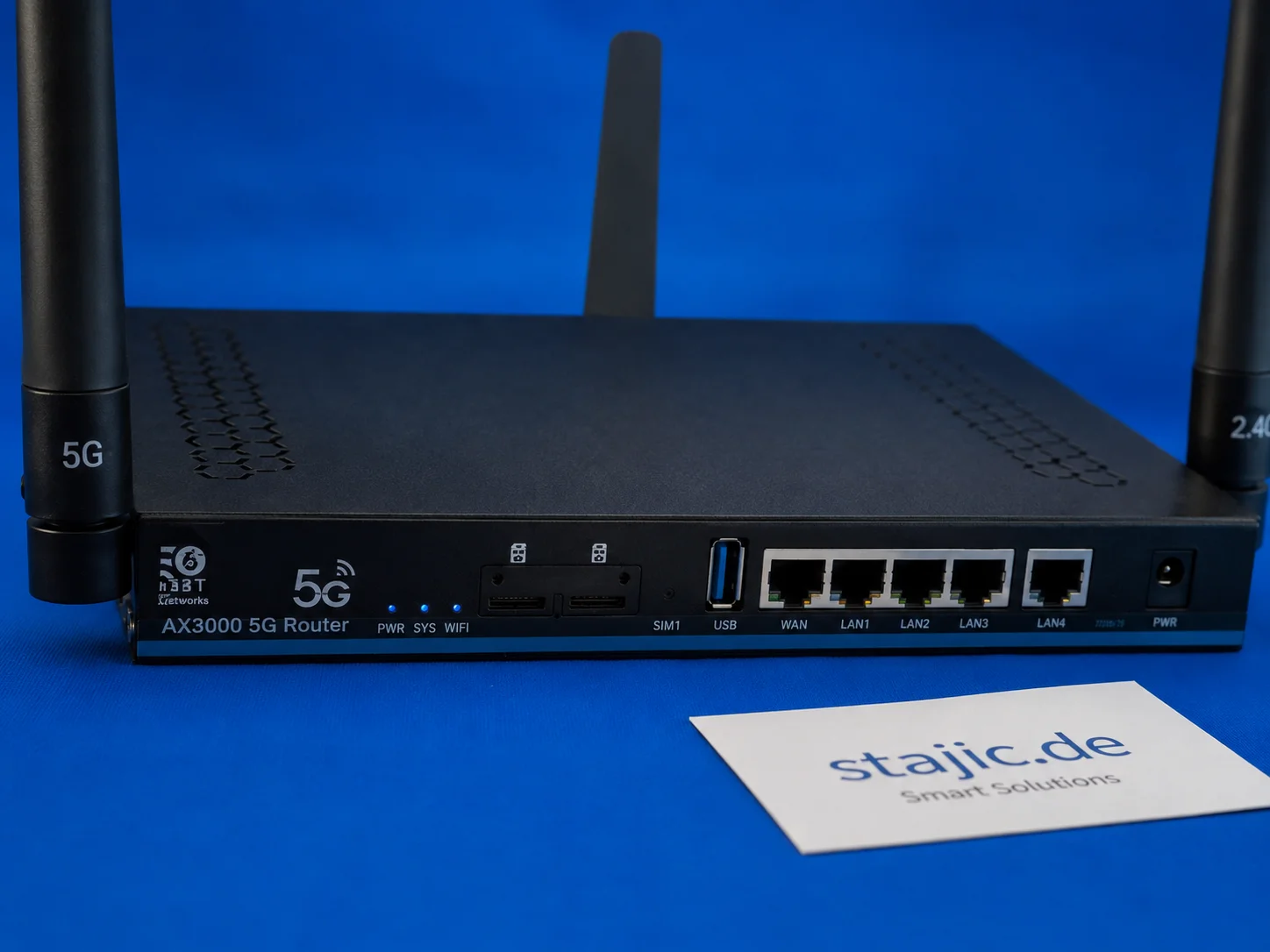
The front side is clearly service-oriented. The ports and labels are visible, the SIM area is accessible, and the status LEDs are placed in a practical position. This makes the router easier to inspect during testing, especially when working with mobile network status, SIM cards and OpenWrt configuration.
Ports and Front Panel
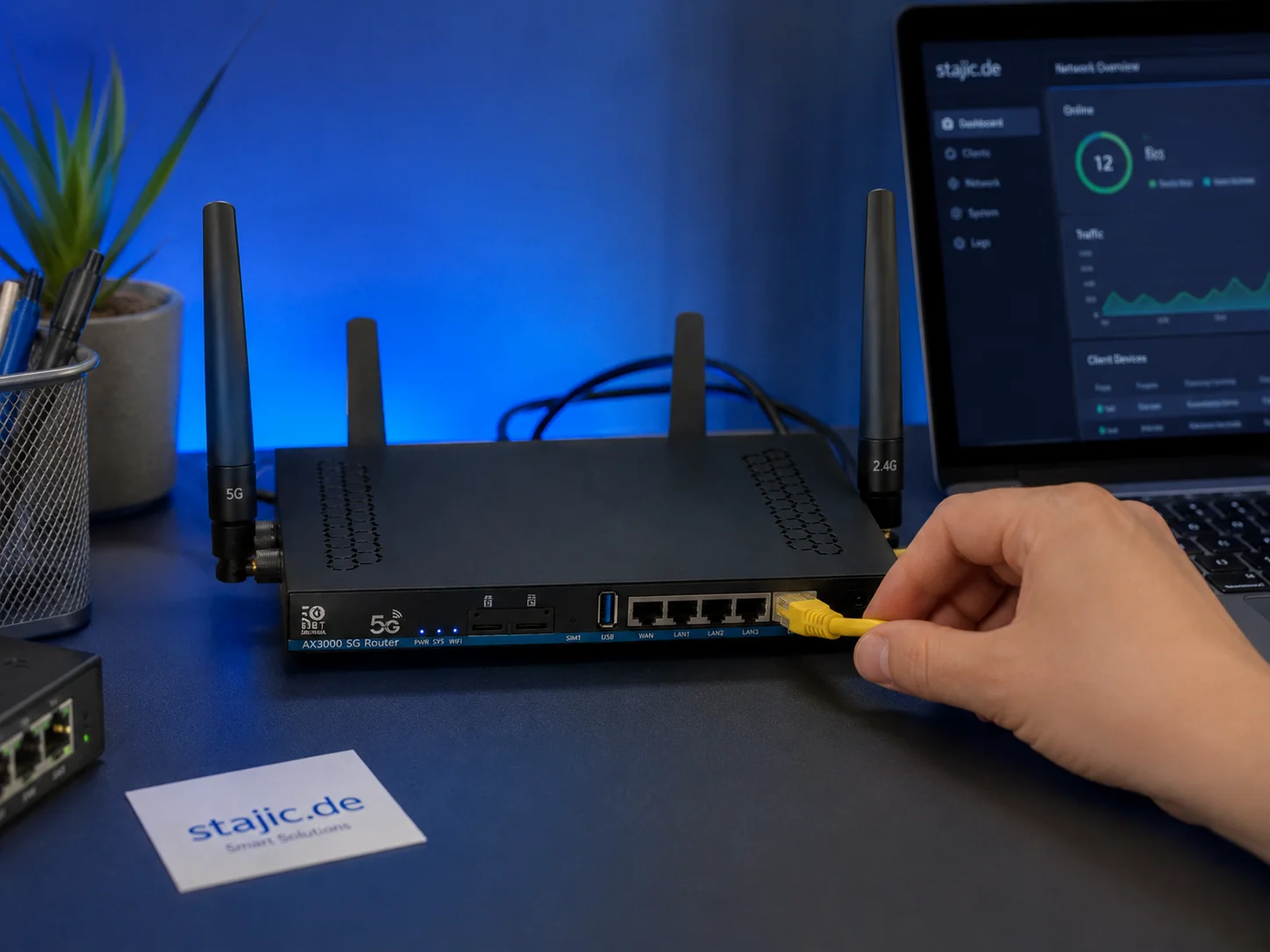
The front panel includes the most important interfaces for a 5G router setup: dual-SIM slots, one USB port, four LAN ports, one WAN port, reset access and DC power input. This layout makes the device flexible enough for mobile internet, backup WAN, small office use, testing environments and homelab scenarios.
- Dual-SIM access on the front panel
- USB port
- Four LAN ports
- One WAN port
- Reset access
- DC power input
- Status LEDs for basic device state
Antennas and Connectors
The router uses external antennas for 5G and Wi-Fi. The antenna connectors are placed on the sides and rear of the case. This is good for flexibility, because antennas can be positioned, replaced or upgraded more easily than on many closed consumer devices.
For real-world use, the antennas matter a lot. A 5G router is not only defined by the modem and firmware. Placement, antenna quality, cable losses and the selected mobile bands can strongly influence speed and stability. This is one of the next test areas.
Packaging: The Clear Weak Point
The weakest part of the first physical impression is the packaging. Unfortunately, the cardboard box is too soft and too weak for this kind of device. The router itself does not have sharp edges, but it still managed to push through the inner cardboard form and damage it easily.
This is not a small detail. A technically good router deserves better packaging, especially if it is meant to be shipped internationally or sold professionally in Europe. In this case, the double packaging probably saved the device from damage.
For a sample device, this is acceptable as long as the router arrives safely. For a serious product strategy, the packaging would need to be improved. A stronger box, better inner protection and cleaner presentation would immediately raise the perceived quality.
Not a Cheap Hotspot
Physically, the ZBT Z8102AX should not be compared with small battery-powered travel hotspots. It is a larger, more open and more configurable 5G router platform. The lack of an internal battery can even be an advantage for stationary and semi-mobile use, because cheap built-in batteries often age badly and can become a long-term weak point.
This device belongs more in the category of advanced mobile networking, backup WAN, testing setups and OpenWrt-based prosumer routers. It is not a pocket device. It is a small networking box for people who want more control.
Market Value and Hardware Impression
Based on the hardware class, 5G modem, external antennas, dual-SIM concept and OpenWrt base, a realistic market positioning can move into the 300 to 400 EUR range if firmware, packaging, documentation and support are handled properly. The router is not perfect, but it is a good piece of hardware.
At the same time, this market will probably become more aggressive. It is only a matter of time before similar products appear in larger numbers and price pressure increases. But in this category, cheaper is not automatically better. Sometimes the more expensive option is cheaper in the long run if the firmware, modem stability, packaging and recovery path are better.
What Needs to Be Tested Next
The hardware is promising enough to continue testing. The next important questions are firmware quality, modem diagnostics, automatic SIM failover, band locking, antenna behavior and whether a newer OpenWrt-based system can improve the device without breaking the 5G and dual-SIM functionality.
- OpenWrt 21.02 vendor firmware behavior
- Upgrade path to newer firmware
- RM500U-EA modem diagnostics
- Signal quality with different antenna positions
- Dual-SIM switching and failover
- Band locking and mobile network stability
- Comparison with a stronger Wi-Fi 7 router later
Conclusion
The ZBT Z8102AX hardware makes a positive first impression. The case, ports, antennas and general layout show that this is more than a simple consumer hotspot. It is a serious 5G OpenWrt router platform with real potential for advanced users, homelabs and mobile networking scenarios.
The weak point is the packaging. The box is too fragile for the hardware and should be improved if the device is ever positioned professionally. The router itself is good enough to continue the test series. The next step is to go deeper into firmware, modem behavior and whether the device can become more than just an interesting sample.
Related Articles
ZBT Z8102AX OpenWrt 21.02 Firmware Review: Stable Enough, but Is It Future-Proof?
The ZBT Z8102AX runs a vendor-modified OpenWrt 21.02 build with kernel 5.4.246. In practical testing, the firmware worked successfully and kept the router stable for several days, but the old base raises important questions about security, modem control, upgrade paths and long-term maintainability.
The Next OpenWrt 5G Router: Why Wi-Fi 7, a Stronger CPU and Better Firmware Matter
The ZBT Z8102AX is a useful first sample, but the next step should be stronger: Wi-Fi 7, a more powerful four-core platform, better firmware clarity, improved packaging and a more stable pricing policy. The goal is not just another 5G router, but a better configured OpenWrt-based prosumer device.
ZBT Z8102AX 5G OpenWrt Router Review: Dual SIM, RM500U-EA and an Honest Assessment
The ZBT Z8102AX is an unusual 5G router with an OpenWrt base, a dual-SIM concept, and a Quectel RM500U-EA modem. In testing, it shows clear strengths in flexibility, interfaces, and mobile connectivity, but also the typical weaknesses of a vendor-modified OpenWrt build.

How to Know Whether an AI Agent Actually Used the Right Evidence
An AI agent can cite sources and still use the wrong evidence. This article introduces a practical method for checking claim support, source authority, applicability, provenance, and whether the evidence actually influenced the answer.
Quectel RM500U-EA in the ZBT Z8102AX: 5G Bands, o2 Germany and Real-World Signal Behavior
The ZBT Z8102AX uses a Quectel RM500U-EA modem for 4G and 5G connectivity. In the first practical test, the router connected successfully to o2 Germany with LTE Band 3 and NR n28. The modem works, but deeper diagnostics such as RSRP, RSRQ, SINR, band locking and cell behavior still need proper testing.
Should You Buy a 5G OpenWrt Router with Old Firmware? ZBT Z8102AX as a Practical Example
Buying a 5G OpenWrt router with older firmware can make sense, but only under the right conditions. The ZBT Z8102AX shows both sides clearly: the hardware is useful, the modem works, and the router stayed stable in testing, but OpenWrt 21.02, weak packaging and unclear upgrade paths require a careful buying decision.

Canonical Architecture, URL Design, Resolver Logic, API & Scalability Specification
Geo-based discovery architecture for multi-tenant portals. Defines canonical URLs, resolver logic, caching strategy, and a geo read-model without CMS coupling or database refactoring. Designed for SEO stability, scalability, and future extensions like booking and maps.
ZBT Z8102AX Dual-SIM Failover: What Works, What Is Missing and What Needs Better Firmware
The ZBT Z8102AX is a dual-SIM 5G OpenWrt router, but dual-SIM hardware alone is not the same as intelligent failover. The router recognizes the SIM and connects successfully, but automatic switching, modem recovery, signal-based decisions and clean failover logic still need deeper testing.