
Emerging Linux Trends in 2026: Shaping the Future of Server Infrastructure
Introduction to Linux Server Infrastructure in 2026
Linux continues to serve as the undisputed backbone of modern server infrastructure. As we navigate through 2026, the operating system powers over 90 percent of cloud deployments and enterprise data centers globally. The evolving demands for massive scalability, uncompromising security, and operational efficiency are propelling new trends that redefine how administrators and DevOps teams manage their environments.
This article delves into the most impactful Linux developments shaping the 2026 landscape. By exploring these emerging paradigms, IT professionals can understand the profound implications for their server architectures and discover actionable steps to leverage these advancements effectively in their daily operations.
Overview of the 2026 Server Landscape
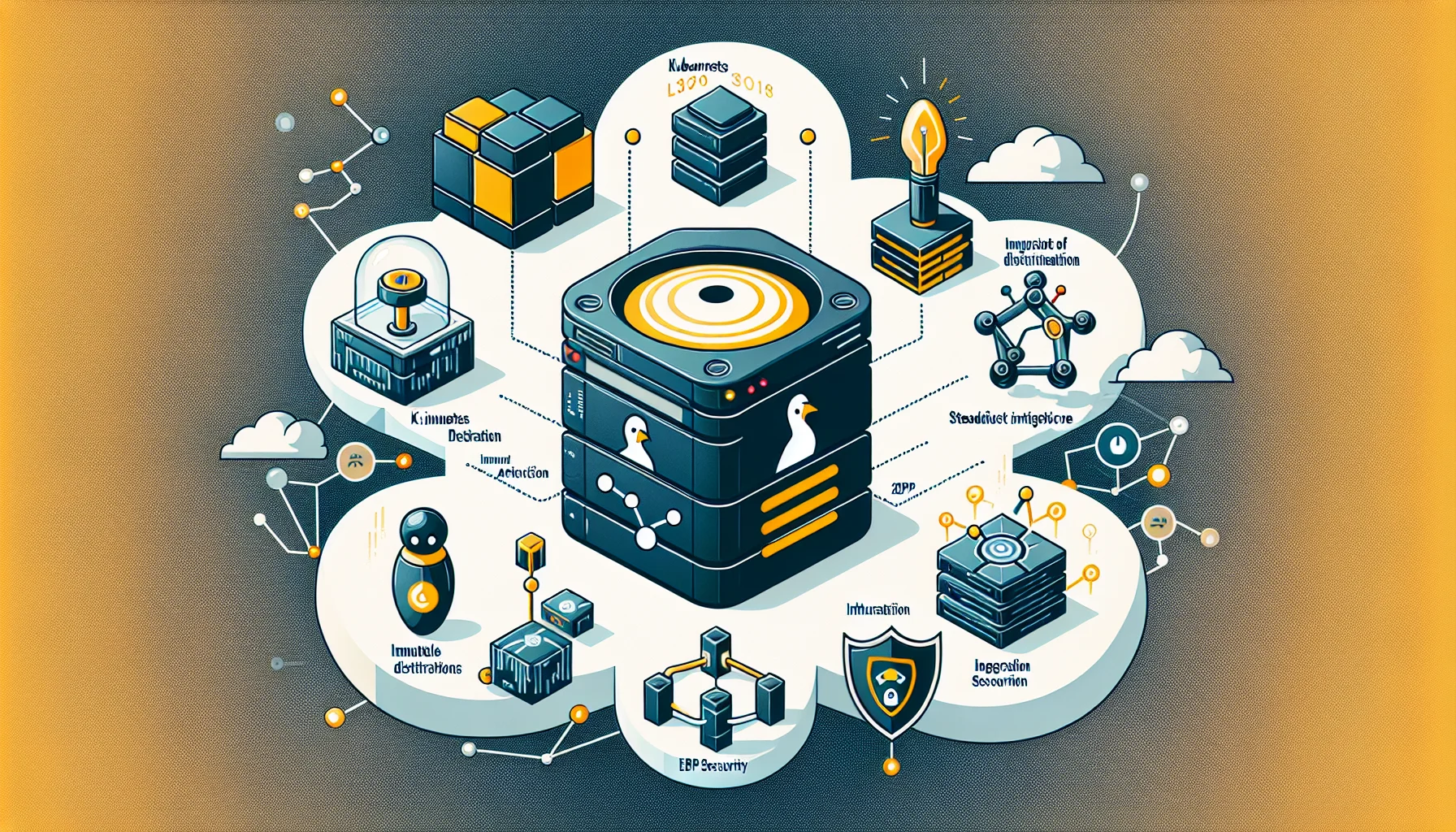
The server landscape in 2026 is heavily defined by the absolute dominance of containerization and advanced orchestration. Containers, championed by Docker and Kubernetes, remain central to Linux server trends. Kubernetes adoption has surged to remarkable levels, with recent Cloud Native Computing Foundation surveys indicating that 70 percent of organizations utilize it for orchestration.
This dominance is driven by the shift toward microservices architecture, which breaks monolithic applications into highly scalable, independent services. Furthermore, hybrid cloud flexibility allows for seamless deployment across on-premises environments, AWS, Azure, and Google Cloud Platform.
Containers utilize ten times less overhead compared to traditional virtual machines, making them the undisputed standard for resource efficiency in 2026 server deployments.— Industry Infrastructure Insight
To adopt these orchestration standards, administrators typically begin by installing Docker on Ubuntu systems using standard package managers like apt. From there, deploying a Kubernetes cluster using Minikube provides a robust testing ground by downloading the latest release and installing it into the local binary path. Creating a pod involves writing a YAML configuration file specifying the API version, kind, and container image, which is then applied using the standard kubectl command-line tool. Production-grade applications are subsequently scaled using Helm charts, ensuring that the infrastructure remains both resilient and adaptable to fluctuating workloads.
Benefits of Immutable and Edge-Optimized Distributions
Another major shift in 2026 is the rise of immutable and edge-optimized Linux distributions. Operating systems such as Fedora CoreOS, Flatcar Linux, and Bottlerocket emphasize immutability, which significantly reduces configuration drift and enhances overall system reliability.
- Enhanced Security: Atomic updates ensure that the core operating system remains read-only, drastically minimizing potential attack surfaces.
- Edge Computing Optimization: Lightweight architectures are perfectly suited for Internet of Things and 5G edge nodes, supporting the projection of 50 billion edge devices.
- Predictable Deployments: Immutability guarantees that every server boots into a known, identical state, simplifying troubleshooting and scaling.
- Streamlined Maintenance: Updates are applied as complete images rather than individual packages, reducing the risk of broken dependencies.
Popular distributions in this space include Talos Linux, a Kubernetes-native operating system, and Ubuntu Core, which utilizes a Snap-based architecture ideal for Internet of Things devices. Administrators can deploy Talos Linux by downloading the ISO, booting via PXE or USB, and applying configurations securely using the talosctl command. Conversely, Ubuntu Core can be flashed directly to devices by installing the ubuntu-image snap and generating an output image file of the desired size.
Technical Details: AI Workloads and Enhanced Security
Linux servers in 2026 are increasingly tuned for Artificial Intelligence and Machine Learning workloads. With robust support for NVIDIA CUDA and ROCm on distributions like Ubuntu 24.04 and Rocky Linux, the infrastructure is fully equipped for intensive computational tasks.
Large Language Model hosting has become a standard practice, utilizing tools like Ollama and vLLM to run on-premises inference directly on Linux servers. Additionally, GPU clusters are managed efficiently through Kubernetes operators, such as the NVIDIA GPU Operator, which automates the provisioning and management of hardware accelerators. Implementation typically involves installing specific NVIDIA drivers on Debian-based systems via the advanced packaging tool, setting up Kubeflow by applying upstream manifests from its repository, and training models using frameworks like PyTorch while verifying compute availability.
Parallel to AI advancements, security mechanisms have evolved significantly. Zero-trust models are driving the strict enforcement of Security-Enhanced Linux and the adoption of Extended Berkeley Packet Filter technologies for runtime monitoring.
Security-Enhanced Linux provides mandatory access controls, particularly in Red Hat Enterprise Linux derivatives, ensuring that applications only access the resources they explicitly require. Meanwhile, Extended Berkeley Packet Filter offers kernel-level observability without the need for loading custom kernel modules. This technology powers advanced networking and security tools like Cilium. Administrators can quickly enhance security by editing the configuration file on CentOS to set the enforcing mode and rebooting the system. Furthermore, installing Cilium for network policies and utilizing bpftrace to monitor system calls, such as execution events, provides immediate, real-time insights.
Use Cases and Applications
The convergence of desktop and server environments represents a highly practical use case in 2026, largely facilitated by the Windows Subsystem for Linux. This technology blurs the traditional lines between operating systems, enabling developers to run full Linux server environments directly on Windows hosts.
The primary application of this convergence is developer productivity. Software engineers can run native Linux command-line tools, utilities, and applications seamlessly alongside their Windows workflows. This eliminates the need for dual-booting or resource-heavy desktop virtualization.
Another critical use case is local server simulation. Developers can test systemd services, configure web servers, and run Docker Desktop with a native Linux backend. By enabling the subsystem with a simple installation command for Ubuntu, installing Docker Desktop, and starting services like Apache2, teams can ensure their local development environments perfectly mirror production Linux servers, thereby reducing deployment friction and compatibility issues.
Fazit: Summary and Future Outlook
In summary, the Linux server infrastructure of 2026 is defined by the absolute dominance of Kubernetes orchestration, the security of immutable distributions, the computational power of AI-tuned environments, and the deep observability provided by kernel-level tracing. These trends collectively ensure that Linux remains the most capable and secure foundation for modern IT operations.
Looking ahead, Linux will continue to integrate more deeply with WebAssembly for serverless architectures and adopt quantum-resistant cryptography to safeguard data against future threats. For server administrators and DevOps professionals, the path forward requires continuous learning and adaptation.
It is crucial to prioritize Kubernetes certification and develop strong skills in kernel-level observability tools. Monitoring the evolution of distributions like openSUSE MicroOS will be vital for edge computing strategies. Finally, continuous experimentation using platforms like Proxmox VE for virtualized testing will keep teams agile. By staying informed through Linux Foundation reports and contributing to upstream projects, organizations can fully harness these emerging trends and secure their infrastructure for the future.
Related Articles

How to Scan and Clean Your Cloud Linux Server from Malware
Ubuntu Graphics Stack Transition: Hybrid GPU Boot Crashes, Wayland Risks, and Stable Deployment Practices
Ubuntu desktop upgrades can trigger boot hangs, missing login sessions, and unstable rendering—especially on hybrid Intel + NVIDIA systems. This article explains the underlying graphics stack transition, why regressions happen, and how to deploy Ubuntu safely using LTS baselines and validated driver strategies.

Remove Duplicate APT Package Sources: Expert Guide for Ubuntu and Debian
A detailed guide for identifying and removing redundant or duplicate APT package sources in Debian and Ubuntu systems to ensure stability and performance.