
AI Governance: Models, Data, Permissions, Risk and Auditability

AI governance is the system of decision rights, responsibilities, controls and evidence used to decide how an organization may develop, acquire, deploy, operate, change and retire AI systems. It is broader than a policy document and narrower than enterprise architecture as a whole. Effective AI governance connects business ownership, model and provider choices, data authority, permissions, risk classification, evaluation, monitoring, incident handling, auditability and lifecycle decisions so that someone can answer not only “does the AI work?” but also “who approved it, under which conditions, with what evidence, and when must that decision be revisited?”
What AI governance really means
AI governance answers organizational questions that a model, SDK or architecture diagram cannot answer by itself. Who owns the business outcome? Who may approve a new provider? Which data classes are prohibited from external processing? What evidence is required before deployment? Which permissions may an agent receive? Who can accept residual risk? What happens when a model changes behavior after an upgrade?
The purpose is not to prevent change. Good governance makes change legible: decisions have owners, evidence, conditions, exceptions, review dates and rollback or escalation paths.
This is why NIST places GOVERN across the entire AI risk-management lifecycle rather than treating governance as one final approval step. Governance establishes the culture, policies, accountability and organizational structures that make mapping, measuring and managing AI risk possible.
The simplest example
A product team wants to add an external generative-AI provider to summarize internal customer-support tickets. Technically, the integration may require only an API call.
Governance asks a different set of questions: Are the ticket contents permitted to leave the organization's environment? Which provider and model version are approved? Is retention disabled? Which users may invoke the feature? How is output evaluated? Is human review required? What gets logged? Who owns incidents? What happens if the provider changes its terms or model behavior?
The governance result may still be “deploy it.” The difference is that deployment is now a traceable decision with explicit conditions instead of an unrecorded engineering choice.
A basic governed AI decision
Where the simple example stops
Large organizations rarely govern one AI system in isolation. The same model may support dozens of products; one provider may process several data classes; an agent platform may expose shared tools to many teams.
Governance therefore needs portfolio-level structures as well as system-level controls: AI inventory, approved providers, model catalogs, shared evaluation baselines, security patterns, risk thresholds, exception registers and ownership mappings.
Governance also cannot be identical for every AI use. A public-content summarizer, an internal coding assistant, a hiring-support system and an agent that can initiate payments have materially different consequence and control profiles.
What AI governance is — and what it is not
AI governance compared with adjacent disciplines
| AI governance | Adjacent discipline | |
|---|---|---|
| Enterprise / solution architecture | ||
| AI risk management | ||
| Compliance | ||
| Security | ||
| MLOps / LLMOps | ||
| AI ethics principles |
Governance is broader than compliance
Compliance is one input to governance, not the entire governance system. An AI use case can be legally permitted yet still violate company risk appetite, security policy, contractual obligations or product-quality requirements.
The reverse also matters: internal approval does not override law. Governance should make applicable legal obligations visible inside the same decision path used for architecture, security and business risk.
ISO/IEC 42001 explicitly frames an AI management system as a structured way to establish policies, objectives and processes for responsible AI. ISO also states that the standard does not replace laws or regulations; it provides a management framework that can support compliance.
NIST AI RMF and ISO/IEC 42001 solve different governance needs
| Framework / standard | Primary role | Useful governance value |
|---|---|---|
| NIST AI RMF 1.0 | Voluntary AI risk-management framework | Organizes outcomes around GOVERN, MAP, MEASURE and MANAGE across the lifecycle |
| NIST AI 600-1 | Generative-AI profile for AI RMF | Adds GenAI-specific risk considerations and actions |
| ISO/IEC 42001:2023 | AI management-system requirements | Creates an organization-wide management system with policy, roles, processes and continual improvement |
| ISO/IEC 23894:2023 | AI risk-management guidance | Guides integration of AI-specific risk management into organizational activities |
| EU AI Act | Binding regulation in the EU | Creates legal obligations according to actor, AI category and use case |
These sources should not be collapsed into one checklist. NIST AI RMF is risk-management guidance. ISO/IEC 42001 is a management-system standard. The EU AI Act is law. An organization can use them together, but their authority, scope and implementation purpose are different.
Current EU AI Act timing matters
As of 8 October 2026, the European Commission states that the AI Act became generally applicable on 2 August 2026. Prohibited-practice and AI-literacy provisions applied from 2 February 2025, while governance rules and obligations for general-purpose AI models applied from 2 August 2025.
The Commission's current guidance also reflects later application dates for certain high-risk requirements. Exact dates and transition rules are a moving compliance input and should be verified against current Commission material before a deployment decision.
AI governance starts with an inventory
An organization cannot govern AI systems it cannot identify. The inventory should cover more than custom-trained models. It may include external model APIs, embedded copilots, local models, AI-enabled SaaS features, agent runtimes, retrieval systems and automated decision components.
A useful inventory connects the AI capability to its business owner, technical owner, use case, users, data classes, model/provider, deployment environment, permissions, risk classification, evaluation status, applicable obligations and lifecycle state.
The inventory is not only a spreadsheet for auditors. It is the index that lets the organization know what must be reviewed when a provider changes, a vulnerability appears, a regulation becomes applicable or a model is retired.
| Inventory field | Why governance needs it |
|---|---|
| Use case / purpose | Defines why AI exists and what success means |
| Business owner | Owns outcome and business risk |
| Technical owner | Owns architecture, implementation and operation |
| Model + version | Identifies the behavior-producing dependency |
| Provider / runtime | Identifies contractual, hosting and operational dependency |
| Data classes | Determines privacy, confidentiality and Source-of-Truth constraints |
| Users / affected parties | Determines exposure and human-impact context |
| Tools / actions | Determines autonomy and side-effect risk |
| Permissions / identity | Defines who or what may invoke the capability |
| Risk classification | Determines required controls and approval path |
| Evaluation evidence | Shows whether intended behavior was tested |
| Lifecycle state | Draft, review, approved, restricted, suspended or retired |
| Review date / triggers | Defines when the governance decision must be revisited |
Governance requires named ownership
AI failures often cross organizational boundaries. A model-quality problem may become a product failure, security issue, privacy incident or contractual breach. Governance needs named owners before the incident occurs.
Ownership does not mean one person is responsible for everything. A strong model separates decision rights: business owner, product owner, technical owner, data owner, security/privacy specialists, legal/compliance actors and operational support.
The critical property is that every required decision has an owner and every owner knows which evidence they are expected to review.
Decision rights should be explicit
| Decision | Typical accountable function |
|---|---|
| May this AI use case exist? | Business/product owner with governance/risk input |
| May this data class be processed? | Data owner + privacy/security according to policy |
| May this provider/model be used? | Architecture/platform + security/procurement + governance |
| May this agent execute this action? | Application owner + authorization/business-policy owner |
| Is quality sufficient for deployment? | Product/technical owner against defined acceptance criteria |
| Can residual risk be accepted? | Named risk owner at appropriate authority level |
| Can an exception be granted? | Explicit exception authority, time-bounded and documented |
| Should the system be suspended? | Operational/business owner under incident or risk triggers |
| Can a model upgrade go live? | Change owner after regression/evaluation evidence |
Model governance is more than choosing a model
Model governance tracks which model is used, for what purpose, under which configuration and evidence. This applies to external APIs, locally hosted models, fine-tuned models and models embedded in third-party software.
A model decision should consider capability, evaluation results, cost, latency, data handling, provider terms, lifecycle support, geographic/hosting constraints, security, fallback behavior and the consequences of version change.
Model aliases such as “latest” can be operationally convenient but weaken reproducibility if behavior changes without a governed release process. Consequential systems benefit from explicit version tracking and regression evaluation.
Provider governance is a separate dependency layer
Two systems using the same model family can have different governance risk if one runs locally and another sends data to an external provider. Provider governance covers contractual terms, processing location, retention, logging, sub-processors, availability, deprecation and exit strategy.
Provider abstraction can reduce technical lock-in, but it does not remove governance work. Swapping providers can change data flows, model behavior, security assumptions, cost and compliance obligations.
An approved provider list should therefore not be interpreted as “every model and every data class from this provider is automatically approved.” Approval needs scope.
Data governance remains the Source-of-Truth layer
AI governance does not make the model the authority for organizational facts. Data governance still determines ownership, classification, retention, quality and permitted use of source data.
For RAG and agents, governance should identify which sources are authoritative, which are advisory, how provenance is preserved, which data may enter model context and which tenant/user boundaries must be enforced.
Generated outputs create new data-governance questions as well: whether prompts and responses are retained, who may access traces, whether generated summaries become records and how derived embeddings or indexes are deleted when source data is removed.
Permissions are governance decisions with runtime enforcement
Agentic AI makes permissions a first-class governance object. The organization needs to decide which tools, files, APIs, databases and side effects each agent or user may access.
Governance defines the policy and approval logic; the trusted runtime enforces it. Natural-language instructions such as “do not delete files” are not a substitute for filesystem, API or service authorization.
The same principle applies to tenant isolation: a role can authorize an operation while tenant scope constrains which customer's resources that operation may reach.
Risk classification should change the control set
Not every AI system needs the same review depth. Governance becomes scalable when risk classification changes the evidence, approval and monitoring requirements.
| Risk driver | Lower-control example | Higher-control example |
|---|---|---|
| Business consequence | Draft internal text | Approve financial settlement |
| Human impact | Optional writing aid | Employment or eligibility decision support |
| Data sensitivity | Public documentation | Health, HR, financial or confidential data |
| Autonomy | Read-only recommendation | Agent with write/payment/deployment tools |
| Reversibility | Easily regenerated summary | Irreversible external transaction |
| Exposure | Small internal pilot | Public/customer-facing system at scale |
| Source authority | Advisory content | System relied on for regulated or contractual fact |
| Failure detectability | Obvious formatting defect | Plausible but materially wrong recommendation |
The classification method can be simple or sophisticated, but it should map to concrete consequences: more testing, narrower permissions, required human oversight, security review, executive risk acceptance or deployment prohibition.
Governance must preserve use-case context
NIST's MAP function emphasizes intended purpose, users, deployment context, assumptions, impacts and applicable laws or norms. This matters because the same model can be low risk in one use case and high consequence in another.
Governance records should therefore classify the application, not only the model. “We use model X” is not enough to determine risk.
The relevant governance object is the system/use case: model + data + context + tools + users + deployment environment + business process.
Evaluation is governance evidence
An AI governance process should not approve deployment based only on vendor benchmarks or a successful demo. The system needs evidence tied to its actual intended use.
Useful evidence can include task-success evaluation, retrieval quality, factual grounding, security tests, permission tests, adversarial scenarios, human-review studies, latency/cost, robustness and regression comparisons.
NIST's MEASURE function makes this explicit: organizations should identify and apply appropriate methods and metrics for risks identified during mapping, while documenting risks that cannot or will not be measured.
Governance gates should exist across the lifecycle
Example lifecycle gates
Change management is central to AI governance
AI systems change even when application code does not. Providers update models, safety filters, context limits, pricing, policies and infrastructure. Retrieval corpora change. Agent tools gain permissions. Regulations and contracts evolve.
Governance should therefore define material-change triggers. A minor prompt wording adjustment may need ordinary regression tests; replacing the model, enabling write tools or introducing sensitive data may require a new approval gate.
The governance record should preserve which version was approved and what conditions made the approval valid.
Exceptions need owners, expiry and compensating controls
Real organizations need exceptions. A team may need an unapproved model for a time-bounded experiment, or a legacy system may not yet meet a new logging requirement.
The dangerous pattern is a permanent undocumented exception. Governable exceptions specify owner, rationale, scope, residual risk, compensating control, expiration date and review condition.
Exception handling should be part of the normal governance system rather than an informal side channel.
Auditability is the ability to reconstruct the decision and execution
AI auditability is not merely storing model prompts. It means being able to reconstruct which system version was used, which data and permissions applied, who approved the configuration, what evaluations supported deployment and what happened during relevant execution.
For an agent, this may require principal identity, tool calls, approvals, target resources, state changes and outcomes. For RAG, it may require corpus/index version, retrieval query, selected evidence and provenance. For a model change, it may require the previous and new evaluation results.
Audit evidence should be proportionate. Logging every possible token can create privacy and security risk of its own. Governance should define which evidence is necessary, how long it is retained and who may access it.
| Audit object | Useful evidence |
|---|---|
| Governance decision | Owner, date, decision, conditions, evidence, exceptions |
| Model release | Model/provider/version, configuration, regression results |
| Data access | Principal, tenant/scope, source class, policy decision |
| Agent action | Tool, arguments/target, approval, result, state change |
| RAG answer | Corpus/index version, retrieval set, selected evidence, citations |
| Incident | Trigger, affected systems, containment, decision owner, remediation |
| Retirement | Disabled endpoints, revoked credentials, deleted derived data, archive decision |
Monitoring closes the governance loop
Approval is a snapshot. Production monitoring tells governance whether the assumptions behind approval still hold.
Useful signals depend on the use case: quality regression, unsafe outputs, tool failures, policy denials, unusual cost, latency, user complaints, drift, retrieval freshness, provider incidents, security alerts or new regulatory classifications.
Governance should define thresholds that cause action: investigate, restrict, require human review, roll back, switch provider, suspend or retire.
AI incidents need a defined operational path
AI-specific incidents may involve harmful content, data leakage, unauthorized actions, persistent factual failure, model/provider outage, prompt injection, cross-tenant retrieval or unexpected behavior after a model update.
The incident process should connect technical response with governance ownership. Someone must be authorized to disable a model, remove a tool, revoke credentials, restrict users, notify affected functions and decide whether the system may return to service.
The lessons from incidents should update policies, tests, risk classification and reusable platform controls rather than remain isolated in one team.
Procurement is part of AI governance
Organizations can acquire substantial AI capability through ordinary SaaS procurement. Governance should therefore cover purchased AI features as well as internally engineered systems.
Vendor review can include data use, retention, model training policy, sub-processors, security, incident notification, export/deletion, geographic processing, version change, service continuity and contractual exit.
A technical architecture review and procurement review should share the same system inventory so commercial approval does not drift away from the actual deployed data flow.
Human oversight should be designed, not merely declared
“Human in the loop” is meaningful only if the human has authority, time, information and a usable intervention mechanism.
A reviewer who sees only the AI recommendation but not its evidence, uncertainty or source state may simply rubber-stamp the output. Governance should specify what the reviewer can inspect and what actions are available: approve, reject, edit, escalate or stop.
Human oversight should also be risk-based. Low-consequence systems may use sampling or post-hoc review, while high-consequence side effects may require approval before execution.
Platform governance and use-case governance are different
Two governance levels
| Shared AI platform | Individual AI use case | |
|---|---|---|
| Primary concern | ||
| Typical approval | ||
| Evidence | ||
| Governance failure |
Platform approval should therefore reduce repeated work, not eliminate use-case accountability. “The model is approved” is different from “this application of the model is approved.”
AI governance and Enterprise AI Architecture
Enterprise AI Architecture describes how AI systems, platforms, data, identities, providers, operations and organizational systems fit together. AI governance describes the decision and control system that determines how those architectures may be created and changed.
The two are tightly coupled. Governance without architecture can become abstract policy. Architecture without governance can produce technically elegant systems with unclear ownership, uncontrolled provider adoption or unreviewed risk.
The strongest design is bidirectional: governance requirements become architecture controls, while architecture exposes the real decisions that governance must own.
Original project evidence
Enterprise Aaasaasa 0.1: governance as delivery structure
Enterprise Aaasaasa 0.1 uses defined milestones for requirements, architecture, prototype, validation and project closure. That structure illustrates a core governance principle: lifecycle transitions should have explicit outputs and decision points instead of an informal “build first, review later” process.
The project also tracks risks such as scope creep, architecture delay and AI/GDPR concerns and identifies stakeholder groups including sponsorship, steering, architecture, security, marketing, external APIs and hosting.
This does not constitute an ISO/IEC 42001 management system. It is narrower project evidence showing how ownership, risk, milestones and validation can be integrated into technical delivery.
SenseFlow: requirements and decision traceability
SenseFlow uses a structured path from product goal and user need through epics, user stories, acceptance criteria, architecture, implementation and validation. Decision records preserve the decision, rationale, alternatives, trade-offs, status and date/version.
That traceability pattern is directly relevant to governance because an AI control should connect to the requirement or risk that justified it. A governance system becomes stronger when the chain from business need to architecture decision to validation evidence can be reconstructed.
Aaasaasa AI Client: permissions and runtime as governed configuration
Aaasaasa AI Client separates provider, model, runtime location and permissions rather than treating them as one “AI setting.” Central workspace permission profiles govern tool access, Direct Chat has no filesystem/shell tools, and agent-capable runtimes operate under explicit permission profiles.
That separation demonstrates an important governance pattern: model choice and action authority should be independent configuration objects. A stronger model does not automatically receive broader filesystem, shell or business permissions.
The implementation evidence is architectural, not a claim that the application constitutes a certified organizational AI governance system.
| Observed project pattern | Governance lesson |
|---|---|
| Milestone gates | Lifecycle transitions can require explicit evidence |
| Risk register | Known uncertainties become managed objects rather than informal concerns |
| Stakeholder mapping | Decision responsibility can be distributed deliberately |
| Acceptance criteria + validation | Deployment decisions can depend on evidence |
| Decision records | Architecture trade-offs remain traceable |
| Separate model/provider/runtime/permissions | Capability and authority can be governed independently |
| Explicit project maturity labels | PoC evidence is not misrepresented as production or market proof |
Common AI governance failure modes
| Failure mode | What goes wrong |
|---|---|
| Governance is only a policy PDF | Teams cannot translate policy into runtime controls or deployment decisions |
| No AI inventory | The organization cannot identify where models, agents or embedded AI are used |
| Model approval is treated as use-case approval | An approved model is used for a materially different risk context |
| No named business owner | Technical teams inherit business-risk decisions by default |
| Risk classification has no control consequence | Every system receives the same review regardless of consequence |
| Permissions live only in prompts | Model instructions become a substitute for real authorization |
| Provider change is invisible | Behavior/data/compliance assumptions change without re-evaluation |
| Demo success is approval evidence | Production risk is inferred from a small happy-path test |
| Human oversight is ceremonial | Reviewer cannot inspect evidence or stop the action |
| Exception has no expiry | Temporary workaround becomes permanent governance debt |
| Logs exist but cannot reconstruct decisions | Auditability is confused with raw data retention |
| Compliance owns governance alone | Product, engineering, security and operations disengage from accountability |
| Every decision goes to a central board | Governance becomes a bottleneck instead of a scalable control system |
Central governance does not mean centralizing every decision
A mature organization can centralize policy, control patterns and escalation while delegating low-risk decisions to product or platform teams.
This federated model scales better than requiring a central committee to approve every prompt change. The central function defines risk tiers, mandatory controls, provider policy, exception authority and audit requirements; teams operate autonomously inside those boundaries.
The design objective is consistent accountability, not maximum centralization.
Govern the governance system itself
Governance needs feedback. Otherwise controls can become expensive rituals that do not reduce risk.
| Metric / signal | What it can reveal |
|---|---|
| Inventory coverage | Whether AI adoption is visible to governance |
| Time to decision | Whether governance blocks delivery unnecessarily |
| Exception count and age | Whether policies are realistic or routinely bypassed |
| Evaluation failure rate | Whether pre-deployment controls catch defects |
| Post-deployment incident rate | Whether approval evidence predicts production behavior |
| Unauthorized-tool denial rate | Whether permission boundaries are actively exercised |
| Model/provider change frequency | How often approved assumptions may become stale |
| Retired-but-active systems | Lifecycle cleanup/control failure |
| Repeated incident patterns | Whether lessons are becoming reusable platform controls |
Governance metrics should not reward paperwork volume. The useful measure is whether decision quality, traceability, risk detection and safe delivery improve.
A practical AI governance implementation sequence
Build governance from visibility to control
AI governance checklist
| Question | Expected governance evidence |
|---|---|
| Why does this AI system exist? | Purpose, business owner and intended outcome |
| Who owns technical operation? | Named technical/platform owner |
| Which model/provider/version is used? | Registered and versioned dependency |
| Which data may enter the system? | Classification, authority and permitted-use decision |
| Which identities may use it? | Authentication and authorization model |
| Which actions may it perform? | Tool/permission matrix and autonomy boundary |
| What is the risk tier? | Documented classification with rationale |
| Which controls are mandatory? | Risk-tier control baseline |
| How was it evaluated? | Representative tests and acceptance criteria |
| Who accepted residual risk? | Named accountable authority |
| What requires human review? | Explicit oversight/approval rules |
| What gets logged? | Audit/observability policy proportional to consequence |
| What triggers re-review? | Model/provider/data/tool/regulatory/material-change events |
| How can it be suspended? | Operational kill/restriction path and owner |
| How is it retired? | Credential, data, derivative, endpoint and record cleanup |
Common misconceptions
| Misconception | Correction |
|---|---|
| “AI governance is compliance.” | Compliance is one governance input; governance also covers ownership, architecture, permissions, quality, risk and lifecycle decisions. |
| “Governance means a review committee.” | Committees can approve exceptions or high-risk systems, but many controls should be embedded in normal delivery and platform architecture. |
| “An approved model is safe for every use.” | Risk belongs to the use case and system context, not only the model. |
| “A vendor handles governance for us.” | A provider controls part of the stack; the organization still owns its use case, data, permissions and business consequences. |
| “Human-in-the-loop automatically solves risk.” | Oversight only works when reviewers have authority, context and intervention capability. |
| “Logging everything gives auditability.” | Auditability requires reconstructable relevant evidence with controlled retention and access. |
| “Governance blocks innovation.” | Poor governance can block delivery; well-designed governance creates reusable safe paths and clearer decision ownership. |
| “Low-risk pilots need no governance.” | They can use lightweight governance, but inventory, ownership and data/tool boundaries still matter. |
| “Local AI needs less governance.” | Local hosting can change privacy/provider risk, but model quality, permissions, security and lifecycle governance remain. |
| “Once approved, the system stays approved.” | Model, provider, data, regulation and use can change; governance decisions need review triggers. |
Edge cases and limitations
Very small organizations may not need a dedicated AI governance function. The same principles can be implemented through lightweight architecture decisions, risk registers, owner mappings and release gates.
Highly regulated organizations may need much more formal governance, independent assurance, documented conformity processes and legal interpretation than this architecture-level article describes.
Open-source and self-hosted models reduce some provider dependencies but create others: patching, model provenance, evaluation, infrastructure security, licensing and operational ownership.
General-purpose AI models can be used across many contexts. Governance should avoid assuming that provider-level model controls fully determine downstream application risk.
No governance framework guarantees that an AI system is safe or correct. Governance improves accountability and decision quality; technical validation, monitoring and human judgment remain necessary.
What would change this answer?
The exact control set changes with law, industry, organization size, data sensitivity, autonomy, deployment model and business consequence.
NIST is currently revising AI RMF 1.0, so future NIST terminology or recommended practices may change. ISO standards can also be revised, and EU AI Act guidance and transition details continue to evolve.
The stable architectural principle is that AI decisions need explicit owners, evidence, permissions, risk treatment and lifecycle review rather than being hidden inside model or application configuration.
Related canonical knowledge
AI governance depends on concepts already separated elsewhere in this knowledge graph: Source of Truth determines authority, RBAC and tenant isolation constrain access, context engineering controls model-visible information, and agentic architecture defines how tools and actions enter an execution loop.
Enterprise AI Architecture is the parent organizational architecture concept. Governance is the operating control layer that determines how those enterprise AI components may be introduced, changed and retired.
Agentic systems increase governance requirements because model decisions can become real side effects. Permission, approval and audit controls must therefore exist outside the model itself.
Frequently asked questions
AI governance FAQ
What is AI governance?
Is AI governance the same as AI risk management?
Is AI governance the same as compliance?
What is the difference between AI governance and Enterprise AI Architecture?
Do small companies need AI governance?
What should an AI inventory contain?
Does using an approved model mean a use case is approved?
What makes an AI system auditable?
How often should AI governance decisions be reviewed?
Glossary
Key AI governance terms
- AI governance
- Organizational system of ownership, decision rights, controls and evidence governing the AI lifecycle.
- AI management system
- Interrelated organizational policies, objectives and processes for responsible development, provision or use of AI; ISO/IEC 42001 specifies requirements for such a system.
- AI inventory
- Registry of AI systems, models, providers, use cases, owners, data, risk classifications and lifecycle state.
- Risk owner
- Named authority accountable for deciding how a defined risk is treated or whether residual risk is accepted.
- Control
- Technical, organizational or procedural measure intended to prevent, detect, reduce or respond to risk.
- Governance gate
- Lifecycle decision point at which defined evidence and authority are required before proceeding.
- Residual risk
- Risk that remains after controls or mitigation have been applied.
- Exception
- Explicit, scoped and usually time-bounded authorization to deviate from a normal governance requirement.
- Auditability
- Ability to reconstruct relevant decisions, configurations, evidence, identities and execution events.
- Model governance
- Controls and decisions covering model selection, versioning, evaluation, permitted use, change and retirement.
- Provider governance
- Controls covering external or internal AI provider dependencies, data handling, security, contracts, lifecycle and exit.
- Human oversight
- Designed human review or intervention capability for AI decisions or actions at defined points.
Conclusion
AI governance is the organizational control plane around AI. It gives names and evidence to decisions that otherwise remain hidden inside code, provider settings, prompts or informal team judgment.
Strong governance connects the complete system: business purpose, models, providers, data authority, identity, permissions, evaluation, risk, compliance, monitoring, incidents, change and retirement.
The practical goal is not maximum process. It is the minimum governance structure that makes important AI decisions owned, evidence-based, enforceable, reviewable and auditable throughout the lifecycle.
Primary sources and current references
The sources below provide current external grounding for AI management, risk and regulation. Project sections are original implementation/project evidence and are explicitly distinguished from formal standards or certified governance systems.
NIST — AI Risk Management FrameworkCurrent NIST hub for AI RMF 1.0, the ongoing revision, the GenAI Profile and related risk-management resources.
NIST AIRC — AI RMF CoreOfficial AI RMF Core describing GOVERN, MAP, MEASURE and MANAGE, with GOVERN as a cross-cutting lifecycle function.
NIST — AI RMF PlaybookSuggested actions for operationalizing trustworthiness and risk management across the AI lifecycle.
NIST AI 600-1 — Generative AI ProfileNIST companion profile applying AI RMF concepts to generative-AI risks and lifecycle management.
ISO/IEC 42001:2023 — AI management systemsInternational standard specifying requirements for establishing, implementing, maintaining and continually improving an AI management system.
ISO/IEC 23894:2023 — AI risk managementInternational guidance for integrating AI-specific risk management into organizational activities and functions.
European Commission — AI ActCurrent Commission overview of the EU AI Act, application timeline and implementation framework.
European Commission — Navigating the AI ActCurrent FAQ covering governance, enforcement, implementation and the evolving application timeline.
European Commission — General-purpose AI obligationsCurrent overview of documentation, copyright, training-content and systemic-risk obligations for GPAI providers.
Related Articles

Why More Context Can Make AI Answers Worse
A larger context window does not guarantee a better answer. This article explains how signal dilution, conflicting evidence, stale state, position sensitivity, and lossy compression can reduce AI reliability—and introduces a practical Context Pressure Test.

How to Know Whether an AI Agent Actually Used the Right Evidence
An AI agent can cite sources and still use the wrong evidence. This article introduces a practical method for checking claim support, source authority, applicability, provenance, and whether the evidence actually influenced the answer.
Ubuntu Graphics Stack Transition: Hybrid GPU Boot Crashes, Wayland Risks, and Stable Deployment Practices
Ubuntu desktop upgrades can trigger boot hangs, missing login sessions, and unstable rendering—especially on hybrid Intel + NVIDIA systems. This article explains the underlying graphics stack transition, why regressions happen, and how to deploy Ubuntu safely using LTS baselines and validated driver strategies.

AI Agent Reliability: Why the Final Answer Is Not Enough
Correct output does not prove correct reasoning, safe execution, or a trustworthy system.

Comprehensive Guide to Rollback Triggers in Enterprise AI Runbooks
This guide explores Rollback Triggers, essential mechanisms in enterprise AI runbooks that automatically detect anomalies and initiate rollbacks to maintain system stability. Learn how to configure, monitor, and optimize these triggers for robust AI deployments.

MCP Explained: What It Connects, What It Does Not Do and Where It Fits
Model Context Protocol connects AI applications to external tools, resources and prompts through a standard client-server boundary. Learn what MCP does, what it does not do, and where it fits in agent architecture.

What Should an AI Agent Remember, Forget, Recompute or Retrieve Again?
Long-running agents should not remember everything. This article provides a practical lifecycle model for deciding what belongs in durable memory, what should be retrieved again, what is safer to recompute, and what should expire or be superseded.
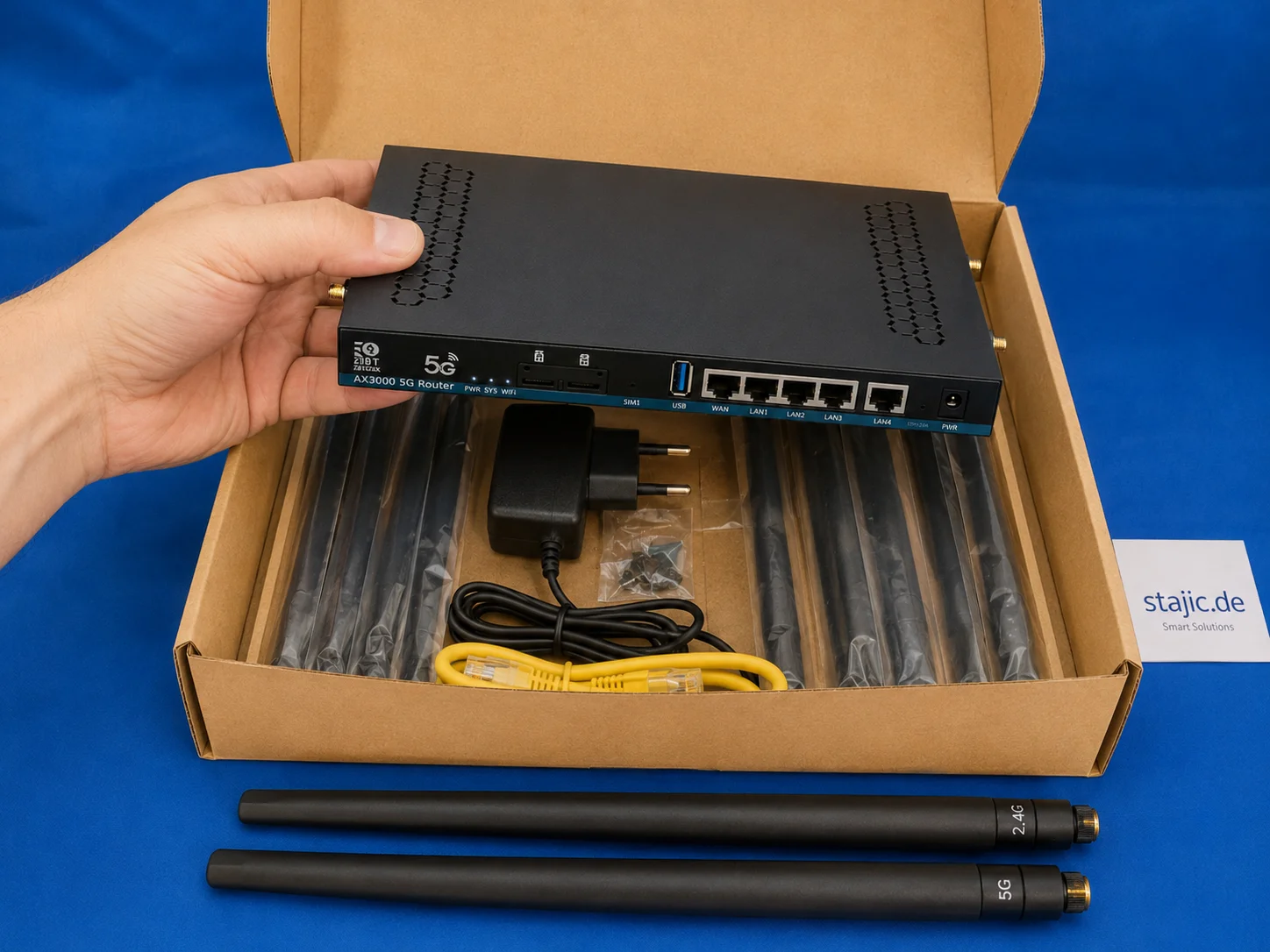
ZBT Z8102AX Hardware and Packaging Review: Strong Router, Weak Box
The ZBT Z8102AX makes a solid first impression as a slim black metal 5G OpenWrt router with multiple antenna connectors, dual-SIM slots, USB, LAN/WAN ports and a practical accessory set. The hardware feels useful and serious, but the packaging is clearly the weak point.

What Is an AI Solution Architect? System Boundaries, Responsibilities and Trade-offs
An AI Solution Architect turns business requirements into a production-ready AI system across data, models, tools, security, runtime, evaluation and operations.

Sovereign AI: Control of Models, Data, Infrastructure and Dependencies
Sovereign AI is about effective control over models, data, infrastructure, software, operations and strategic dependencies — not simply where an AI model is hosted.

The Answer Validity Boundary: The Missing Layer Between Relevance and Reliable AI Answers
A source can be relevant, authoritative and still be wrong for the question being asked. The missing layer is applicability: the conditions under which an answer holds, and the changes that force it to be reconsidered. This article introduces the Answer Validity Boundary as a source-design pattern for humans, AI search and RAG systems.
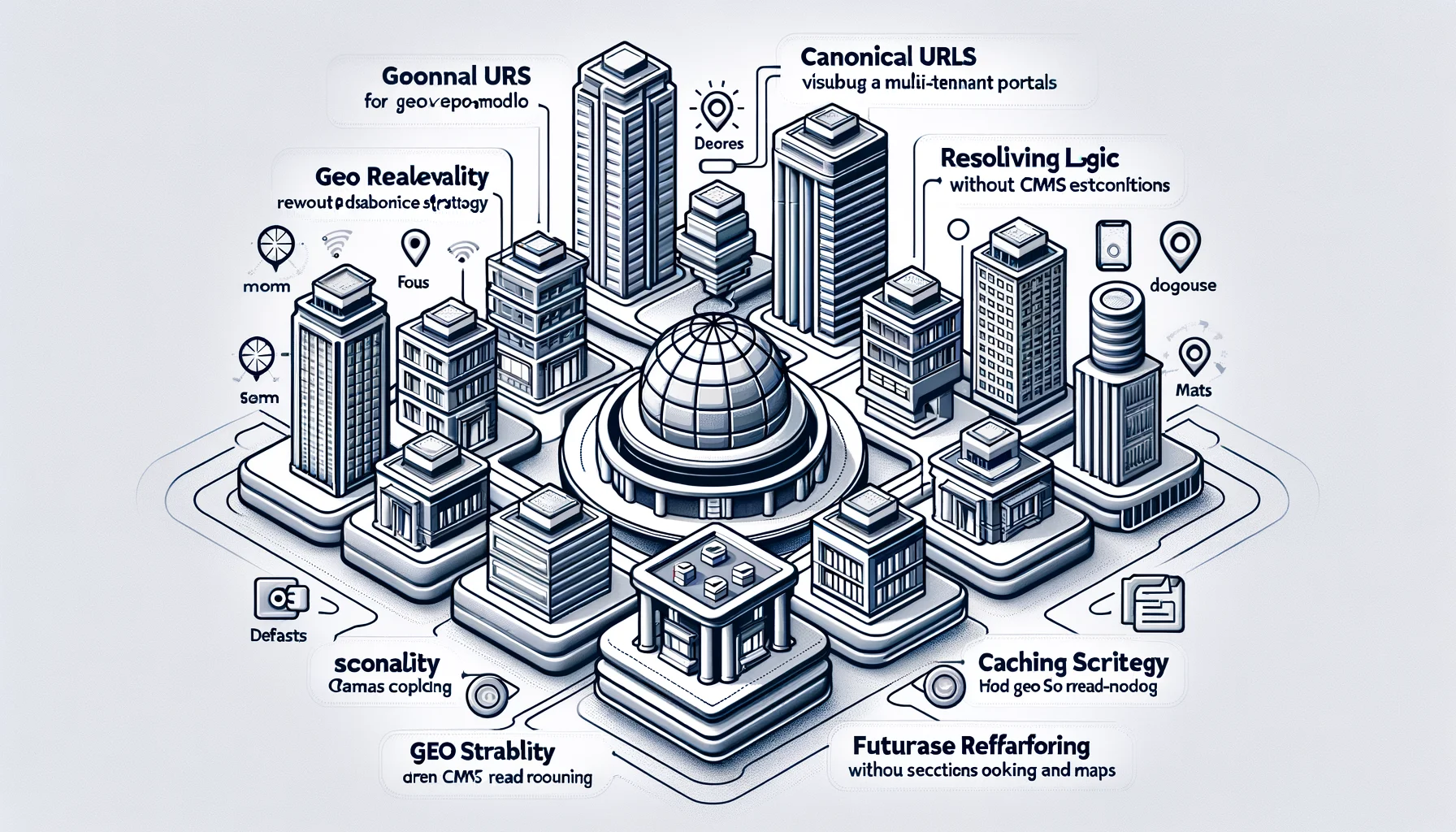
Canonical Architecture, URL Design, Resolver Logic, API & Scalability Specification
Geo-based discovery architecture for multi-tenant portals. Defines canonical URLs, resolver logic, caching strategy, and a geo read-model without CMS coupling or database refactoring. Designed for SEO stability, scalability, and future extensions like booking and maps.