
MLOps vs LLMOps: What Changes When the Model Is an LLM

MLOps is the engineering discipline for reliably developing, deploying, versioning and operating machine-learning systems; LLMOps extends that discipline to applications built around large language models, where production behavior depends not only on a model artifact but also on prompts, context, retrieval, provider/model versions, tool calls, safety controls and evaluation pipelines. LLMOps does not replace MLOps. It changes the operational unit from “a model plus serving pipeline” toward “an evolving LLM application whose behavior emerges from several independently changing components.”
What MLOps really means
MLOps applies software-engineering and operational discipline to machine-learning systems. The production challenge is broader than training a model: data collection, data validation, experimentation, reproducibility, model evaluation, deployment, infrastructure and monitoring all have to work together.
Google's MLOps architecture guidance frames the discipline around continuous integration, continuous delivery and continuous training. CI validates not only code but also data, schemas and models; CD deploys ML pipelines and prediction services; CT can retrain and redeploy models as data or implementations change.
AWS guidance adds the same operational concerns from another angle: model lineage, model/version traceability, drift monitoring and production-quality monitoring are core parts of keeping ML systems reliable after deployment.
What changes when the model is an LLM
Large language models change the production problem because the application often does not own the complete model-training lifecycle. A team may call a hosted model API, run an open model locally, switch between providers or use several models for different tasks.
The model is therefore only one versioned dependency inside a larger behavioral system. Prompts, retrieval results, context order, tools, model snapshot, temperature/reasoning settings, safety filters and runtime orchestration can all change the output.
This creates a broader operational question: which combination of model, context, data, prompt, tools and runtime produced this behavior? LLMOps exists to make that question answerable and the answer reproducible enough for engineering work.
The simplest example
Suppose an application answers internal policy questions.
In a classical ML framing, you might version a trained classifier, deploy it and monitor prediction quality. In an LLM application, the answer might depend on a hosted model snapshot, a system prompt, an embedding model, a vector index, retrieval filters, a reranker and the final selected context.
Changing any one of those components can change the final answer even though the application endpoint and user question stay identical.
A typical LLMOps release path
Where the simple example stops
Some LLM systems still train or fine-tune their own models, so traditional MLOps practices such as training pipelines, model registry and data lineage remain directly relevant.
Other systems use only external foundation-model APIs and never run continuous training. Their main operational workload is application evaluation, model/provider change management, prompt/context versioning, retrieval quality and observability.
There is therefore no single universal “LLMOps pipeline.” The exact lifecycle depends on whether you train, fine-tune, self-host, retrieve external knowledge, run agents or depend on managed model APIs.
MLOps vs LLMOps
What stays the same and what expands
| MLOps | LLMOps | |
|---|---|---|
| Primary operational unit | ||
| Model ownership | ||
| Typical change | ||
| Evaluation | ||
| Production monitoring | ||
| Continuous training | ||
| Versioned artifacts | ||
| Rollback target |
LLMOps extends MLOps rather than replacing it
The core operational principles do not disappear: source control, CI/CD, reproducibility, lineage, deployment controls, monitoring, rollback and measurable acceptance criteria remain essential.
The extension is that more behavior-defining artifacts now sit outside the model weights. A managed foundation model can change behavior through snapshot upgrades, while application output can change through prompt or retrieval changes without any model retraining.
This is why the useful hierarchy is usually DevOps → MLOps → LLMOps/GenAIOps as increasingly specialized operational concerns, not three mutually exclusive practices.
What has to be versioned in LLMOps?
| Artifact | Why it matters |
|---|---|
| Application code | Defines orchestration, validation, retries and business behavior |
| Model family + snapshot/version | Different snapshots can produce different behavior |
| Provider / endpoint | Changes data flow, latency, limits, pricing and availability |
| Prompt/instruction code | Changes model behavior even with same model |
| Generation/reasoning parameters | Can alter determinism, latency, depth and cost |
| Eval dataset | Defines what “good enough” is tested against |
| Scorers / graders | Define how quality is measured |
| Embedding model | Changes vector representation and retrieval behavior |
| Chunking/index configuration | Changes what can be retrieved |
| Reranker / retrieval fusion | Changes result ordering |
| Tool schemas | Change what the model can request and how |
| Permission profile | Changes what tool actions may actually execute |
| Context assembly rules | Change what evidence and state reach the model |
| Safety/guardrail configuration | Changes allowed or blocked behavior |
Model snapshots become release dependencies
With hosted LLMs, the team may not control model training, but it still controls which model or snapshot the application calls.
OpenAI's current API guidance explicitly warns that prompting behavior can change between model snapshots and recommends pinning production applications to specific snapshots where consistency matters, then running evals when upgrading.
The operational consequence is straightforward: model upgrades should be treated as application releases, not invisible infrastructure maintenance.
Provider lifecycle becomes part of operations
LLM applications often depend on provider rate limits, deprecation schedules, API semantics, context limits, data-handling rules and pricing.
A provider can deprecate a model while your application code remains unchanged. OpenAI's current deprecation schedule, for example, includes 2026 retirement dates for older model snapshots and platform surfaces.
LLMOps therefore needs provider lifecycle tracking, migration testing and fallback decisions in addition to model-quality monitoring.
Prompts behave like production code
Prompts are executable behavioral configuration. Small changes can alter output quality, tool selection and policy interpretation.
OpenAI's current guidance recommends storing production prompts in application code, reviewing prompt changes through pull requests, using typed inputs and covering changes with tests and evaluation checks.
That makes prompt versioning less like editing marketing copy and more like changing a function whose output is probabilistic and model-dependent.
Context engineering becomes an operational concern
The production model rarely receives only a static prompt. It may receive conversation history, retrieved documents, tool outputs, memory, current application state and policy instructions.
LLMOps must therefore observe context assembly: which evidence was selected, which state version was current, whether truncation occurred and whether important instructions survived compaction.
A model regression and a context regression can look identical at the final answer. Tracing the actual context path is what lets the team separate them.
RAG creates its own operational lifecycle
A RAG system introduces a second production pipeline beside model inference: ingestion, extraction, chunking, metadata, embeddings, indexes, retrieval, reranking and context selection.
The knowledge corpus can change every day even when the model and prompt do not. A stale index or broken metadata filter can therefore degrade answer quality without any model drift.
LLMOps for RAG should track corpus/index version, embedding model, chunking policy, retrieval configuration, source freshness and retrieval metrics separately from generation quality.
Evals replace “looks good to me” with release evidence
Generative outputs are often open-ended, so exact-match tests are insufficient for many tasks. LLMOps adds evaluation datasets and scorers that can measure task success, correctness, safety, groundedness, style or domain-specific acceptance criteria.
MLflow's current GenAI evaluation stack supports versioned evaluation datasets, prompt/model comparisons, custom scorers and evaluation over complete traces.
The strongest practice is evaluation-driven development: define representative cases and acceptance criteria before or alongside changes, then compare releases against the same evidence.
LLM-as-a-judge is useful but not ground truth
LLM judges can scale evaluation for qualities that are expensive to encode as deterministic assertions, such as relevance, tone or groundedness.
However, the judge is another model with its own bias, version and prompt. Judge configuration should therefore be versioned and calibrated against human or deterministic reference cases where consequence matters.
A production eval can mix deterministic checks, reference-based metrics, model judges and human review rather than asking one metric to represent every quality dimension.
Tracing becomes more important than endpoint logs
Traditional API logs can tell you that a request took two seconds and returned HTTP 200. They cannot tell you which retrieved chunks were selected, which tool the agent called or which model span consumed most tokens.
MLflow's current GenAI tracing captures prompts, retrievals, tool calls and application spans, and its production evaluation flow can score intermediate trajectory information rather than only final text.
This is a major LLMOps shift: observability follows the behavioral graph of the application, not only the serving endpoint.
Agents expand LLMOps into runtime operations
An agentic application can perform several model calls, tool invocations and state transitions before producing a result.
Operating agents therefore requires step counts, tool-call traces, permission denials, retries, loop detection, human approvals and verified final state in addition to ordinary model latency and token metrics.
A correct final answer can hide a bad trajectory, so agent evaluation must inspect the path as well as the result.
Tokens, model calls and context become cost variables
Classical ML inference cost is often dominated by serving infrastructure or per-prediction compute. LLM applications can add provider token pricing, repeated agent calls, embedding calls, reranking and tool/runtime overhead.
Cost therefore has to be attributed to task or trace, not only to one endpoint. A workflow that makes eight hidden model calls can be functionally correct but operationally unacceptable.
Latency behaves the same way: model latency, retrieval, reranking and external tools compose into end-to-end user latency.
Caching becomes semantic, not only technical
LLM systems can cache prompts, embeddings, retrieval results or full responses, but the cache key must reflect the semantics that can change the result.
A response cache that ignores model version, tenant, permissions or source freshness can return a technically valid but semantically invalid answer.
LLMOps therefore treats cache invalidation as part of model/context/data versioning rather than only infrastructure optimization.
Safety and permissions become release criteria
Generative systems can produce unbounded text and agents can trigger external actions. Safety testing therefore sits closer to ordinary CI/CD than in many classical predictive ML systems.
Permission checks, prompt-injection tests, tenant-isolation tests and side-effect approvals should be reproducible regression tests where those risks exist.
The model may suggest an operation, but the runtime still has to enforce authorization. LLMOps owns the evidence that those controls continue to work after model, prompt or tool changes.
What CI looks like in LLMOps
| CI layer | Example checks |
|---|---|
| Code | Unit tests, type checks, schema validation |
| Prompts | Template rendering, required variables, policy text, snapshot review |
| Models/providers | Compatibility, output schema, capability and regression tests |
| RAG | Chunking fixtures, filter tests, Recall@k, reranker regression |
| Tools | Input/output schema tests, permission tests, idempotency tests |
| Agents | Trajectory fixtures, loop limits, handoff/tool-selection tests |
| Security | Prompt injection, unauthorized tools, cross-tenant negative tests |
| Behavioral evals | Task success, correctness, grounding, safety, domain criteria |
| Operational | Latency, token/cost budgets, timeout/fallback behavior |
What CD looks like in LLMOps
A production release may deploy no new model artifact at all. It may simply ship a new prompt, retrieval configuration, tool set or provider mapping.
The release bundle should therefore identify the complete behavior-defining configuration rather than only the application container image.
Feature flags, staged rollout, shadow evaluation, canary traffic and rollback are useful because LLM behavior can regress in ways that static contract tests do not detect.
Continuous training becomes optional; continuous evaluation becomes central
Traditional MLOps often emphasizes continuous training when new data or drift justifies retraining.
Many LLM applications never train the foundation model. Their equivalent continuous loop is continuous evaluation: collect failures and representative production cases, add them to evaluation datasets, test candidate prompt/model/retrieval changes and redeploy only when evidence improves.
Fine-tuning can reintroduce a training lifecycle, but it should sit inside the same broader evaluation and release process.
What should be monitored in production?
| Signal class | Examples |
|---|---|
| System health | Errors, timeouts, endpoint availability |
| Model/provider | Model ID, snapshot, rate limits, provider errors |
| Latency | End-to-end, model, retrieval, tool and reranker spans |
| Cost | Input/output tokens, embeddings, tool/API spend |
| Quality | Sampled task success, correctness, relevance, groundedness |
| RAG | Retrieval recall proxies, empty retrieval, stale sources, citation coverage |
| Agents | Tool selection, retries, loops, handoffs, approval frequency |
| Security | Denied actions, prompt-injection indicators, tenant-boundary failures |
| User feedback | Corrections, abandonment, escalation, explicit ratings |
| Change drift | Provider/model/config changes relative to approved release |
Production traces can become evaluation data
One of the most useful modern LLMOps patterns is to turn sampled production traces into evaluation records.
MLflow currently supports retrieving production traces and scoring not only outputs but intermediate spans such as retrieval or tool-call trajectories.
This closes the loop between observability and development: real failures can become regression cases in the next release rather than disappear inside logs.
Reproducibility becomes conditional rather than exact
Classical ML reproducibility often aims to recreate a model from versioned code, data, environment and training parameters.
Hosted LLM applications cannot always reproduce identical output token-for-token because generation is probabilistic and providers may control infrastructure.
LLMOps therefore aims for behavioral reproducibility: record enough model/provider/version, prompt, context inputs, retrieval state and runtime configuration to reproduce the conditions and validate behavior within expected tolerances.
Lineage expands from model lineage to application lineage
AWS's MLOps guidance treats model lineage as the history of code, data, model and infrastructure artifacts needed for diagnosis and reproducibility.
For LLM applications, lineage should additionally connect prompts, eval datasets, retrieval/index versions, tool schemas, agent/runtime configuration and provider/model snapshots.
The target question becomes: Which exact application configuration produced this trace?
Multi-provider and model routing create operational policy
Once an application can use several providers or local models, routing becomes an operational policy rather than a simple model string.
Routing may depend on capability, latency, cost, privacy, context length, availability, tool support or locality. A fallback can preserve uptime while changing answer quality or data-processing assumptions.
LLMOps should therefore log which route was actually selected and evaluate routes independently rather than treat every compatible endpoint as behaviorally interchangeable.
Original implementation evidence
Aaasaasa AI Client: provider, model and runtime are separate operational objects
Aaasaasa AI Client separates agent/client, provider, model, runtime location and permissions. Its AI Hub supports Ollama, LM Studio/OpenAI-compatible endpoints and other provider protocols rather than treating “the model” as one global setting.
The implementation includes dynamic local model discovery, streaming, thinking output and explicit Ollama warm/load and unload controls. That is operational evidence that local LLM serving introduces resource lifecycle concerns beyond an API model name.
Provider status is queried through provider adapters, and connection types distinguish local, cloud API, account-backed, remote-agent and web-client paths. These are concrete operational dimensions an LLM-aware platform has to surface.
The repository also preserves an important boundary: a local runtime is not automatically local inference. Provider/model/runtime location are versioned or configurable concerns that affect privacy, latency, cost and availability.
Source of Truth Research Engine: LLM application state extends beyond the model
The Source of Truth Research Engine combines lexical search, optional embeddings, source snapshots, SHA-256 identity, claims, provenance and contradiction tracking around local model-assisted research.
This is useful LLMOps evidence because changing the model alone does not define the research system. Retrieval, source acquisition, evidence classification and persistent provenance are independent operational artifacts.
The implementation deliberately treats semantic similarity as discovery rather than evidence, showing why LLMOps observability should distinguish retrieval behavior from claim validity.
| Observed implementation | LLMOps lesson |
|---|---|
| Multiple provider protocols | Provider identity is an operational dependency |
| Dynamic model discovery | Available models can change independently of application code |
| Ollama load/unload controls | Local models have memory/resource lifecycle |
| Provider health/status adapters | Model availability needs runtime observability |
| Separate runtime and inference location | Deployment topology is not one boolean “local/cloud” |
| Central permissions | Model capability and tool authority must remain separate |
| Lexical + semantic retrieval pipeline | Retrieval configuration is part of application behavior |
| Source/provenance persistence | Operational state and evidence live outside model weights |
Common LLMOps failure modes
| Failure mode | What actually went wrong |
|---|---|
| Model alias upgraded silently | Behavior changed without controlled release |
| Prompt changed without evals | Behavioral regression passed normal unit tests |
| RAG index stale | Generation model was blamed for retrieval/data failure |
| Only final answer is logged | Root cause in retrieval/tool/context trajectory is invisible |
| Provider fallback is silent | Different model/data path changes behavior without attribution |
| Token cost tracked globally | Expensive workflows cannot be localized |
| Judge model changed | Evaluation scores drift without application change |
| Production traces never become tests | Known failures repeatedly return |
| Local model stays loaded indefinitely | VRAM/resource pressure becomes operational instability |
| Permissions encoded only in prompt | Model behavior is mistaken for authorization |
| One eval score gates everything | Different quality dimensions are collapsed into a misleading number |
| Model registry exists but prompt/index versions do not | Application lineage remains incomplete |
Common misconceptions
| Misconception | Correction |
|---|---|
| “LLMOps replaces MLOps.” | LLMOps extends MLOps principles to LLM-specific application behavior. |
| “LLMOps is prompt engineering.” | Prompts are one artifact among models, providers, context, retrieval, tools, evals and runtime. |
| “Hosted APIs remove operations work.” | They remove some model-serving/training work but add provider lifecycle, version and dependency management. |
| “If the API is stable, the app is stable.” | Model behavior and provider/model snapshots can change independently of API schema. |
| “RAG is just data preprocessing.” | In production it has its own ingestion, index, retrieval and freshness lifecycle. |
| “LLM outputs cannot be tested.” | They can be evaluated with deterministic, reference, judge and human criteria. |
| “LLM judges are objective ground truth.” | They are model-based evaluators that also require calibration and version control. |
| “A local model eliminates LLMOps.” | Local serving adds model files, VRAM, load/unload, runtime health and upgrade concerns. |
| “Observability means token counts.” | Useful observability follows prompts, retrievals, tools, model spans and outcomes. |
| “Continuous training is mandatory.” | Many LLM apps use continuous evaluation without training the foundation model. |
A practical LLMOps design sequence
Operate the complete behavior-producing system
LLMOps architecture checklist
| Question | Expected evidence |
|---|---|
| Which model/provider/version served the request? | Traceable model identity |
| Which prompt/instructions were active? | Versioned application code/config |
| Which context reached the model? | Context/retrieval trace |
| Which corpus/index version was used? | Retrieval lineage |
| Which tools were available and called? | Tool schema + trajectory trace |
| Which permissions applied? | Runtime authorization record |
| How is quality measured? | Versioned eval dataset + scorers |
| How are model upgrades tested? | Behavioral regression suite |
| How is production quality sampled? | Trace evaluation/feedback process |
| Can one failure be reproduced approximately? | Model/context/provider/application lineage |
| Where is cost spent? | Per-trace model/tool/retrieval attribution |
| What triggers rollback? | Defined quality/safety/cost/availability threshold |
| How are provider deprecations handled? | Migration/fallback process |
| How are local models operated? | Health, resource, load/unload and version controls |
Edge cases and limitations
A simple application that calls one fixed hosted model with no retrieval or tools may need only lightweight LLMOps: versioned prompt code, evals, model pinning, basic tracing and provider monitoring.
A self-hosted fine-tuned model may require nearly the full classical MLOps stack plus LLM-specific application evaluation, making the boundary between MLOps and LLMOps intentionally blurry.
An agent platform can have minimal model-training operations but substantial runtime operations because failures occur in tool selection, state and orchestration.
A RAG-heavy system can be operationally dominated by document ingestion and retrieval quality rather than model serving.
Terminology will continue to evolve. The durable architecture question is not which “Ops” label wins, but which artifacts produce behavior and therefore must be versioned, evaluated, observed and governed.
What would change this answer?
If foundation-model providers standardize perfectly stable model behavior and long-term version support, provider/snapshot management could become less operationally significant.
If applications increasingly own fine-tuning or training, classical MLOps concerns become more central again.
The operational principle would remain: every component that can materially change production behavior belongs in lineage, testing, observability and change control.
Related canonical knowledge
LLMOps sits below AI Governance and Enterprise AI Architecture: governance defines which changes require evidence and approval, while LLMOps provides the operational machinery to version, evaluate, deploy and observe those changes.
Context Engineering and RAG are operational subdomains inside many LLM applications because context and retrieval can change behavior independently of the model.
Agentic AI extends LLMOps further into trajectory, permissions and tool-runtime operations.
Frequently asked questions
MLOps vs LLMOps FAQ
What is the difference between MLOps and LLMOps?
Does LLMOps replace MLOps?
Do LLM applications need continuous training?
Why are evals so important in LLMOps?
What should be versioned in LLMOps?
Is prompt versioning enough?
What is GenAIOps?
How do you monitor an LLM application?
Can local LLMs use LLMOps practices?
Glossary
Key MLOps and LLMOps terms
- MLOps
- Engineering practices for building, deploying, monitoring and maintaining machine-learning systems and their data/model lifecycle.
- LLMOps
- Operational practices for production applications whose behavior materially depends on large language models and surrounding prompts, context, retrieval, tools and runtime.
- GenAIOps
- Operational discipline for generative-AI applications; often used as a broader or alternate label for LLMOps.
- Continuous training
- Automated or repeated retraining and serving of ML models as data or implementations change.
- Continuous evaluation
- Repeated evaluation of candidate and production AI behavior against versioned datasets and criteria.
- Model snapshot
- A concrete version of a hosted or packaged model whose behavior can be tested and referenced.
- Application lineage
- Traceable relationship among code, model/provider, prompts, data/retrieval, tools, runtime and release configuration.
- Trace
- Structured record of one application execution containing spans such as model calls, retrievals and tool operations.
- Eval dataset
- Versioned set of representative inputs, expectations and optionally traces/outputs used to measure behavior.
- LLM judge
- A language model used as an evaluator for qualitative or semantic criteria; it is itself a versioned evaluation dependency.
- Behavioral regression
- A degradation in application output or trajectory despite interfaces and code continuing to execute successfully.
- Provider routing
- Policy for selecting among available model providers/endpoints according to capability, cost, latency, privacy or availability.
Conclusion
MLOps and LLMOps share the same engineering objective: make AI systems reproducible enough, testable enough and observable enough to operate reliably in production.
The difference is the shape of the system. Classical MLOps often centers on training and serving model artifacts; LLMOps must operate a behavioral stack in which model snapshots, prompts, context, retrieval, tools, permissions and providers can change independently.
The shortest useful rule is: version, evaluate and observe everything that can materially change the LLM application's behavior — not only the model.
Primary sources and current documentation
The sources below ground the MLOps baseline and the current operational patterns for LLM and agent applications. Project sections are original implementation evidence and are intentionally narrower than claims about a complete LLMOps platform.
Google Cloud — MLOps: Continuous delivery and automation pipelinesReference architecture describing CI, CD, continuous training, model registry, metadata, serving and monitoring for ML systems.
AWS Machine Learning Lens — Model lineageCurrent guidance for tracking code, data, models, environments and infrastructure across ML releases.
AWS Machine Learning Lens — Model observability and trackingCurrent guidance for production model monitoring, drift, endpoint health and lineage.
Microsoft Azure — GenAIOps / LLMOps lifecycleOfficial guidance describing GenAIOps, sometimes called LLMOps, across initialization, experimentation, evaluation/refinement and deployment.
MLflow — Agents and LLM applicationsCurrent GenAI operations documentation covering tracing, evaluation, prompts and production observability for LLM applications and agents.
MLflow — Evaluating production tracesCurrent guidance for evaluating complete LLM/agent traces, including retrieval and tool-call trajectories.
MLflow — Evaluating promptsCurrent prompt/model evaluation workflow using versioned prompts, datasets, scorers and traces.
OpenAI API — Versioning and model snapshotsCurrent API guidance recommending pinned model versions and evals because prompting behavior can change between snapshots.
OpenAI — PromptingCurrent guidance to treat production prompts as application code, version them through source control and cover changes with tests and evaluation checks.
OpenAI — DeprecationsCurrent provider lifecycle evidence showing model and platform-surface retirement as an operational dependency.
OpenAI — Moving evaluation workflows to PromptfooCurrent 2026 migration guidance illustrating why evaluation assets should remain portable as provider tooling changes.
Related Articles
Comprehensive Guide to Evaluation Harness: Mastering LLM Performance Evaluation
This guide provides a detailed walkthrough of Evaluation Harness, an essential framework for rigorously assessing large language model (LLM) capabilities in enterprise LLMOps pipelines. Learn setup, best practices, and advanced techniques to ensure reliable model benchmarking and optimization.

New Qwen 3.5-Plus: Open-source AI is getting serious now
Discover the groundbreaking features and benefits of Alibaba's Qwen 3.5-Plus, a revolutionary open-source AI for developers.

What Is Context Engineering? What the Model Receives Before It Answers
Context engineering designs what information an AI model receives before inference, including prompts, retrieval, memory, application state, tool results and conversation history.
Mastering the SEO Workflow: Essential Optimization Strategies for Organic Growth
A structured SEO workflow is crucial for sustainable organic growth. Learn the ten foundational strategies, from keyword research and technical optimization to content quality and performance analysis.
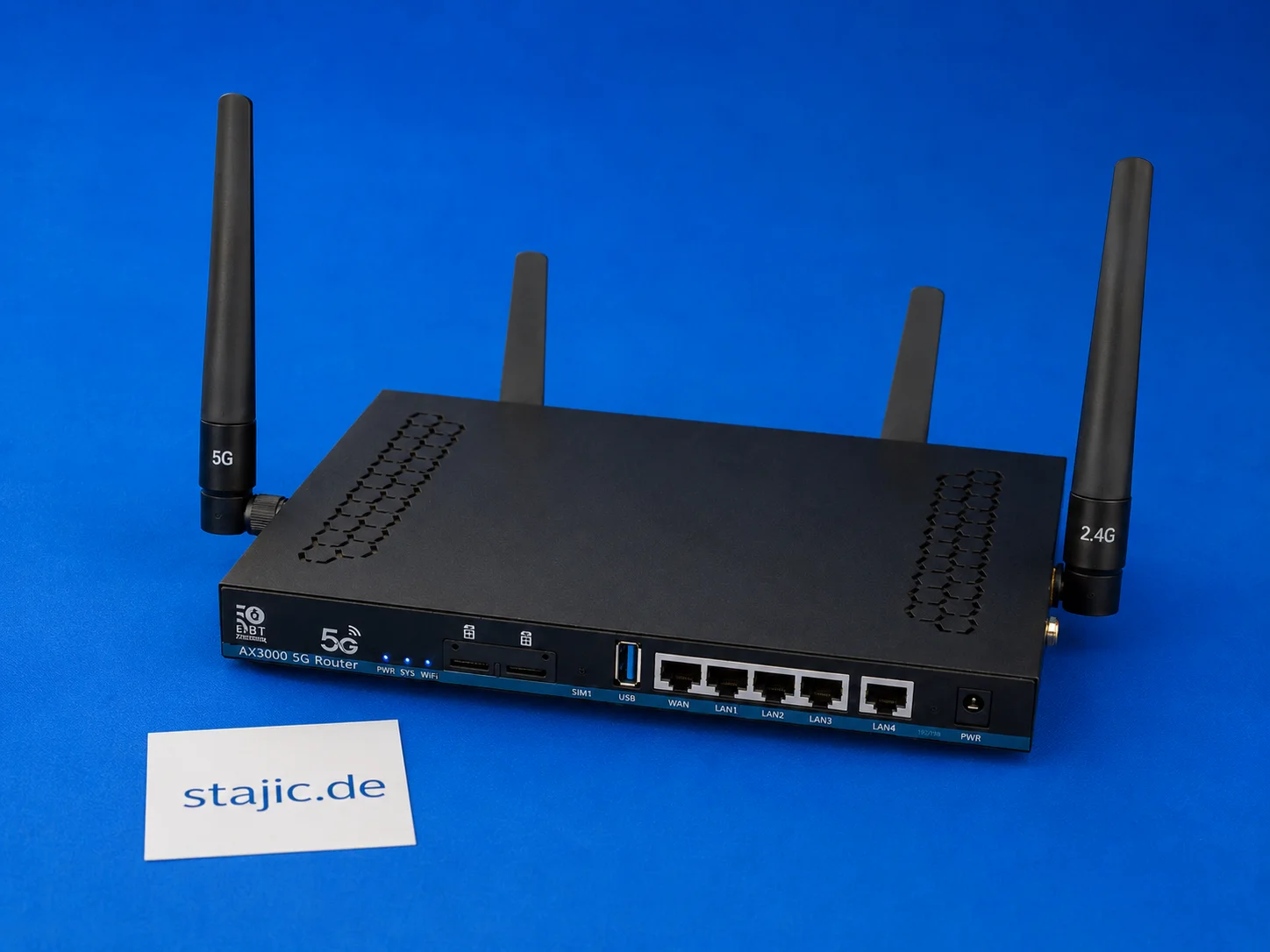
ZBT Z8102AX Dual-SIM Failover: What Works, What Is Missing and What Needs Better Firmware
The ZBT Z8102AX is a dual-SIM 5G OpenWrt router, but dual-SIM hardware alone is not the same as intelligent failover. The router recognizes the SIM and connects successfully, but automatic switching, modem recovery, signal-based decisions and clean failover logic still need deeper testing.

Managed Agent Harness vs Self-Hosted Agent Loop: What You Gain, What You Lose
“Self-hosted agent” can mean very different architectures. This guide separates the managed harness, self-hosted execution environment, and fully self-operated agent loop—and shows which control boundary teams actually need.
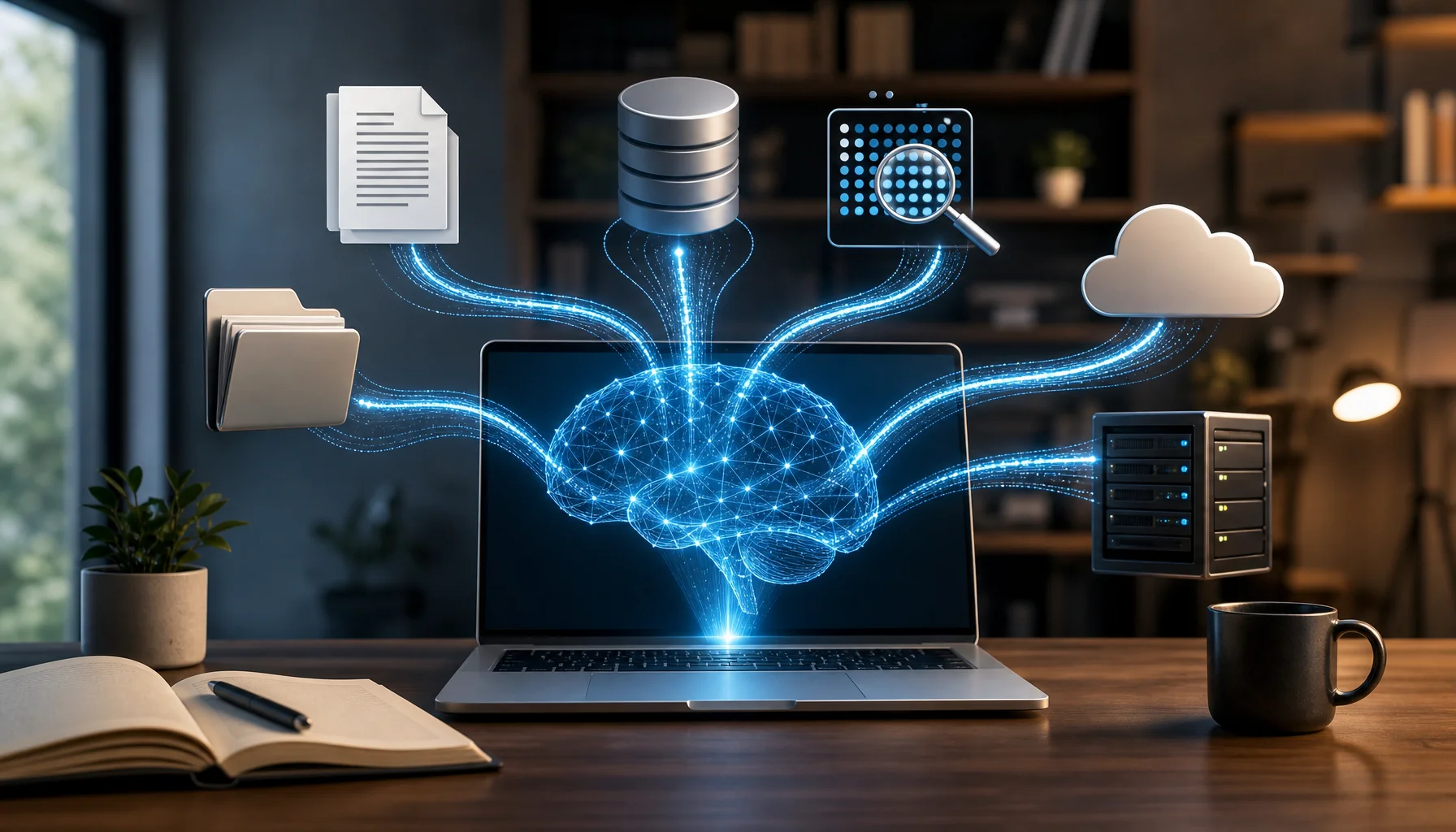
Where Does an LLM Get Its Data? RAG Data Sources in Python
An LLM does not magically know your files, databases or APIs. This practical continuation of the RAG series shows, with simple Python, how external data becomes retrievable evidence: from text files and SQL to full-text search, embeddings, context assembly and the final LLM call.

When Should an AI Stop Trusting Its Own Knowledge? — The Retrieval Trigger
An AI model does not need retrieval for every question. The important problem is knowing when its internal knowledge is no longer enough. The Retrieval Trigger is a practical decision boundary that determines when an AI system should stop relying solely on model knowledge and obtain external evidence before answering.

What Is RAG? The Simplest Explanation of How It Works
RAG sounds complicated, but the idea is simple: before an AI answers, it first looks up useful information from a knowledge source and gives that information to the language model. This guide explains RAG, LLMs, state, memory and tools using one simple mental model.

Ollama Is Not the Product: Building Production-Ready Open-LLM Applications
Running a local model with Ollama is easy. Building a production-ready Open-LLM application is harder: it requires RAG, access control, provider abstraction, evaluation, logging, deployment discipline and a controlled application layer around the model.
git-with-automatic-upload-and-synchronization-to-a-production-server

RAG Failed — But Which Layer Actually Failed? A Diagnostic Method
When a RAG answer is wrong, blaming retrieval or the model is too vague. This diagnostic method isolates source coverage, query construction, retrieval, ranking, context assembly, generation, evidence attribution, and freshness—so the actual failure can be reproduced and fixed.