
Database Marketing – Modern Approach for Customer Relationships

Database Marketing: A Modern Approach to Customer Relationships
In my professional career, I have implemented numerous projects in the field of database marketing and customer relationship management. The goal has always been to support companies in sustainably strengthening their customer relationships through the targeted use of data and modern technology.
This article is based on practical experience as well as strategic and technical insights from real projects in the marketing and IT environment.
Why is Database Marketing Important?
In the digital economy, the effective handling of customer data determines a company's success. Database marketing makes it possible to specifically collect, evaluate, and use relevant information for personalized marketing measures.
Companies can thus optimize customer acquisition, retain customers long-term, create personalized offers, and use marketing budgets more efficiently.
The Foundation of Database Marketing
Successful database marketing is based on three central pillars that must be implemented cleanly from a technical and organizational perspective.
- Data Collection: Capturing relevant customer data from websites, CRM systems, social media, and transactions.
- Data Analysis: Use of modern analytical tools to identify patterns, preferences, and customer behavior.
- Automation: Systems for real-time data processing and triggering automated campaigns.
Challenges in Database Marketing
Despite the great potential, companies face several challenges in database marketing, which are both technical and organizational in nature.
- Data Quality: Incomplete or erroneous data leads to incorrect decisions.
- Integration: Different data sources must be transferred into a consistent system.
- Data Protection: GDPR compliance and secure storage of sensitive customer data are mandatory.
Technical Implementation in Database Marketing
From a technical perspective, database marketing requires a clean architecture and clearly defined data flows. Scalability, security, and maintainability are the focus.
- APIs for integrating CRM, ERP, and third-party systems.
- Data Warehousing for central storage and analysis of large data volumes.
- Use of AI and Machine Learning for pattern recognition and predictions.
- Cloud Platforms for scalability and flexible infrastructure.
- Security measures such as encryption and access controls.
Best Practices for Successful Database Marketing
Clear best practices have been established in practice that help companies unlock the full potential of their data.
- Regular cleaning and validation of the database.
- Meaningful customer segmentation for personalized campaigns.
- Use of marketing automation tools for efficient processes.
- Measurement of relevant KPIs such as conversion rates and customer loyalty.
Conclusion
Database marketing is an indispensable tool for companies that want to strengthen their customer relationships and grow sustainably. The combination of modern technology, strategic thinking, and sound analysis enables efficient, personalized, and measurable marketing measures.
With technical experience and strategic know-how, I support companies in leveraging these potentials in a targeted and sustainable manner.
Related Articles

Source of Truth in AI Systems: Where Reliable Knowledge Actually Comes From
A Source of Truth defines which source is authoritative for a specific fact or state. Learn how it differs from RAG, provenance, memory, context, vector databases and systems of record.
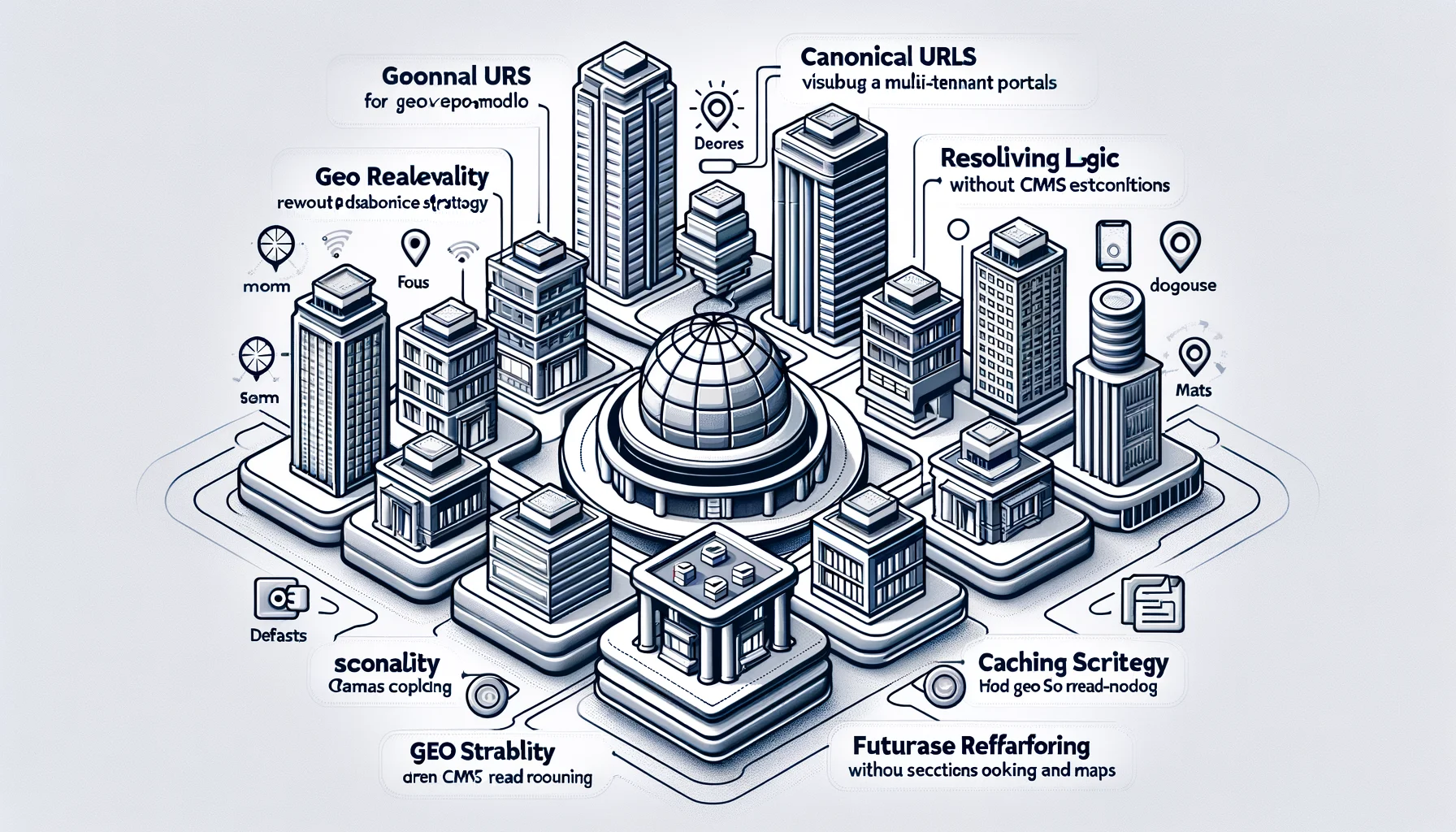
Canonical Architecture, URL Design, Resolver Logic, API & Scalability Specification
Geo-based discovery architecture for multi-tenant portals. Defines canonical URLs, resolver logic, caching strategy, and a geo read-model without CMS coupling or database refactoring. Designed for SEO stability, scalability, and future extensions like booking and maps.

ZBT Z8102AX OpenWrt 21.02 Firmware Review: Stable Enough, but Is It Future-Proof?
The ZBT Z8102AX runs a vendor-modified OpenWrt 21.02 build with kernel 5.4.246. In practical testing, the firmware worked successfully and kept the router stable for several days, but the old base raises important questions about security, modem control, upgrade paths and long-term maintainability.

Comprehensive Guide to Rollback Triggers in Enterprise AI Runbooks
This guide explores Rollback Triggers, essential mechanisms in enterprise AI runbooks that automatically detect anomalies and initiate rollbacks to maintain system stability. Learn how to configure, monitor, and optimize these triggers for robust AI deployments.

What Is an AI Solution Architect? System Boundaries, Responsibilities and Trade-offs
An AI Solution Architect turns business requirements into a production-ready AI system across data, models, tools, security, runtime, evaluation and operations.

What Is Context Engineering? What the Model Receives Before It Answers
Context engineering designs what information an AI model receives before inference, including prompts, retrieval, memory, application state, tool results and conversation history.

Can Evidence Survive the AI Pipeline? — The Evidence Preservation Chain
Evidence can be correct at the source and still become unreliable after parsing, normalization, chunking, retrieval and context assembly. The Evidence Preservation Chain tracks whether identity, provenance, scope and meaning survive the entire AI pipeline.

From Research Protocol to a General AI Reasoning Framework
A methodology developed for rigorous AI-assisted research can be generalized far beyond research itself. By separating evidence from assumptions, testing competing hypotheses, controlling prompt framing, searching for counter-evidence and applying domain-specific validators, the same reasoning architecture can improve debugging, software design, strategy, technical analysis and AI-assisted decision support.

Falsification for AI Reasoning: From Answers to Tested Hypotheses
AI models can generate convincing evidence for almost any plausible hypothesis. A more reliable methodology asks the opposite question: what evidence would weaken, contradict or force us to abandon the conclusion? This article develops falsification-oriented reasoning for LLMs using competing hypotheses, discriminating tests, counter-evidence and explicit rejection criteria.

Quectel RM500U-EA in the ZBT Z8102AX: 5G Bands, o2 Germany and Real-World Signal Behavior
The ZBT Z8102AX uses a Quectel RM500U-EA modem for 4G and 5G connectivity. In the first practical test, the router connected successfully to o2 Germany with LTE Band 3 and NR n28. The modem works, but deeper diagnostics such as RSRP, RSRQ, SINR, band locking and cell behavior still need proper testing.

MLOps vs LLMOps: What Changes When the Model Is an LLM
MLOps operates machine-learning systems; LLMOps extends those practices to prompts, context, retrieval, providers, tools, evaluations and runtime behavior around large language models.

The Answer Validity Boundary: The Missing Layer Between Relevance and Reliable AI Answers
A source can be relevant, authoritative and still be wrong for the question being asked. The missing layer is applicability: the conditions under which an answer holds, and the changes that force it to be reconsidered. This article introduces the Answer Validity Boundary as a source-design pattern for humans, AI search and RAG systems.