
Controls & Evidence: Auditability, Approvals, Traceability, and Repeatable Execution
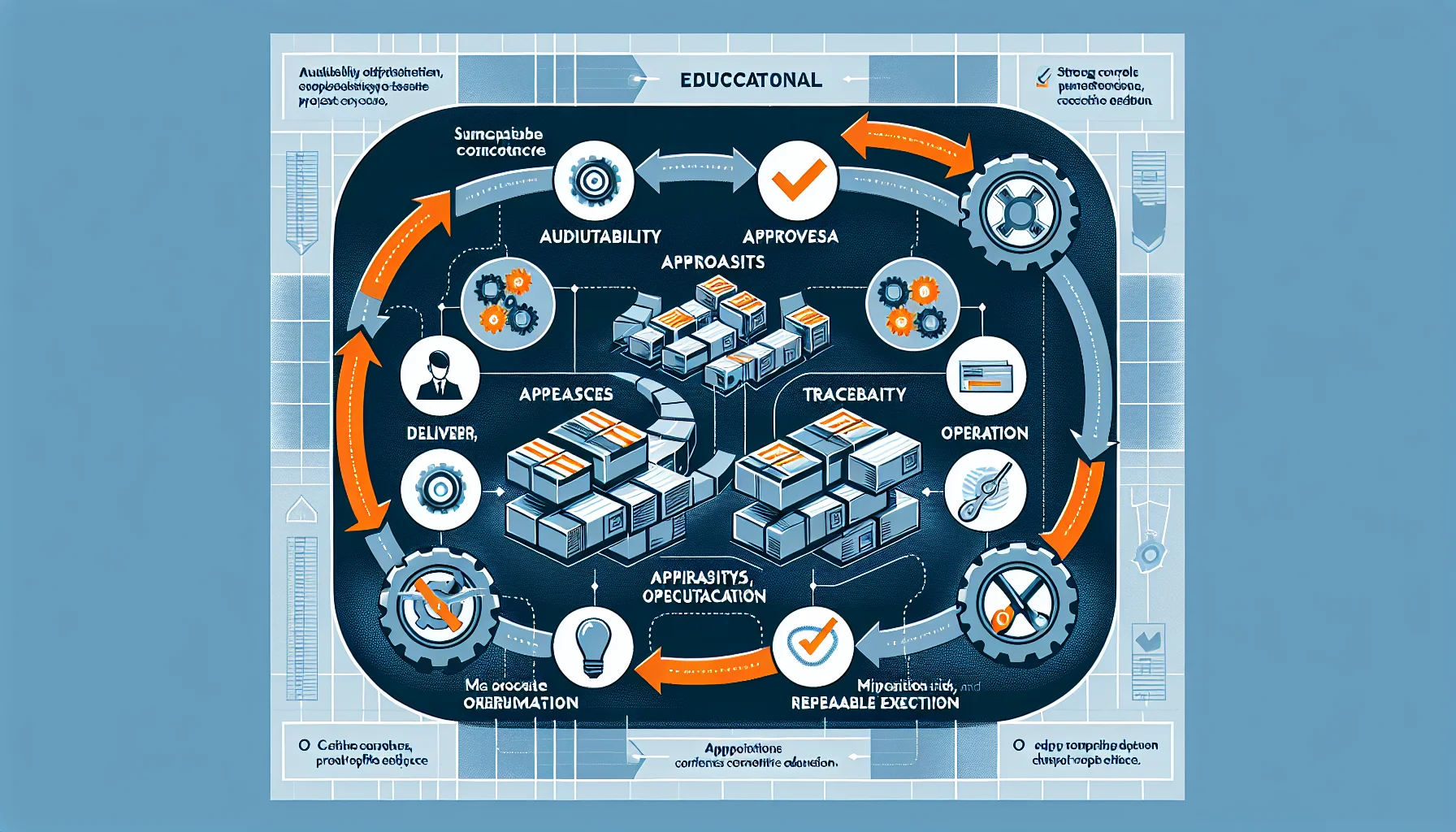
Controls & Evidence is where delivery discipline stops being a slogan and starts becoming operational reality. Teams often say they want safe change, accountable approvals, clear ownership, and predictable execution. But none of those goals exist in a credible form unless the platform produces visible controls and durable evidence. Without them, governance becomes opinion, approvals become ceremony, and auditability becomes reconstruction after the fact.
That is why this topic belongs first inside Enterprise Delivery OS under Reference Models > Delivery & Change. The live Delivery & Change Reference Model explicitly defines safe shipping through quality gates, clear evidence, and measurable outcomes. In the same library, Reference Models describe what good looks like in terms of capabilities, controls and evidence, metrics, and anti-patterns. That makes Controls & Evidence a structural pillar topic, not just a compliance afterthought.
In practice, controls and evidence exist for one reason: they make execution repeatable under pressure. A team should not need perfect memory, heroic coordination, or informal trust to prove what was changed, who approved it, whether it met acceptance criteria, and how the outcome was verified. A mature delivery system leaves behind an evidence trail strong enough for release review, incident analysis, audit questions, migration checkpoints, and future operational learning.
What Controls and Evidence Actually Mean
A control is a mechanism that reduces risk or enforces a required behavior. An evidence artifact is the record that proves the control was applied, the decision was made, or the verification was completed. Controls without evidence are unverifiable. Evidence without meaningful controls is documentation theater. Serious operating systems need both.
- Controls reduce ambiguity, constrain risky behavior, or require explicit checks.
- Evidence proves what happened, who acted, what was verified, and whether the result met expectations.
- Traceability connects decisions, approvals, implementation, verification, and outcomes into one reviewable chain.
- Repeatability means another team can execute the same path with similar clarity and similar controls.
This is why controls and evidence are not administrative overhead by default. Done well, they reduce operational friction because they eliminate guesswork. Teams move faster when they no longer need to reconstruct context from chat logs, memory, and conflicting interpretations.
The Core Outcomes Controls & Evidence Should Produce
A strong controls-and-evidence model should produce four outcomes consistently: auditability, approvals with accountability, end-to-end traceability, and repeatable execution. If one of those outcomes is weak, the system usually feels fine during calm periods and then fails exactly when change pressure rises.
- Auditability means a reviewer can reconstruct what happened without relying on memory.
- Approvals mean a decision was made by the right owner at the right point with enough context.
- Traceability means requirement, implementation, test evidence, release decision, and outcome can be connected.
- Repeatable execution means the same work can be done again without reinventing the process every time.
If execution only works when the same people remember the same unwritten rules, the system is not controlled. It is fragile.— Delivery governance perspective
Auditability: The Ability to Reconstruct Reality
Auditability is often misunderstood as a formal or external requirement. In reality, it is an internal operating advantage. Teams with good auditability can answer simple but high-value questions quickly: What changed? Why was it approved? Which acceptance criteria were used? What verification happened before release? Which rollback conditions were defined? What evidence exists that the result matched the stated intent?
That capability matters not only for auditors. It matters for engineering leads, incident responders, delivery managers, security reviewers, and platform owners. A system that cannot reconstruct change history with confidence will struggle in every serious operational scenario.
Evidence trail example
1. Change request or ticket with scope and owner
2. Risk classification and required controls
3. Approval record with timestamp and approver identity
4. Acceptance criteria and test evidence
5. Release checklist and execution record
6. Post-release verification result
7. Rollback trigger definition and outcome record
Approvals Should Be Real Decisions, Not Rituals
An approval is useful only if it changes the risk posture of the change. If an approver has no context, no responsibility, or no ability to stop a risky action, then the approval is ceremonial. Good controls define when approval is required, who owns the decision, what evidence must exist before approval, and what happens if required evidence is missing.
This is one reason the topic fits so naturally with the Release Runbook. The runbook already emphasizes preflight checks, clear owners, verification against acceptance criteria, captured evidence, and post-release review. In other words, approval only becomes credible when it sits inside a controlled release path.
// Example release approval contract
{ "changeId": "REL-2026-041", "owner": "platform-team", "riskLevel": "medium", "approver": "engineering-manager", "requiredEvidence": [ "test-report", "acceptance-checklist", "rollback-plan", "release-notes" ], "status": "approved"
}
That structure is simple, but it makes one important thing explicit: the approval is attached to evidence, not merely to hierarchy.
Traceability Connects Decisions to Outcomes
Traceability is the connective tissue between planning and execution. A mature system should allow a team to move from requirement to implementation, from implementation to verification, from verification to release, and from release to measured outcome without losing context. If that chain breaks, reviews become slower and incidents become harder to analyze.
Traceability is also where many teams quietly lose control. Requirements live in one system, code in another, approvals in chat, test evidence in screenshots, and release notes in someone’s local file. Each part exists, but the chain does not. That means the organization has fragments of evidence without operational coherence.
- Requirement or demand source
- Risk classification and owner
- Implementation reference such as branch, PR, or change record
- Verification artifacts such as test output or acceptance checks
- Approval event
- Release record
- Post-release result or rollback decision
The How to Use This Library guide reinforces the same pattern: start with a reference model to align on capabilities and controls, use a playbook to execute the change with phases and acceptance criteria, and use runbooks when the risk is high and time matters. Controls and evidence are the thread that connects those layers into one operating system.
Repeatable Execution Is the Real Payoff
The deepest value of controls and evidence is repeatability. If a process cannot be executed consistently by different people under different conditions, then it is still dependent on informal knowledge. Repeatability is what turns delivery from personality-driven work into system-driven work. That is a serious threshold in platform maturity.
This is also why playbooks matter. The live Operating Playbooks page defines playbooks as execution structures with phases, deliverables, risks, controls, KPIs, and acceptance criteria. That is exactly the level where controls and evidence become operational assets instead of static policies.
Repeatable execution pattern
1. Define the phase and expected outcome
2. Attach required controls to the phase
3. Define evidence needed to exit the phase
4. Assign explicit owner and approver
5. Record verification result
6. Move forward only when exit criteria are satisfied
What Good Controls Look Like in Practice
Good controls are clear, proportionate, and tied to risk. They do not attempt to slow everything down equally. They make high-risk work more explicit, medium-risk work more reviewable, and low-risk work more standardized. The result is not bureaucracy by default. The result is a cleaner allocation of attention.
- Quality gates before release
- Approval thresholds based on risk level
- Acceptance criteria tied to measurable outcomes
- Rollback readiness for changes with material blast radius
- Post-release verification steps
- Mandatory evidence packs for high-risk changes
The live Delivery & Change Reference Model already uses this language directly through quality gates, evidence packs, audit trails, rollback readiness, and postmortem patterns. That is why Controls & Evidence belongs there first. It is one of the model’s core operational ideas, not a detached appendix.
Evidence Should Be Reviewable, Not Decorative
Many teams produce evidence that looks complete but is operationally weak. Screenshots with no context, approvals with no defined evidence requirements, checklists that are always marked complete, and post-release notes that say little more than deployed successfully all create the appearance of rigor without the benefit of rigor.
Useful evidence is specific enough to answer a later question. It should help a reviewer determine whether the required control actually happened, whether acceptance criteria were met, and whether the decision would still look defensible in hindsight.
Weak evidence
- Looks good
- Approved
- Tests passed Strong evidence
- Test run ID and summary
- Acceptance criteria checklist with result
- Named approver with timestamp
- Release step completion record
- Post-release verification result
- Linked rollback conditions
Controls & Evidence in Migration and Replatforming
Controls and evidence become especially important during major change programs. The live Migration & Replatform Playbook states the issue clearly: most migrations fail due to missing controls, unclear acceptance criteria, and weak verification. That is almost a direct summary of why this topic matters.
A migration without structured evidence quickly turns into hope-driven execution. Teams think the target system is ready because most tasks appear complete, but there is no stable record showing which parity checks passed, which rollback triggers were agreed, or what acceptance criteria were actually satisfied.
- Cutover criteria
- Parity verification records
- Rollback trigger definitions
- Owner-approved go or no-go decisions
- Post-migration validation evidence
Controls & Evidence in High-Risk Execution
When time pressure increases, controls matter more, not less. That is exactly why the live Runbooks & Controls page defines runbooks for high-risk situations where time matters and clear steps, triggers, verification, and evidence are required. High pressure is where informal execution breaks down first.
This principle extends beyond classic releases. The AI Rollback Runbook shows the same operating logic in AI systems: freeze change, verify on test sets, rollback when triggers fire, and learn through postmortem evidence. The domain changes, but the control model stays recognizable.
Common Anti-Patterns
- Approvals that happen without required evidence
- Checklists that exist but are never reviewed critically
- Traceability split across too many disconnected tools
- No clear owner for final go or no-go decisions
- Evidence captured too late to influence risk
- Post-release verification skipped because deployment succeeded
These anti-patterns are dangerous because they create a false sense of maturity. The organization feels controlled right up until an incident, audit question, failed migration, or disputed release exposes the gaps.
A control that cannot be evidenced is mostly trust. An evidence pack that cannot influence a decision is mostly paperwork.— Controls and evidence perspective
Best-Fit SEO Pillar Placement
Inside the Enterprise Delivery OS structure, this article belongs primarily to Reference Models > Delivery & Change. That is the correct home because the live model already defines safe delivery through quality gates, evidence, and measurable outcomes. Strong secondary links belong to Release Runbook, Migration & Replatform, Runbooks & Controls, and Assessments. Those links reinforce the topic, but they should not replace its primary classification.
Final Perspective
Controls and evidence are not there to make delivery heavier. They are there to make delivery more defensible, more repeatable, and less dependent on improvisation. Auditability, approvals, traceability, and repeatable execution are all different expressions of the same underlying need: a platform must be able to prove what it did and why it was reasonable to do it. When that capability exists, execution becomes calmer, reviews become sharper, migrations become safer, and operational trust becomes earned rather than assumed.
Enterprise Delivery OSUse Reference Models to design capabilities and controls, Playbooks to execute change safely, and Runbooks when risk is high and time matters.
Reference ModelsReference models describe what good looks like through capabilities, controls and evidence, metrics, and anti-patterns.
Delivery & Change Reference ModelThis model defines how to ship changes safely with quality gates, clear evidence, and measurable outcomes.
Release RunbookUse preflight checks, clear owners, verification against acceptance criteria, captured evidence, and post-release review.
Migration & Replatform PlaybookMost migrations fail due to missing controls, unclear acceptance criteria, and weak verification. This playbook forces clarity and evidence.
Runbooks & ControlsRunbooks are used when risk is high and time matters. They provide clear steps, triggers, verification, and evidence.